
The commercial insurance industry is currently navigating a sea of unprecedented complexity, where underwriters are tasked with evaluating risks from a deluge of unstructured data arriving in countless formats, from broker emails and intricate spreadsheets to detailed loss runs and dense financial statements. This reliance on manual data entry and disjointed systems has created significant operational friction, leading to slower quote times, increased potential for error, and pricing models that struggle to keep pace with the dynamic nature of modern risks. As data volumes continue to explode and risk profiles become more multifaceted, the traditional underwriting model is being stretched to its breaking point, signaling an urgent need for a transformative shift toward more intelligent, automated, and data-driven solutions. The integration of advanced artificial intelligence is emerging not merely as an enhancement but as a fundamental necessity for insurers aiming to maintain a competitive edge through speed, accuracy, and deeper risk insight.
Streamlining the Data Deluge
Intelligent Ingestion and Data Structuring
The primary bottleneck in commercial underwriting has long been the challenge of data friction, a problem that advanced AI platforms are now directly addressing. These systems are engineered to ingest and process massive quantities of unstructured data from a wide array of sources, including complex broker submissions, historical loss runs, and detailed financial reports. An intelligent ingestion engine serves as the first line of defense against data chaos, automatically extracting, normalizing, and validating critical risk attributes from various file formats like PDFs, emails, and spreadsheets. This automated capability effectively eliminates the laborious and error-prone manual data entry that has historically consumed a significant portion of an underwriter’s valuable time. By transforming this messy, disparate information into a coherent, high-quality, structured format from the moment it enters the workflow, these AI solutions lay a reliable foundation for all subsequent analysis and decision-making, shifting the underwriter’s focus from clerical tasks to strategic evaluation.
Beyond simple data extraction, the true power of these AI systems lies in their sophisticated data validation and enrichment capabilities, which are essential for creating actionable intelligence. The platform doesn’t just pull data; it rigorously vets it by cross-referencing the newly ingested information with the insurer’s internal records, such as past claims histories and policy data, as well as with external industry benchmarks and third-party data sources. This comprehensive verification process ensures an exceptionally high degree of accuracy and consistency from the outset, mitigating the risks associated with flawed or incomplete information. The immediate benefit is a substantial reduction in operational costs tied to manual data cleanup and reconciliation. More importantly, this establishes a single source of truth—a foundational layer of trustworthy, structured data that empowers underwriters to build their risk assessments on solid ground, thereby elevating their role from data processor to strategic risk analyst.
Creating a Unified Risk Perspective
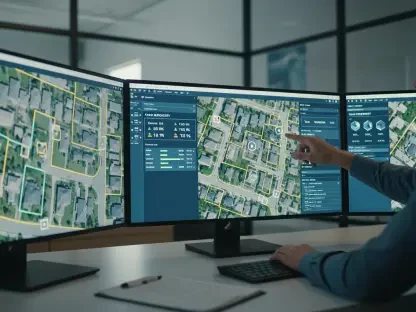
Once the data is structured and validated, the next evolutionary step is its consolidation into a unified decisioning workbench, often referred to as a “single pane of glass” for the underwriter. This integrated environment is designed to provide a comprehensive, 360-degree risk profile by amalgamating all relevant information into one accessible interface. It seamlessly combines the newly processed submission data with a wealth of contextual information, including the applicant’s internal loss history, external hazard data from geospatial and catastrophe models, and critical compliance information. By centralizing these disparate data streams, the workbench eliminates the need for underwriters to toggle between multiple systems and manually piece together a complete picture of the risk. This holistic view not only accelerates the decision-making process but also enhances its quality, empowering underwriters to make faster, more confident, and more accurately informed judgments with all pertinent details readily available.
The creation of a centralized risk profile fundamentally transforms the underwriter’s workflow from a reactive, fragmented process into a proactive, strategic one. This unified view enables a more nuanced and granular level of risk assessment that was previously impractical. For instance, an underwriter can simultaneously evaluate an applicant’s financial stability from their statements, their property’s exposure to natural disasters via catastrophe models, and their claims frequency from internal records, all within the same dashboard. This comprehensive perspective allows for the immediate identification of potential red flags, compliance issues, or hidden risk correlations that might have been missed in a siloed environment. The ability to access and synthesize this level of structured intelligence on demand allows underwriters to dedicate more time to complex risk analysis and strategic pricing, ultimately driving more profitable and sustainable underwriting outcomes for the organization.
Enhancing Decision-Making Across Commercial Lines
Automation in High-Volume and Property Lines
In high-volume commercial lines such as general liability and workers’ compensation, the impact of AI-driven automation is particularly pronounced. These lines are characterized by a steady flow of submissions that often require the meticulous validation of standardized documents like loss runs and payroll data. AI platforms streamline this entire process, automatically ingesting these documents, extracting the relevant figures, and cross-validating them against historical data and industry standards to flag anomalies or errors. This level of automation significantly reduces the potential for human error and accelerates the quoting process, enabling insurers to respond to brokers and clients with greater speed and consistency. For property and construction lines, the technology synthesizes complex structural details from engineering surveys and blueprints with external hazard data, such as flood zones and seismic activity reports. This integration cuts down the time required for data validation and risk assessment by as much as 80%, improving underwriting accuracy and efficiency.
The practical application of AI in these sectors moves beyond simple efficiency gains to enable a more sophisticated approach to risk management. For workers’ compensation, intelligent systems can analyze job-site safety reports and claim narratives to identify emerging risk trends or specific workplace hazards, allowing for more precise pricing and proactive loss control recommendations. In the property sector, AI can analyze satellite imagery and building permit data to verify property characteristics and identify undeclared modifications, ensuring that the coverage accurately reflects the true risk exposure. By automating the mundane and enriching the analytical capabilities, these platforms empower underwriters to handle a greater volume of submissions without sacrificing the quality or depth of their risk assessments. This allows them to focus their expertise on the more complex or unusual risks that require nuanced human judgment, ultimately leading to a more balanced and profitable portfolio.
Precision in Specialty and Global Markets
The advantages of an AI-powered underwriting platform extend profoundly into the complex domains of specialty and financial lines, where risks are often unique and multifaceted. In areas like cyber insurance, directors and officers (D&O) liability, and professional liability, the platform provides a consolidated, cross-line view of risk that is critical for a comprehensive assessment. For instance, it can automatically analyze a company’s cybersecurity posture by scanning for vulnerabilities, cross-referencing this with their financial statements to understand potential business interruption costs, and flagging any compliance issues related to data protection regulations. This ability to synthesize diverse, industry-specific risk factors into a single, coherent profile allows for far more granular risk selection and pricing. Underwriters are equipped with deeper insights, enabling them to move beyond broad classifications and tailor policies to the specific risk landscape of each individual applicant.
In the intricate global and Excess & Surplus (E&S) markets, AI and Generative AI (GenAI) are proving to be transformative tools for handling highly complex and non-standard submissions. These markets often involve intricate trade and regulatory documents, unique risk scenarios, and submissions that do not conform to standard formats. GenAI models can interpret complex, narrative-heavy submissions, summarizing key exposures and extracting critical data points that would otherwise require hours of manual review by a senior underwriter. The system can process and understand documentation related to international trade regulations, supply chain dependencies, and political risk, providing a structured summary for faster evaluation. This dramatically accelerates the submission-to-quote timeline, which is a critical competitive differentiator in these fast-paced markets. By arming underwriters with the tools to quickly decipher and analyze the most complex risks, AI is enabling greater agility and precision in markets where expertise and speed are paramount.
A New Era of Underwriting
The integration of advanced AI into commercial underwriting workflows marked a definitive shift from reactive, manual processes to a proactive, data-driven discipline. By systematically dismantling data friction, consolidating risk intelligence, and automating routine tasks, these platforms redefined the underwriter’s role, elevating it from data administration to strategic risk architecture. The technology facilitated a level of speed, precision, and insight that was previously unattainable, allowing insurers to build more resilient and profitable portfolios. This evolution established a new industry standard where data-backed confidence and operational agility became the cornerstones of competitive underwriting.