
As the insurance industry grapples with the escalating frequency and severity of climate-related disasters, a fundamental shift is underway, moving beyond reactive modeling to proactive, AI-driven risk integration at the very core of underwriting. The traditional approach of assessing climate exposure as a separate, often downstream, portfolio-level concern is proving inadequate in an environment where individual asset vulnerability can have cascading financial effects. This evolution is driven not only by the clear and present danger of physical climate hazards but also by mounting pressure from global regulators demanding transparent disclosure of climate-related financial risks. Frameworks such as the Task Force on Climate-related Financial Disclosures (TCFD) are compelling insurers to embed climate intelligence directly into their decision-making processes, transforming it from a peripheral compliance exercise into an essential component of strategic underwriting and long-term solvency. This new paradigm leverages artificial intelligence to make climate risk an immediate, quantifiable, and actionable data point from the first moment a submission is received.
Integrating Climate Science into Underwriting
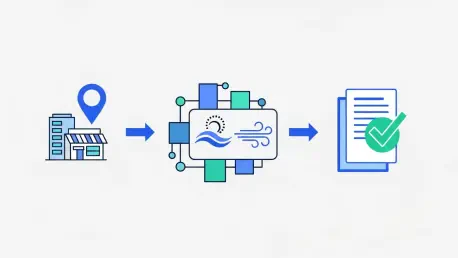
The most transformative change involves embedding high-resolution, science-backed climate intelligence directly into the initial stages of the underwriting workflow through sophisticated technological partnerships. This integration is powered by a seamless connection between AI-powered platforms used for commercial insurance submissions and specialized climate risk analytics providers. When a submission for a commercial property enters the insurer’s system, the platform automatically geolocates the asset with precision. This action instantly triggers an automated request to a climate intelligence partner for a comprehensive risk assessment specific to that location. This assessment is not based on historical data alone but incorporates forward-looking projections for a range of physical hazards, including perils like river flooding, severe wind events, and wildfires. The resulting detailed climate data is then seamlessly integrated into the earliest phases of the underwriting process, such as triage or enrichment and risk evaluation, providing underwriters with critical insights before significant resources are committed.
This operational shift represents a move away from siloed analysis toward a holistic and real-time evaluation of risk. Previously, climate considerations were often handled by separate teams and applied at a portfolio level, long after individual underwriting decisions had been made. Such a delayed process made it difficult to price risk accurately or to decline submissions that fell outside a newly defined climate-aware appetite. By embedding these analytics at the point of decision-making, insurers can automate a significant portion of their due diligence. Submissions can be instantly tested against predefined, climate-aware appetite rules, flagging high-risk assets for further review or automatic declination. This automation not only accelerates the underwriting process but also ensures consistency and rigor in applying the insurer’s climate risk strategy across its entire book of business. The result is a more dynamic and responsive underwriting function, capable of adapting to the rapidly changing landscape of climate-related perils with greater agility and precision.
The Future of Risk Assessment and Resilience
The practical benefits for insurers adopting this integrated model are both immediate and far-reaching, fundamentally enhancing their ability to manage complex exposures. By having detailed, forward-looking climate data available at the asset level, underwriters are empowered to make smarter and faster decisions. This allows for a much more accurate risk selection process, ensuring that the policies written align with the company’s strategic tolerance for climate-related perils. Furthermore, this granular insight provides a robust, data-driven foundation for pricing, enabling insurers to more confidently and accurately quantify the financial impact of climate exposure on an individual asset and, by extension, the entire portfolio. This leads to stronger claims control, as high-risk properties can be identified and either priced accordingly or avoided altogether. The powerful combination of an AI platform’s workflow automation with the deep, scientific rigor of climate analytics provides a comprehensive toolset for building a more resilient and profitable business in an increasingly volatile world.
This evolution ultimately redefined the industry’s approach to climate change, shifting the focus from mere compliance to strategic resilience. The integration of AI and predictive climate science was no longer a niche capability but a core component of sound underwriting and portfolio management. Insurers who embraced this technological fusion found themselves equipped not only to meet regulatory disclosure requirements with greater ease but also to gain a significant competitive advantage through superior risk insight. This capability allowed them to navigate the complexities of a changing climate with a new level of confidence, ensuring their portfolios were robust and their pricing was adequate for the challenges ahead. The adoption of these integrated systems marked a pivotal moment, providing the industry with the tools it needed to transition from a defensive posture on climate risk to a proactive strategy centered on informed, data-driven decision-making and long-term sustainability.