
The intersection of massive physical infrastructure and advanced artificial intelligence has created a unique set of challenges for the global construction industry, which currently faces an unprecedented demand for data centers and renewable energy facilities. Shepherd, a leader in the AI-native commercial insurance space, recently announced the successful closing of a $42 million Series B funding round to address these complexities. Led by Intact Private Capital with participation from Spark Capital and Costanoa Ventures, this investment brings the company’s total funding to $67 million. This capital infusion arrives at a critical juncture as the global economy shifts its focus toward the physical infrastructure required to support the next generation of computing. By providing specialized insurance coverage for multi-billion-dollar projects, Shepherd ensures that essential facilities like semiconductor manufacturing plants can move from planning to completion without the administrative delays that often plague large-scale developments. This strategic alignment with the technology industry’s hardware needs has allowed Shepherd to secure a unique foothold in a market that traditional insurers have long struggled to navigate effectively.
Modernizing the Underwriting Process
Overcoming Legacy Bottlenecks and Manual Inefficiency
Traditional commercial insurance remains one of the final frontiers of manual administration, often functioning as a slow and fragmented process that fails to keep pace with modern construction timelines. In the legacy model, brokers and contractors frequently encounter severe bottlenecks where securing a single quote for a complex project can take several weeks or even months. This delay is primarily due to a reliance on disconnected systems, static spreadsheets, and manual data entry that requires human underwriters to cross-reference multiple disparate sources. In an environment where technology giants are racing to deploy hardware clusters and GPU farms at lightning speed, these administrative hurdles represent a significant financial liability. When a project is delayed by insurance paperwork, the opportunity cost of idle capital and unutilized technology can reach millions of dollars per day, creating a massive gap between the speed of digital innovation and the reality of physical risk management.
Underwriters at legacy firms are often forced to manually review hundreds of pages of site reports, environmental assessments, and email chains to assess risk, which inevitably leads to inconsistent pricing and operational friction. Shepherd addresses these systemic failures by utilizing proprietary machine learning models designed to ingest and analyze vast quantities of risk data in mere seconds. This AI-native approach collapses the feedback loop for underwriting from weeks to just a few hours, providing the agility required by today’s high-stakes industrial projects. By automating the preliminary intake and data enrichment phases, the platform allows human experts to focus on complex decision-making rather than data entry. This transition from a document-heavy workflow to a data-driven ecosystem ensures that pricing is not only faster but also more reflective of the actual risks present on a specific jobsite, rather than relying on broad historical averages that may no longer be relevant in a rapidly changing technological landscape.
Real-Time Data Integration and Precision Pricing
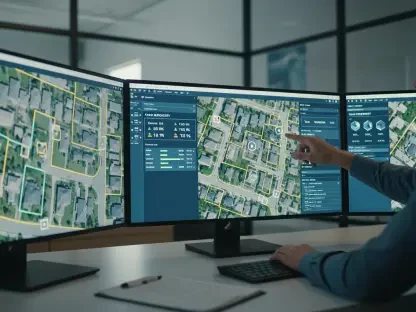
The technical advantage of this modern approach lies in its deep integration with the construction industry’s leading technology platforms, including Procore, Autodesk, and Samsara. Rather than treating insurance as a one-time transaction based on a snapshot of past performance, Shepherd pulls real-time telematics and operational data directly into its underwriting engine to maintain a continuous view of the jobsite. This integration allows for the monitoring of safety protocols, quality inspection rates, and environmental conditions through drone data and site sensors as they happen. Such a level of precision was previously impossible in the commercial sector, where risk assessment was often relegated to infrequent manual inspections. By capturing thousands of data points throughout the lifecycle of a project, the system can identify emerging risks before they escalate into costly claims, fundamentally changing the relationship between the insurer and the policyholder from an adversarial one to a collaborative partnership focused on safety.
Furthermore, the utilization of real-time data enables a more nuanced understanding of how modern construction techniques impact overall project risk. For instance, the use of automated machinery or advanced site monitoring tools can significantly reduce the likelihood of workplace injuries, yet traditional insurance models rarely account for these technological investments in their pricing structures. Shepherd’s platform fills this void by quantifying the safety benefits of specific technology stacks, allowing contractors to see a direct correlation between their digital adoption and their insurance premiums. This data-driven transparency provides a much clearer picture of project health for all stakeholders involved, from the general contractor to the financial backers. As the physical layer of the AI economy continues to grow in complexity, the ability to translate technical operational data into financial risk metrics becomes an essential component of successful project delivery, ensuring that the infrastructure supporting global innovation is built on a foundation of verifiable safety and efficiency.
Strategic Market Expansion and Future Vision
Behavioral Incentives Through the Shepherd Savings Program
A core component of the broader market strategy involves a fundamental shift toward behavior-based pricing through the innovative Shepherd Savings program. While traditional premiums are often calculated using general demographic statistics or historical loss runs that may be years out of date, this program rewards contractors who actively demonstrate operational excellence through the consistent use of technology. This creates a virtuous cycle where builders are financially incentivized to invest in safety and efficiency tools, as these practices lead to direct, measurable reductions in their insurance costs. By aligning the interests of the insurer with the safety goals of the contractor, the program transforms insurance from a mandatory overhead expense into a strategic tool for operational improvement. Contractors who utilize telematics to track fleet safety or deploy wearable sensors to monitor worker health can leverage that data to negotiate better terms, effectively gamifying the safety process in a way that benefits the entire construction ecosystem.
The impact of this approach is evidenced by Shepherd’s rapid dominance in the AI infrastructure space, where the company currently insures over $400 billion in total project value. With a client roster that includes some of the most prominent AI labs and energy developers in the world, the firm has become the preferred choice for projects that demand a high degree of technical sophistication and rapid execution. As the race for AI supremacy moves from the cloud to the construction site, there is an urgent need for insurance partners who understand the unique risks associated with massive power requirements and hyperscale cooling systems. Shepherd provides the speed and scale necessary to support these global infrastructure demands, ensuring that the physical facilities required for advanced computation are not stalled by outdated financial processes. This specialized focus allows the company to capture a segment of the market that is growing exponentially, positioning it as a critical infrastructure partner rather than just a secondary service provider.
The Path Toward Autonomous Underwriting and Global Scale
Looking toward the coming years, the primary technical objective is achieving a state of autonomous underwriting to exponentially increase operational capacity across all business lines. The goal is to move from manual processing to a state of supervised autonomy where artificial intelligence handles the bulk of data enrichment, risk analysis, and preliminary pricing with minimal human intervention. This would allow a single underwriter to manage ten times the volume of accounts compared to traditional methods, shifting their professional role from a data processor to a high-level portfolio orchestrator who focuses on strategy and exception handling. This transition is not merely about speed; it is about creating a scalable framework that can handle the massive influx of new infrastructure projects without a linear increase in headcount. By automating the repetitive elements of the underwriting process, the company can maintain a lean operational structure while providing the high-touch service that large-scale commercial clients expect.
The efficacy of this model is underscored by a sevenfold revenue increase over the past two years, demonstrating that there is a significant appetite for tech-enabled insurance solutions in the industrial sector. Operating as a Managing General Underwriter, Shepherd maintains internal authority over its underwriting decisions while partnering with top-rated global carriers to provide the substantial capital capacity required for multi-billion-dollar projects. This hybrid model combines the agility of a technology startup with the financial stability of a traditional insurance powerhouse, offering a unique value proposition to the market. As the company expands its footprint into renewable energy and power verticals, it is setting a new standard for how the physical world is insured. By ensuring that the infrastructure of the future is built faster, safer, and with greater economic transparency, the firm is paving the way for a more resilient global construction industry that is fully equipped to meet the technological demands of the decade. Moving forward, the focus will remain on refining these autonomous capabilities and deepening integrations with the construction technology stack to ensure that insurance keeps pace with the speed of physical innovation.