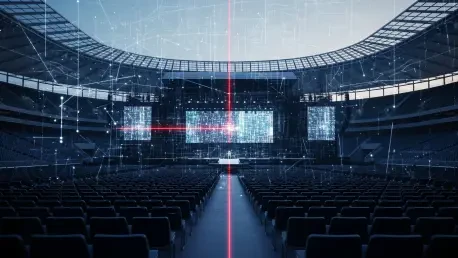

A sold-out stadium pulses with anticipation under the glow of a thousand screens, but the threat that could bring the entire production to a halt is no longer a looming storm cloud but an invisible string of malicious code. As the live events industry leans more heavily on digital infrastructure for everything from ticketing to stage production, a new class of risk has emerged, one that traditional insurance policies have largely ignored. In response to this growing vulnerability, Arch Insurance International has launched a dedicated cyber coverage extension for its event cancellation policies, aiming to protect organizers from the financial fallout of digital disasters.
When the Show Cannot Go On Because of a Hacker
The cancellation of a major event has traditionally been associated with tangible perils: severe weather, structural damage to a venue, or the sudden illness of a headline performer. These are the risks that contingency policies were built to address, providing a financial safety net for circumstances beyond an organizer’s control. However, the operational backbone of modern events is now digital, creating a new and pervasive point of failure that exists entirely outside the physical realm.
A ransomware attack that locks down a ticketing provider’s system hours before doors open can be just as catastrophic as a hurricane, forcing a cancellation even when the venue, artists, and staff are all ready to go. Similarly, a denial-of-service attack on a stadium’s network could cripple entry systems, payment processing, and even safety protocols, making it impossible for the event to proceed. These scenarios highlight a critical protection gap where the financial loss is real, but the cause is a digital peril explicitly excluded from standard policies.
Why Traditional Event Insurance Falls Short in a Connected World
Standard event cancellation insurance policies were drafted for an analog world. Their language is centered on “physical loss or damage” as a primary trigger for a claim. A cyberattack does not cause physical damage in the traditional sense, leaving organizers uninsured for a significant and growing threat. This exclusion is no longer a minor detail but a major vulnerability for an industry that has embraced digital transformation.
The increasing frequency and sophistication of cyberattacks on major public-facing organizations serve as a stark warning. The 2024 Ticketmaster breach, which exposed the data of over half a billion customers, and the wave of cyber threats targeting the Paris Olympics underscored how interconnected systems are prime targets. A single successful attack on a widely used vendor, like a ticketing platform or a cloud service provider, could have a cascading effect, disrupting hundreds of events simultaneously and creating a level of aggregated risk that the insurance industry is only now beginning to address.
A Detailed Look at the Digital Safety Net for Events
Arch’s new policy extension, available through the London Market, is specifically designed to bridge this protection gap. It provides coverage for financial losses stemming from an event’s cancellation, abandonment, postponement, interruption, or relocation caused directly by a malicious cyber act or a critical computer system failure. This offers a direct response to scenarios where digital infrastructure is the root cause of the disruption.
The coverage is notably comprehensive, extending beyond the policyholder’s own systems. It includes failures within third-party digital infrastructure, such as communications networks, internet service providers, and utilities, if that failure directly prevents the event from taking place. Crucially, policyholders also gain immediate access to a panel of specialist incident response consultants. These experts provide critical support in the immediate aftermath of an attack, offering services like forensic investigation to determine the cause, legal counsel to navigate regulatory obligations, and public relations support to manage brand reputation.
Expert Insight on Evolving Risks and Client Demand
The development of this specialized cyber cover was not a speculative move but a direct reaction to market demand. According to Chris Rackliffe, Arch’s head of contingency, the product was developed in close consultation with brokers and clients who identified cyber threats as a principal and uninsured risk in an increasingly digital landscape. This reflects a broader trend where insurers are expanding their appetite to cover non-traditional perils that are becoming more prevalent.
This shift runs parallel to the increased demand for coverage against extreme weather events, driven by a changing climate. However, underwriting cyber risk presents a unique challenge. While a weather event is geographically contained, a cyberattack on shared infrastructure can be borderless and impact a vast number of policyholders at once. This potential for massive, aggregated losses has made the insurance industry cautious, but growing client demand is compelling carriers like Arch to innovate and develop sophisticated solutions to meet the needs of the modern event ecosystem.
Assessing Your Digital Exposure as an Event Organizer
With the availability of specialized coverage, the onus is now on event organizers to rigorously evaluate their digital vulnerabilities. A crucial first step is to map out all critical digital dependencies, from ticketing and payment platforms to access control systems and communication networks. Organizers must ask which third-party vendors have access to their systems or data and what security protocols those vendors have in place.
Furthermore, a comprehensive risk assessment involves stress-testing these systems through scenario planning. What is the contingency plan if the primary ticketing provider suffers an outage? How would the event manage entry if the digital scanning system fails? Answering these questions not only strengthens operational resilience but also provides the necessary information to secure adequate and appropriate insurance coverage. Understanding the scope of digital reliance is the first step toward mitigating the financial risk of a cyber-induced cancellation.
The introduction of dedicated cyber coverage for event cancellations marked a pivotal acknowledgment from the insurance industry that the nature of risk has fundamentally changed. It recognized that a silent, digital threat could be just as devastating as a physical catastrophe. For event organizers, this evolution in insurance provided a critical tool to safeguard their revenues and reputations in a world where the show’s success depended as much on cybersecurity as it did on stage presence.