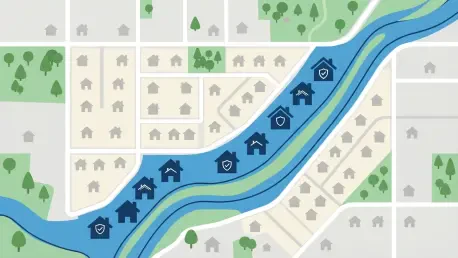

Data from South Australia shows that 52 percent of residents now flatly refuse to shoulder the financial burden of protecting properties built in known floodways. This sentiment marks a profound shift in the Australian social contract, where the traditional ethos of collective resilience is being tested by the scale of modern climate challenges. As insurance costs climb, the broader population is increasingly vocal about its unwillingness to cross-subsidize risks that are perceived as avoidable or poorly managed by developers and local councils. This growing friction suggests that the era of universal risk-pooling is under threat, as policyholders in safer regions demand a decoupling of their premiums from the vulnerabilities of high-risk estates. The tension reflects a realization that reactive disaster recovery is no longer financially sustainable for the average household, necessitating a transition toward more transparent and individualized risk assessments across the housing market.
Regional Trends: Insurance Sustainability
Regional Variations: Public Sentiment
Recent survey data reveals a stark geographic divide, with South Australia and Western Australia emerging as the most resistant to premium hikes. In Western Australia, 50.9 percent of respondents expressed a clear refusal to provide financial support for flood-prone properties, matching the strong opposition seen in the southern states. Even in Queensland, a region frequently battered by extreme weather events and flooding, 49 percent of the population voiced a rejection of subsidized insurance costs. This indicates that even those who live in states with high general exposure are beginning to question the fairness of current premium structures. The data suggests that the willingness to participate in a shared financial safety net is eroding fast, as the frequency of inundation events makes the cost of mutual aid prohibitively expensive. Consequently, the public sentiment is shifting from empathetic support to a demand for fiscal accountability and a localized approach to risk management.
In New South Wales and Victoria, residents display a slightly more lenient attitude, yet they still maintain high levels of opposition to subsidizing high-risk zones. In New South Wales, where major floods have recently reshaped the landscape, 42.5 percent of policyholders remain opposed to contributing extra funds to the national insurance pool. When factoring in those who are undecided, the nationwide figure for those refusing a financial safety net reaches a staggering 66 percent. This widespread reluctance across the eastern states highlights a significant boundary in the concept of national solidarity. The public is essentially signaling that the burden of bad urban planning should not fall on the shoulders of individual policyholders who chose lower-risk locations. This regional dissent underscores the need for a national conversation regarding the equity of insurance pricing and the long-term viability of risk-sharing models that do not account for individual property choices.
Redefining Risks: Social Contracts
For the minority willing to provide assistance to those in flood-prone areas, there is a clear consensus that any additional contribution should be strictly limited. Most participants suggested a cap of no more than $300 per year, illustrating that mateship has its limits when it translates into recurring, high-cost bills for private citizens. This financial threshold highlights a burgeoning demand for a more transactional and less communal approach to disaster management. The public views these costs not as a charitable contribution but as an unfair tax on their own financial security. As a result, the insurance industry is facing pressure to rethink how it communicates risk and value to its customers. Without a clear benefit or a cap on liability, the average Australian is unlikely to support the continued expansion of premium-sharing schemes. This shift toward fiscal pragmatism is forcing a re-evaluation of how the nation funds the recovery and rebuilding of communities.
This refusal to shoulder costs is driving a broader demand for the transition from reactive cleanup to proactive defense strategies. Australians are no longer satisfied with the status quo, where billions of dollars are spent on post-event compensation without addressing the underlying vulnerabilities of the built environment. There is a growing consensus that the government must move away from the traditional model of financial bailouts and toward a strategy that prevents damage before it occurs. This involves a fundamental shift in public policy, prioritizing the physical protection of assets through engineering and planning. By moving the focus from the checkbook to the drawing board, the nation can begin to tackle the root causes of the insurance crisis. The public sentiment suggests that they would rather see taxpayer funds and premiums invested in permanent mitigation than in temporary relief efforts. This preference for prevention marks a turning point in climate responsibility.
Strategic Reforms: National Resilience
Future Planning: Prioritizing Prevention
The national discourse is moving rapidly toward an aggressive stance on land-use regulation and development bans in hazardous areas. Australians are overwhelmingly calling for local and federal governments to implement strict prohibitions on new housing developments in areas identified as active floodways. This demand for structural reform stems from the recognition that over two million homes are currently exposed to significant flood risks, a legacy of historical planning failures. By stopping the expansion of the housing footprint in dangerous zones, the public believes the nation can finally begin to mitigate the spiraling costs associated with disaster recovery. This shift represents a transition from a build and repair mentality to one of prevent and protect, placing the onus on authorities to ensure future infrastructure is resilient. It also serves as a warning to developers that the market will no longer tolerate the creation of assets that are uninsurable.
In tandem with planning laws, there is a significant appetite for engineering solutions that address existing vulnerabilities. The public is identifying infrastructure enhancement, such as the construction of advanced levee systems and overhauled urban drainage, as a critical priority. Instead of bankrolling recurring cleanup efforts, which could eventually lead to an $855 billion economic disaster, there is a clear preference for pre-emptive physical defenses. This approach includes investing in resilient architectural innovations that allow homes to withstand water ingress with minimal damage. By focusing on these solutions, the country can move toward a more stable economic framework where physical risk is reduced rather than simply transferred. The consensus is that the cost of building defenses today is a fraction of the price of rebuilding entire communities tomorrow. Consequently, the push for mitigation is being framed as a smarter financial investment that protects both the taxpayer and the homeowner.
Economic Realities: The Path Forward
Industry leaders argue that this public pushback is a logical response to a broken insurance system that has failed to account for localized risk. From an industry perspective, the model relies on a diverse pool of participants to remain affordable, but the current trend of rising premiums in flood-prone areas is a signal that the underlying risk must be addressed. If a unified national response is not achieved, the market faces a crisis of uninsurability, where high-risk properties are left without private protection. This creates a precarious situation for the broader economy, as the lack of coverage could lead to a drop in property values and local investment. Experts suggest that to maintain market viability, the government must step in to treat flood preparedness as a non-partisan issue. By focusing on a long-term strategy that prioritizes the physical safety of assets, the state can help stabilize premiums and ensure that the costs of living in high-risk areas are transparent and manageable.
To address these systemic issues, economists proposed that the federal government conduct a comprehensive nationwide audit of all existing flood defenses. This initiative aimed to identify critical gaps where structures, such as the earthen walls seen in Mystic Park, could provide immediate and cost-effective protection for vulnerable townships. The transition toward a transparent housing market required that live-in costs, including insurance, were integrated into the initial purchasing decision rather than treated as an afterthought. By late 2026, the focus shifted toward government-led buybacks and managed retreats for the most hazardous areas, ensuring the financial burden did not fall solely on individual homeowners. These actions provided a blueprint for a sustainable national housing strategy that prioritized safety and economic stability. Ultimately, the coordinated effort between the private sector and the state established a new framework for resilience, which successfully reduced the long-term fiscal impact of disasters.