
The persistent financial and physical toll of musculoskeletal disorders has forced a massive recalculation in how North American industrial leaders safeguard their workforce from repetitive stress. For decades, the safety industry operated under a reactive model where improvements only occurred after a worker reported chronic pain or suffered a debilitating injury on the assembly line. However, the current landscape of 2026 reflects a fundamental shift toward predictive intervention, utilizing high-resolution cameras and advanced algorithms to identify ergonomic hazards before they result in medical claims. This transformation is driven by the realization that human observers, regardless of their expertise, cannot consistently monitor every movement across multiple shifts and locations with the precision required to prevent micro-traumas. By integrating artificial intelligence into the daily workflow, organizations are moving away from anecdotal safety reports toward a standardized, data-heavy framework that treats physical wellness as a measurable metric of operational efficiency.
Modern safety management now prioritizes the identification of “invisible” risks—those subtle deviations in posture or exertion that accumulate over thousands of repetitions. While a fall or a machinery accident is immediately obvious, an improperly angled wrist or a slightly strained lower back may take months to manifest as a clinical diagnosis. Computer vision technology bridges this gap by providing a continuous, objective eye on the factory floor, ensuring that the physical demands placed on employees align with their physiological capabilities. This shift represents more than just a technological upgrade; it is a cultural realignment that positions worker longevity as a core component of a company’s financial stability. As businesses navigate the complexities of a tight labor market, the ability to keep experienced personnel healthy and productive through technological foresight has become a primary competitive advantage.
Addressing the Epidemic of Musculoskeletal Disorders
The Hidden Costs: Beyond Medical Expenses
The true financial burden of musculoskeletal disorders (MSDs) extends far beyond the initial medical bills or workers’ compensation payments that typically appear on a company’s balance sheet. When a veteran employee is forced into early retirement or long-term disability due to a preventable shoulder injury, the organization loses decades of institutional knowledge that is nearly impossible to replace quickly. This loss manifests in decreased throughput, as less experienced replacements take longer to achieve the same level of proficiency, often creating bottlenecks in critical production phases. Furthermore, the administrative overhead involved in managing a complex insurance claim, coordinating with legal teams, and ensuring regulatory compliance consumes hundreds of hours that safety directors could otherwise spend on proactive improvement initiatives. The “ripple effect” of a single injury can destabilize an entire department, leading to increased stress among remaining staff who must absorb the additional workload, further increasing the risk of secondary injuries.
Beyond the immediate operational slowdowns, the long-term impact on employee morale and brand reputation can be devastating for companies that fail to address ergonomic risks systematically. Workers who perceive their environment as hazardous are significantly less engaged, leading to a culture of “quiet quitting” or high turnover rates that inflate recruitment costs. In the competitive industrial sectors of 2026, a reputation for prioritizing physical safety through advanced technology serves as a powerful tool for attracting top-tier talent. Conversely, high injury rates act as a red flag for potential hires and investors alike, signaling a lack of operational discipline and a disregard for human capital. By treating ergonomics as a strategic priority rather than a compliance checkbox, businesses can mitigate these indirect costs, fostering a more resilient and loyal workforce that views safety as a shared organizational value rather than a top-down mandate.
Scalability: Overcoming the Limits of Manual Observation
Traditional ergonomic assessments have historically been limited by their reliance on the physical presence of certified specialists, making them difficult to scale across large or geographically diverse organizations. A professional ergonomist might spend several hours observing a single workstation, taking manual measurements and notes that are inherently subjective and prone to human error. This labor-intensive approach meant that many high-risk areas were only evaluated once every few years, or worse, only after a significant injury occurred. In contrast, the current implementation of AI-driven computer vision allows for the simultaneous assessment of dozens of workstations across multiple facilities without requiring a specialist to be physically present at every site. This democratization of safety expertise ensures that even smaller satellite offices or secondary warehouses receive the same level of diagnostic scrutiny as the main headquarters.
The transition to digital observation also solves the problem of “the observer effect,” where employees temporarily change their behavior because they know they are being watched by a safety officer with a clipboard. Because computer vision systems can analyze standard security footage or brief, non-intrusive mobile recordings, they capture workers performing their tasks in a natural, unscripted manner. This provides a much more accurate picture of the real-world risks associated with a particular job function, allowing for interventions that address actual habits rather than performative safety measures. By removing the logistical and financial barriers to frequent assessments, companies can maintain a continuous feedback loop, identifying and correcting risky movements as soon as they emerge. This scalability is essential for maintaining safety standards in an era where supply chains are increasingly complex and the pace of industrial production continues to accelerate.
The Mechanics of AI-Driven Ergonomics
Diagnostic Precision: From Video to Biological Data
The core of modern ergonomic intervention lies in the ability to translate raw video footage into a sophisticated map of human kinetic energy and skeletal stress. When a supervisor captures a brief segment of a worker performing a repetitive task, the AI system immediately identifies key anatomical landmarks—such as the spine, shoulders, elbows, and knees—and tracks their movement through three-dimensional space. By applying the laws of physics and biology to this data, the software calculates the exact torque and force being exerted on specific joints during every phase of the motion. This level of granular analysis allows safety teams to pinpoint the exact millisecond a movement becomes hazardous, such as the precise moment a lift exceeds the safe rotational limit of the lower back. This data-driven approach removes the guesswork from safety management, providing an objective baseline that remains consistent regardless of who is performing the analysis.
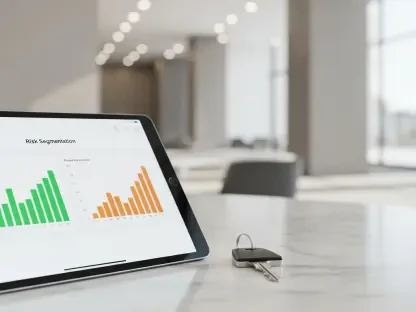
Furthermore, the software generates a comprehensive “risk score” that quantifies the danger level of a specific task on a standardized scale, allowing for direct comparisons between different departments or even different regional facilities. This quantitative output is invaluable for prioritizing capital investments, as it allows leadership to direct funds toward the most dangerous tasks first based on empirical evidence rather than subjective complaints. The integration of this biological data into a centralized safety dashboard enables a macro-level view of organizational health, highlighting trends that might otherwise go unnoticed. For instance, the system might reveal that a specific task becomes significantly more dangerous during the final hour of a shift, suggesting that fatigue is a primary risk factor. This allows for highly targeted interventions, such as adjusting shift lengths or introducing mandatory stretching intervals, that are backed by hard data rather than general assumptions.
Visual Communication: The Power of the Digital Avatar
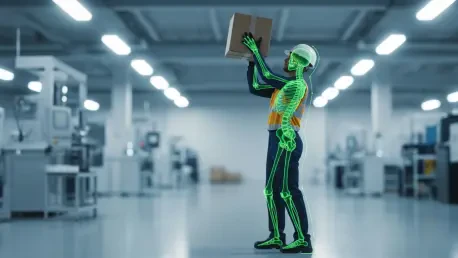
One of the most effective features of current computer vision technology is the use of color-coded digital avatars to communicate risk to non-experts. While a spreadsheet full of kinetic data might be meaningful to a specialized engineer, it often fails to resonate with a floor supervisor or an executive focused on the bottom line. By superimposing a “stoplight” system—green for safe, yellow for moderate, and red for high risk—directly over a video of the worker, the technology makes abstract ergonomic concepts immediately tangible. When an executive sees an avatar’s lower back turn bright red during a routine pallet-loading task, the need for a mechanical lift becomes an undeniable reality. This visual evidence collapses the communication gap that often exists between safety departments and financial decision-makers, speeding up the approval process for necessary equipment upgrades or process redesigns.
This visual feedback is equally powerful when used as a coaching tool for the workers themselves, providing them with a clear “before and after” view of their own physical performance. Many employees are unaware that their personal lifting technique is hazardous until they see it analyzed through the lens of a digital avatar. Showing a worker that a slight change in their stance keeps their avatar “in the green” provides an immediate, positive reinforcement that is far more effective than a generic safety lecture. This creates a collaborative environment where workers and supervisors work together to optimize movements, using the AI as an objective referee. The transparency provided by these visual tools helps to demystify ergonomic safety, turning it into a tangible skill that workers can master and take pride in, rather than a set of restrictive rules imposed by management.
Merging High-Tech Diagnostics with Human Expertise
The Hybrid Model: Empowering Specialists with Data
While the analytical power of artificial intelligence is immense, it remains a diagnostic instrument that requires human intelligence to implement effective solutions. The most successful safety programs in 2026 utilize a hybrid model where AI identifies the “where” and “why” of a risk, while professional ergonomists and safety engineers determine the “how” of the fix. Once the computer vision system identifies a high-risk task, a specialist can use that specific data to design a tailored intervention, such as reconfiguring a conveyor belt height or introducing a specialized pneumatic tool. This synergy ensures that technology is not used in a vacuum but is integrated into a broader strategy of engineering controls and process optimization. The AI acts as a force multiplier for the ergonomist, allowing them to focus their highly specialized skills on solving complex problems rather than spending their days conducting basic, repetitive observations.
This tiered approach to safety allows organizations to allocate their human resources more efficiently by matching the complexity of the risk to the level of expertise required. For low-to-moderate risks identified by the software, internal safety coordinators can use standardized “self-service” modules to implement basic improvements. However, for highly complex industrial environments where a single movement might involve multiple interacting hazards, professional ergonomists are deployed to conduct deep-dive assessments informed by the AI’s preliminary data. This ensures that expert intervention is applied exactly where it is needed most, maximizing the impact of the safety budget. By combining the speed and consistency of machine learning with the nuanced problem-solving capabilities of human experts, companies can create a safety infrastructure that is both incredibly precise and deeply practical.
Case Studies: Measuring the Return on Investment
Evidence from the manufacturing and logistics sectors has demonstrated that the financial returns on AI-driven ergonomic interventions are both rapid and sustainable. In one notable implementation at a large-scale distribution center, the safety team used computer vision to analyze a high-volume sorting area where workers were frequently reporting wrist and shoulder strain. The AI revealed that the height of the intake bins was forcing workers into a “red zone” extension over 400 times per shift. By replacing the static bins with height-adjustable platforms, the facility saw an immediate 60% reduction in reported discomfort and a 15% increase in sorting speed, as workers were no longer battling physical fatigue. The total cost of the equipment was recovered within six months through reduced insurance premiums and the elimination of temporary labor costs needed to cover injured employees.
These results highlight a critical point: ergonomic improvements are often synonymous with operational improvements. A task that is physically punishing for a human body is almost always an inefficient task from a mechanical perspective. When movements are optimized to stay within the body’s natural range of motion, they are naturally faster and more accurate, leading to higher quality control and fewer errors on the production line. Companies that have embraced this technology have reported that their safety initiatives have become a primary driver of overall plant productivity. This shift in perspective transforms the safety department from a “cost center” into a “value creator,” as the data generated by ergonomic assessments provides a roadmap for lean manufacturing and continuous improvement. The success of these case studies has made AI-driven ergonomics a standard requirement for any organization looking to maintain a high-performance industrial environment.
Cultivating a Sustainable Safety Culture
Overcoming Behavioral Drift Through Technology
A significant challenge in workplace safety is the phenomenon of behavioral drift, where employees gradually revert to old, risky habits once a specific training session or safety audit has concluded. Human beings are naturally inclined to find the path of least resistance, which often leads to “cutting corners” in posture or technique to save a few seconds of time. Traditional safety programs often struggle to combat this because they lack a way to provide consistent, ongoing feedback outside of sporadic inspections. By utilizing computer vision for periodic “safety check-ins,” managers can identify when these risky behaviors begin to creep back into the daily routine. This allows for “micro-coaching” moments—short, targeted reminders that address a specific behavior in real-time—which are much more effective at changing long-term habits than a massive, once-a-year training seminar.
To ensure these changes are permanent, organizations are increasingly looking toward the principles of behavioral economics, creating systems of incentives and rewards that reinforce the data-driven safety goals. When workers can see their own ergonomic progress reflected in a digital dashboard, it turns safety into a measurable achievement similar to production quotas or quality targets. Some companies have successfully implemented “gamification” strategies, where teams compete to maintain the highest percentage of “green-zone” movements over a month, with the winners receiving tangible rewards. This approach shifts the perception of safety from a restrictive burden to a positive, collaborative goal. By combining high-tech monitoring with a human-centric incentive structure, businesses can create a self-sustaining culture where safe behavior is the natural and rewarded choice for every employee on the floor.
Actionable Strategies for Future Safety Integration
The successful integration of AI and computer vision into the workplace requires a deliberate, phased approach that prioritizes transparency and employee buy-in. Organizations should begin by conducting a comprehensive audit of their existing safety data to identify the departments with the highest rates of musculoskeletal claims, as these areas will provide the most immediate evidence of the technology’s value. Once a pilot area is selected, leadership must clearly communicate the purpose of the technology to the workforce, emphasizing that the cameras are tools for injury prevention and ergonomic coaching rather than instruments of surveillance or discipline. This trust is foundational; without it, workers may feel intimidated by the technology, leading to resistance that can undermine the entire safety initiative. Providing employees with access to their own data can further demystify the process and encourage them to take an active role in their own physical well-being.
As the program expands, the focus should shift toward integrating ergonomic data into the broader operational decision-making process. This means involving procurement teams to ensure that new machinery meets the ergonomic standards identified by the AI and training middle management to interpret the “stoplight” visualizations as part of their daily floor walks. Furthermore, companies should establish a clear protocol for how AI-generated insights lead to engineering changes, ensuring that a “red-zone” movement is met with a prompt and effective physical intervention. By treating the data as a catalyst for continuous improvement rather than a static report, businesses can ensure their safety protocols remain as dynamic as the technology itself. The ultimate goal is to create a seamless loop where data informs design, design improves safety, and safety drives long-term organizational success.