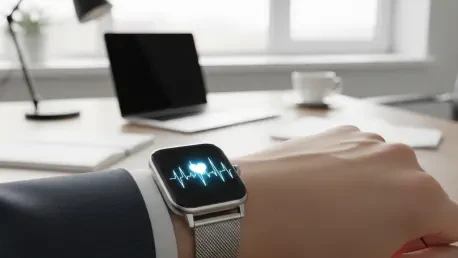

The gentle haptic vibration of a smartwatch on the wrist serves as a constant tether to one’s physiological state, often blurring the line between helpful health monitoring and obsessive digital checking. While the proliferation of sophisticated sensors in consumer electronics was intended to democratize healthcare and empower individuals, it has simultaneously introduced a unique form of psychological distress. Users who once relied on their own physical sensations to gauge their well-being now find themselves deferring to an algorithm that measures blood oxygen, heart rate variability, and sleep architecture with clinical precision. This shift toward externalizing health assessments often results in a state of hypervigilance, where the brain becomes overly sensitized to minor fluctuations that were previously ignored. Instead of feeling empowered by the data, many individuals report a growing sense of vulnerability, as if their health is a fragile metric that could fail at any moment. The constant stream of notifications acts as a double-edged sword, providing useful information while also fostering a environment of perpetual scrutiny and unease.
The Mechanics of Internal Awareness and Monitoring
Understanding the rise of wearable-induced anxiety requires an exploration of how the human brain functions as a sophisticated prediction machine that anticipates internal and external states. Rather than simply reacting to sensory input in a vacuum, the brain continuously maintains and updates a model of what it expects the body to feel at any given moment. This predictive processing is essential for survival, allowing the nervous system to filter out background noise and focus on significant changes that require immediate attention. However, the introduction of high-frequency digital data from a smartwatch can disrupt this delicate balance by providing information that the brain cannot easily integrate into its existing model. When a device displays a sudden heart rate spike that does not match the user’s current level of activity, it creates a prediction error. This error triggers a heightened state of awareness, forcing the individual to search for a reason behind the discrepancy, which frequently leads to the assumption that something is physically wrong.
Part 1: Neural Prediction and Biological Signals
This predictive mechanism is particularly sensitive to biological signals, often generating an immediate emotional response when reality deviates from the expected norm. If the brain expects a resting heart rate of sixty beats per minute but the watch reports eighty, the resulting prediction error is not just a statistical anomaly; it is experienced as a potential threat. Because the brain prioritizes survival, it often interprets these discrepancies through a negative lens, assuming that a physical malfunction is occurring. This creates a feedback loop where the anxiety caused by the notification actually increases the heart rate further, seemingly confirming the device’s initial abnormal reading. In this way, the smartwatch does not just monitor health; it actively participates in the physiological state it is supposed to be objectively measuring. The psychological weight of this data can transform a benign physiological variation into a full-blown stress response that feels indistinguishable from a genuine medical crisis.
Part 2: Interoception and Digital Verification
The internal monitoring process known as interoception is the sense of the body’s physiological condition, and it typically operates quietly below the level of conscious thought. When a wearable device provides a specific numerical value suggesting an abnormality, it creates a direct conflict between the user’s subjective physical feelings and the device’s objective digital output. Modern society places an immense amount of trust in the perceived infallibility of data, leading many to instinctively prioritize the screen’s readings over their own internal signals. This prioritization causes users to ignore the fact that they feel perfectly fine, choosing instead to focus on a potential medical issue signaled by the watch. The resulting disconnect can lead to a cycle of alarm where the person becomes obsessed with correcting the metric, rather than listening to the body’s natural feedback. Over time, this reliance on external validation can erode the ability to interpret signals, leaving the user dependent on a gadget for assurance.
Psychological Fallout and Strategies for Balance
The widening gap between digital feedback and physical reality has the potential to quickly dismantle a person’s confidence in their own health and resilience. For instance, an individual might be enjoying a brisk walk or a moment of relaxation until a glance at their watch reveals a high heart rate reading, which immediately triggers a surge of worry and physiological stress symptoms. This cognitive dissonance illustrates how easily external data points can override internal sensations, transforming a healthy and pleasant moment into a source of acute anxiety simply because a device suggests a metric is outside an arbitrary range. The psychological impact is profound because the device acts as a constant narrator of the body’s status, often framing normal physiological variations as causes for concern. This constant framing encourages a mindset where health is not seen as a holistic state of being, but rather as a series of numbers that must be managed and optimized daily, leading to significant mental fatigue.
Part 1: When Digital Data Conflicts with Reality
For individuals who already possess a predisposition toward health anxiety, wearable technology can inadvertently become a tool for safety-seeking behaviors that increase long-term stress. This phenomenon creates a feedback loop of hypervigilance: the more frequently a person checks their metrics to seek reassurance, the more likely they are to notice tiny, benign fluctuations that the brain would typically filter out. This intense focus amplifies minor signals, resulting in a compulsive need for constant monitoring and a significant sense of frustration or even panic when the device is unavailable or provides an unexpected result. The search for security through data often backfires, as the sheer volume of information provides more opportunities for misinterpretation and worry. Instead of providing peace of mind, the watch becomes a source of cyberchondria, where every notification is scrutinized for hidden medical meaning, further entrenching the user’s anxiety levels and making it difficult to maintain a calm perspective.
Part 2: Actionable Steps for Digital Wellness
To effectively navigate the complexities of digital health monitoring, individuals were encouraged to adopt a more balanced and critical approach to the information provided by their wearable devices. One successful strategy involved the implementation of behavioral experiments, such as removing the watch during weekends or disabling specific notifications that triggered the most anxiety. These actions allowed users to reconnect with their internal interoceptive signals and reclaim a sense of bodily autonomy that was previously overshadowed by digital metrics. Rather than treating every notification as an emergency, users began to view the data as supplementary information that required context and personal interpretation. Health professionals also recommended setting specific times for checking data, rather than reacting to every haptic alert, to break the cycle of hypervigilance. The objective was to ensure that the user remained the ultimate authority over their own well-being by trusting intuition alongside digital insights.