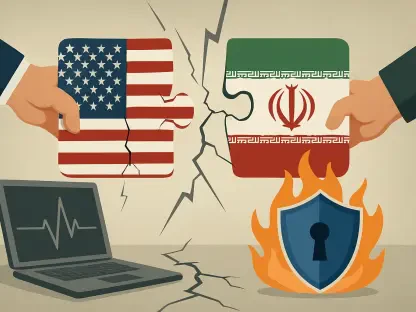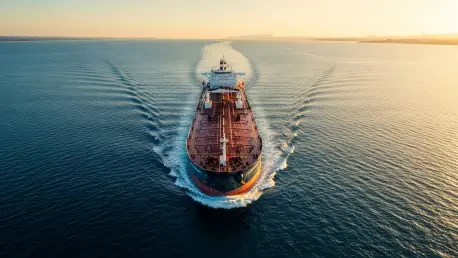

The stability of the global energy landscape currently hinges on a high-stakes financial gamble designed to keep the world’s most dangerous maritime corridor open for business. As geopolitical friction in the Middle East reaches a boiling point, the US International Development Finance Corporation (DFC) has officially selected Chubb, a titan in the global insurance sector, to lead a groundbreaking reinsurance program. This initiative is not merely a bureaucratic adjustment; it is a strategic massive-scale intervention aimed at providing a $20 billion financial safety net for vessels traversing the Strait of Hormuz. By underwriting the “war risk” that has recently terrified private markets, this public-private partnership seeks to ensure that the vital flow of crude oil remains uninterrupted, even as physical threats to shipping continue to escalate.
Orchestrating Maritime Stability in the Strait of Hormuz
The current state of global commerce is being tested by a volatile mix of drone technology and regional animosity. To counter the paralysis affecting shipping lanes, the DFC and Chubb have constructed a framework that allows for $20 billion in coverage on a rolling basis. This facility is designed to provide coverage where the traditional private market has retreated, offering shipowners the necessary guarantees to continue operations. By absorbing the extreme liabilities associated with potential conflict, the program attempts to decouple the financial survival of shipping companies from the physical volatility of the region.
Historical Context: The Escalation of Maritime Risk
Understanding the gravity of this intervention requires a look at how the Strait of Hormuz has transformed from a predictable chokepoint into a high-intensity combat zone. Historically, this narrow passage has carried approximately 20 million barrels of oil daily, serving as the primary artery for the global economy. However, the nature of risk shifted dramatically earlier this year when projectiles began striking commercial vessels off the Iranian coast with alarming frequency. These incidents forced insurers to hike premiums to unsustainable levels, effectively creating a blockade by making the route commercially unviable for standard operators.
The Dynamics of the Public-Private Reinsurance Framework
Assessing the Economic Impact: $20 Billion in Coverage
The sheer scale of the $20 billion backstop is intended to act as a psychological and financial firewall. Chubb, serving as the lead underwriter, manages the issuance of policies that cover hull damage, cargo loss, and environmental liabilities resulting from hostile acts. For the energy sector, this means that the sudden loss of a tanker no longer translates into a terminal balance-sheet catastrophe. While the data suggests this coverage can stabilize corporate operations, the burden remains on Chubb to accurately price risk in an environment where a single drone strike can alter the market overnight.
Bridging the Gap: Financial Protection and Physical Safety
Despite the massive financial injections provided by the DFC, a significant divide remains between fiscal security and human safety. Insurance can replace a vessel or a cargo of refined petroleum, but it provides no shield against the physical danger faced by the crews on deck. Maritime unions have expressed persistent concern that financial incentives might encourage operators to take risks that lead to loss of life. Consequently, the effectiveness of the Chubb-led program is inherently tied to the perceived level of physical threat; if the security environment deteriorates further, even the most robust policy may fail to convince crews to enter the Gulf.
Regional Complexities: The Global Energy Bottleneck
The implications of this bottleneck extend far beyond the Persian Gulf, directly influencing global inflation and energy policy. With Brent crude prices hovering above $91 a barrel, the international community is desperate for tools that can prevent a full-scale energy crisis. This initiative represents a move toward “economic statecraft,” where financial instruments are used to achieve what traditional diplomacy has struggled to secure. However, there is a risk that regional actors may view a US-backed insurance scheme as a political provocation rather than a neutral commercial safeguard, potentially complicating the very security situation it seeks to mitigate.
Future Trends: Geopolitical Risk Mitigation
The collaboration between the DFC and Chubb is likely to set a precedent for how global powers manage trade in contested waters. We are moving toward an era where “specialized financial architecture” becomes a standard tool for protecting supply chains from non-traditional warfare. As autonomous weapons and cyber-attacks on maritime infrastructure become more common, governments will increasingly rely on private insurers to act as front-line risk assessors. This shift suggests that the future of global trade resilience will depend as much on underwriting expertise as it does on naval presence.
Strategic Takeaways: Maritime and Energy Sectors
For businesses navigating these turbulent times, the partnership highlights the necessity of integrated risk management. Companies must realize that the open market can no longer be relied upon to provide coverage during high-intensity regional conflicts. Moving forward, the most successful maritime operators will be those that align themselves with government-backed insurance frameworks while simultaneously investing in enhanced physical security measures. Treating geopolitical instability as a permanent variable rather than a temporary anomaly is now a fundamental requirement for any entity involved in the energy supply chain.
The Enduring Importance of Resilient Trade Infrastructure
The initiative successfully demonstrated that the integration of state-level financial backing with private-sector underwriting expertise was the only viable path to maintaining energy flow during the recent crisis. By addressing the prohibitive cost of war-risk premiums, the program allowed the global economy to bypass a total maritime shutdown. Stakeholders took the necessary steps to prioritize the creation of long-term, scalable financial tools that could be deployed in other contested regions. Ultimately, the focus shifted toward establishing a permanent global maritime risk facility, ensuring that the lessons learned in the Strait of Hormuz would safeguard future international trade against the unpredictable nature of regional hostilities.