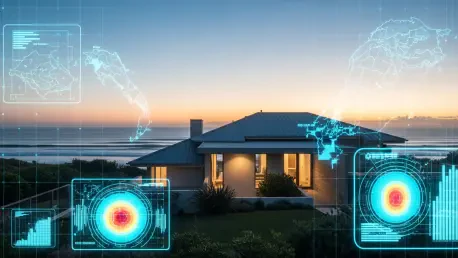

The escalating frequency of extreme weather events across the United States has pushed the traditional property insurance model to a breaking point, forcing many major carriers to retreat from high-risk zones or implement unsustainable premium hikes. For decades, insurers relied on historical loss tables and actuarial data that assumed the future would largely mirror the past, but the rapid shifts in climate patterns have rendered these legacy methodologies obsolete. Consequently, property owners in regions prone to wildfires, hurricanes, and floods face a dwindling pool of coverage options and skyrocketing costs that threaten local real estate markets. However, the integration of advanced artificial intelligence is beginning to reverse this trend by providing a level of precision that was previously unattainable. By leveraging machine learning algorithms to ingest vast quantities of atmospheric data and geographic information, insurers are moving away from broad regional assessments and toward highly specific risk profiles that reflect the actual vulnerabilities of a structure.
Precision Underwriting Through Machine Learning
Transitioning from reactive to proactive risk assessment requires a fundamental change in how data is collected and processed at the point of underwriting. Modern artificial intelligence platforms now utilize high-resolution satellite and aerial imagery to analyze physical property characteristics with extreme accuracy, identifying critical features such as roof material integrity, proximity to overhanging vegetation, and the presence of defensible space in wildfire zones. Unlike manual inspections, which are costly and infrequent, these AI-driven systems can monitor thousands of properties simultaneously, providing insurers with a real-time view of their risk exposure. This granular visibility allows for more equitable pricing, as homeowners who invest in resilient materials or proactive maintenance are no longer penalized by the general risk level of their zip code. Furthermore, computer vision models can detect early signs of structural degradation or environmental hazards that might escape the human eye, enabling underwriters to offer tailored coverage that accurately reflects the unique risk profile of every building.
Long-Term Market Sustainability and Loss Prevention
Building on these technical capabilities, the ultimate goal of implementing artificial intelligence in the insurance sector was to create a stabilized market where coverage remained available and affordable even in volatile regions. The transition involved moving beyond simple risk detection toward an integrated ecosystem of loss prevention, where AI-powered sensors and predictive alerts notified property owners of impending threats in time to take action. For instance, smart water leak detection systems and localized fire risk monitoring provided a secondary layer of protection that significantly reduced the severity of claims. By the time these technologies became industry standards, the reliance on broad exclusions and mass market exits began to subside. Insurers found that they could maintain profitability while offering lower premiums to those who adopted AI-validated mitigation strategies. This shift fostered a collaborative environment between carriers and policyholders, where data transparency replaced the opacity of traditional actuarial black boxes. The focus shifted toward long-term resilience, ensuring that the property insurance industry functioned as a stable foundation for economic growth rather than a source of financial uncertainty for homeowners.