
Simon Glairy stands as a preeminent figure in the complex world of marine and political risk insurance, bringing decades of experience to the table when navigating the volatile intersections of global trade and regional conflict. With the Persian Gulf currently serving as a focal point for unprecedented geopolitical friction, Glairy’s insights offer a crucial roadmap for understanding how physical threats and financial structures are evolving in tandem. Our discussion covers a broad spectrum of critical developments, ranging from the recent drone incursions against civilian nuclear infrastructure and the emergence of state-backed cryptocurrency insurance platforms to the staggering rise in hull premiums that threaten the very viability of international shipping routes. We also delve into the intricate legal challenges facing policyholders as they grapple with the distinction between acts of terrorism and undeclared warfare in a landscape where traditional coverage boundaries are being aggressively tested.
A drone strike recently hit an electrical generator at the Barakah Nuclear Power Plant’s outer perimeter. How does this incident shift the risk profile for regional energy infrastructure, and what specific security protocols or policy adjustments should operators implement now to mitigate the threat of systemic or radiological fallout?
The strike on the Barakah facility marks a chilling escalation because it moves the theater of conflict from the open sea directly onto the doorstep of high-stakes civilian infrastructure. While the International Atomic Energy Agency confirmed there was no radiological impact, the fact that a drone penetrated the outer perimeter to strike an electrical generator sends a clear message about the vulnerability of even the most sophisticated sites. For operators, this means the risk profile is no longer just about “incidental damage” but about targeted disruption of critical systems; the activation of emergency diesel generators at Barakah is a vivid reminder of how quickly a primary power source can be compromised. We are advising clients to move beyond standard physical security and look at “Political Violence and Terrorism” coverage, which is currently being quoted at up to 10% return on line due to this heightened sensitivity. Operators must now implement rigorous drone-interdiction protocols and ensure their policy wording specifically covers secondary systemic failures that could lead to a meltdown, even if the initial strike only hits an ancillary component like a transformer or a cooling pump.
The “Hormuz Safe” platform now offers maritime insurance for vessels transiting the strait, with premiums payable in cryptocurrency. How do you evaluate the legal exposure for brokers regarding US Treasury sanctions, and what due diligence steps are required to navigate the conflict between this and US-backed insurance facilities?
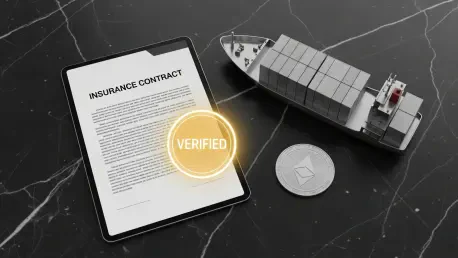
The launch of “Hormuz Safe” is a provocative strategic move by Tehran, designed to bypass the Western financial blockade by using a $10 billion digital insurance gambit. For any broker or shipowner, engaging with a platform that settles premiums in cryptocurrency to avoid traditional payment rails is like walking through a legal minefield, especially with the US Treasury’s Office of Foreign Assets Control (OFAC) watching every block on the chain. We are seeing a direct confrontation between this Iranian scheme and the $40 billion US-backed political risk reinsurance facility led by Chubb and other American giants like Travelers and AIG. Due diligence now requires more than just checking a list; it involves a forensic audit of the entire payment flow to ensure no digital tokens identified by regulators are being utilized. If a broker is found to be facilitating transactions that touch this Iranian framework, they risk total exclusion from the US financial system, which is a death sentence in this industry, regardless of the lure of the “Hormuz Safe” coverage.
War-risk premiums for Gulf transits have surged from 0.15% to as high as 10% of hull value. At what threshold do these costs render maritime trade economically unfeasible, and what specific financial hedging strategies or alternative logistics routes are companies adopting to keep their supply chains operational?
We have reached a point where the arithmetic of a voyage simply no longer adds up for many operators, as a $100 million vessel can now face a $10 million insurance bill for a single transit. When premiums hit that 10% threshold, the insurance cost often exceeds the projected profit margin of the cargo, effectively turning the Strait of Hormuz into a “no-go” zone for all but the most essential or state-subsidized shipments. This economic paralysis is reflected in the data, with shipping volumes collapsing by approximately 95% as the daily transit count has essentially evaporated. To survive, companies are desperately seeking alternative logistics, such as overland trucking routes through neighboring territories or pivoting to different suppliers entirely, though these are often more expensive and less efficient than the maritime “highway.” On the financial side, we see a shift toward voyage-by-voyage placement rather than annual policies, allowing for a more granular, albeit painful, assessment of risk that allows some trade to trickle through despite the astronomical costs.
Without a formal declaration of war, insurers often dispute whether war exclusions apply to various “defensive” military strikes. How should policyholders audit their current policy wording to prevent prolonged claims battles, and what metrics or evidence are most critical when distinguishing between acts of terrorism and acts of war?
The current conflict is a masterclass in legal ambiguity, as the United States has characterized its actions as “defensive operations” rather than a formal declaration of war, which creates a massive gray area for claims adjusters. Policyholders must audit their wording immediately to see if their “War, Strikes, Riots, and Civil Commotion” clauses are triggered by the nature of the act or the identity of the actor; for instance, the UAE’s refusal to formally attribute the Barakah strike to a state actor allows it to be classified as “terrorism,” which has different coverage implications than an act of war. The most critical evidence in these disputes is often the official government characterization of the event and the specific intent of the strike, which is why we tell clients to document everything from the drone’s flight path to the specific targets hit. Without a clear distinction, we are looking at years of litigation where the definition of a “defensive strike” versus an “aggressive act” will be debated in the London and New York courts while payouts remain frozen.
Shipping volumes through the Strait of Hormuz have recently fallen by approximately 95% due to heightened hostilities. What are the long-term implications for global commodity pricing, and how can stakeholders determine if these disruptions represent a temporary bottleneck or a permanent realignment of international trade routes?
A 95% drop in volume through the world’s most consequential chokepoint is not just a temporary hiccup; it is a systemic shock that is already forcing a permanent realignment of global energy and commodity flows. When the flow of oil and gas is choked off so drastically, the long-term implication is a structural increase in the “security premium” of every barrel, as buyers realize they cannot rely on the Persian Gulf as a stable source. Stakeholders can determine the permanence of this shift by watching the investment in “workaround” infrastructure, such as new pipelines or expanded port facilities in the Red Sea or Oman, which signal a lack of confidence in a return to the status quo. If these hostilities continue to prevent the return of the 88% of marine war market participants who still have an “appetite” to underwrite but cannot find ships willing to sail, we will see a world where trade routes are dictated more by regional security alliances than by the shortest distance between two ports.
What is your forecast for the maritime insurance market in the Persian Gulf?
My forecast is that we are entering an era of “segmented risk,” where the Persian Gulf will no longer be covered under standard global marine policies but will instead require a specialized, high-cost niche product that functions more like a political tool than a commercial one. We will see a deepening divide between the US-backed $40 billion reinsurance facility, which will support vessels aligned with Western interests, and shadow markets like “Hormuz Safe” that cater to those willing to operate outside the traditional financial system. Premiums will likely stabilize at a “new normal” that is significantly higher than the pre-conflict 0.15% rate, perhaps hovering around 2-3% for standard transits while spiking to 10% during active escalations. Ultimately, the market will remain functional because the Lloyd’s Market Association and others still have the appetite to underwrite, but the days of low-cost, high-volume shipping through the Strait are over for the foreseeable future, replaced by a landscape where insurance is the primary gatekeeper of global trade.