
Digitized intake processes allow dispatchers to convert phone calls into actionable job cards faster, providing a critical competitive edge in the high-stakes service industry. This efficiency is merely the baseline in an era where the American home has fundamentally shifted from being a static physical asset into a complex, data-producing entity. Homeowners currently navigate a landscape saturated with smart thermostats, leak sensors, and video doorbells, yet the infrastructure required to synthesize this information remains remarkably fragmented. This disconnection creates a profound “post-close vacuum” that leaves homeowners, tradespeople, and financial institutions struggling to interpret the pulse of the property. While the adoption of smart technology has reached a tipping point, the operational connectivity needed to manage these systems effectively has lagged behind, resulting in a suite of high-tech tools that often fail to communicate during a critical maintenance crisis or major appliance failure.
The Escalation of Residential Smart Infrastructure
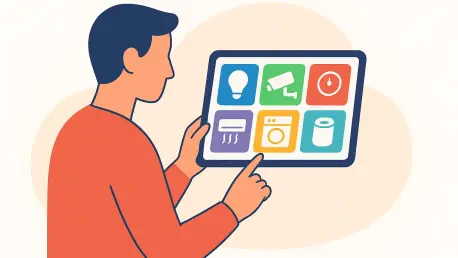
The frustration of the modern resident often stems from a common scenario: a homeowner manages a thermostat, a security camera, and a leak sensor, yet each device resides in a different application. Despite this technological density, these tools operate in silos with zero meaningful communication between them, rendering a “smart” home effectively “dumb” when an actual emergency occurs. If a water heater fails, the existing sensors rarely facilitate an immediate service connection, and the professional arriving on-site often lacks access to the historical data of the building’s physical state. This gap illustrates that while technology has crossed the threshold of mass adoption, the practical utility of that data remains untapped. The current challenge lies not in the availability of hardware but in the creation of a cohesive ecosystem where data flows between devices and the professionals responsible for maintaining the integrity of the property’s infrastructure.
Current market data indicates a significant surge in smart home integration, with approximately 65% of households now utilizing at least one connected device. Projections suggest that by the end of 2028, nearly 77 million American homes will be integrated with advanced smart technology, signaling a permanent shift in consumer expectations. Despite these staggering numbers, the residential service industry has struggled to build the “connective tissue” required to process this information. A property should no longer be viewed as a one-time financial transaction that vanishes from a professional’s radar once the deed is recorded; instead, it is a continuous source of operational data. The organizations that successfully capture and manage this flow of information are the ones positioned to maintain long-term relationships with customers. Transitioning from a transactional model to a data-driven service partnership is essential for any stakeholder looking to thrive in this environment.
Transforming Service Records into a Medical Chart
For data to move beyond simple invoices and become truly “connected,” service operators must adopt the habit of structured record capture. This involves moving past basic documentation to include high-resolution technical photos, specific equipment part numbers, and precise meter readings during every site visit. When professionals treat property history like a patient’s medical record, they create a comprehensive “chart” of the home’s health that evolves over time. This methodology ensures that each subsequent service visit builds upon previous data, allowing for more accurate diagnostics and proactive maintenance schedules. Field service providers who utilize advanced platforms to centralize these records find that they can offer a level of transparency and expertise that traditional contractors cannot match. By treating the home as a living entity with a documented history, tradespeople transform their role from reactive repair workers into long-term stewards of the property’s longevity.
Operational integration serves as the engine that drives the value of connected data across the entire housing lifecycle. Data captured at the property level must flow effortlessly into adjacent systems, including insurance documentation portals and homeowner-facing management applications. Patterns in the field suggest that contractors who integrate their service data with these secondary tools experience compounding business gains and higher customer retention rates. Conversely, those who maintain siloed data often see their growth plateau because they cannot demonstrate the broader value of their insights. The ability to share maintenance logs or equipment lifecycles with insurance carriers or prospective buyers adds a layer of “ambient value” to the property itself. As the industry moves toward a unified view of residential assets, the integration of field service data becomes a critical differentiator for businesses aiming to provide a superior, modern customer experience.
The Evolution of Professional Property Stewardship
The shift toward connected home management required a fundamental reimagining of the relationship between homeowners and service professionals. Stakeholders who prioritized the creation of a digital “connective tissue” successfully bridged the gap between raw data and actionable maintenance strategies. By adopting structured documentation practices, these operators transformed disparate sensor alerts into a comprehensive medical chart for the home, which ultimately enhanced the long-term value of the physical asset. Lenders and insurance carriers who embraced this flow of information were able to assess risk with accuracy, moving away from static annual evaluations toward a more dynamic understanding of property health. This transition demonstrated that the most valuable referral relationships in the real estate ecosystem belonged to those who maintained a verifiable digital history. The integration of technology and service finally ensured that the modern home functioned as a proactive partner.
As the industry matured, the focus shifted toward ethical data ownership and the continuous refinement of privacy protocols to maintain consumer trust. Service providers who viewed documentation as a defensive and value-added tool thrived, while those who ignored the digital evolution struggled to maintain relevance in a competitive market. The success of the connected data model rested on the ability to provide “ambient value,” where homeowners felt a sense of security driven by the knowledge that their property was being monitored by professionals. The industry learned that the true future of home management was not found in the devices themselves, but in the intelligent synthesis of the data they produced. By connecting maintenance logs and sensor history into a single stream, the professional community established a new standard for homeownership. This evolution allowed the market to move beyond the post-close vacuum and into a state of continuous, data-driven partnership.