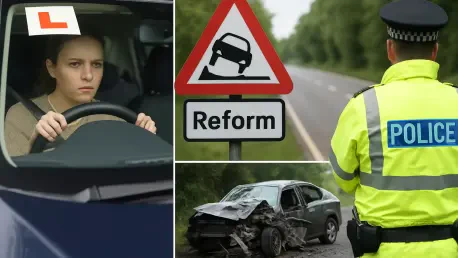

With a road-death rate significantly higher than the rest of the UK, Northern Ireland’s new driver licensing reforms are more than just policy—they’re a critical intervention with major implications for road safety and the insurance industry. To unpack what these changes mean for risk, underwriting, and the future of motor insurance, we sat down with Simon Glairy, a leading expert in Insurtech and risk management. We explored the deep-seated reasons behind Northern Ireland’s distinct risk profile, how insurers will measure the real-world impact of these new laws, the practical challenges of turning policy into safer streets, and the operational hurdles for insurers managing portfolios across the UK.
Given that Northern Ireland’s road-death rate is significantly higher than Great Britain’s, what underlying factors do you believe contribute to this risk gap? Please elaborate on how the new licensing reforms might interact with these specific challenges.
That gap is the single most important piece of context here. When you see a statistic as stark as 36 road deaths per million people in Northern Ireland versus 24 in Great Britain, it forces you to look beyond simple compliance and ask more fundamental questions. While the data doesn’t explicitly name the causes, in my experience, such a persistent divergence often points to a complex mix of factors like a higher proportion of rural roads, different driving cultures, and perhaps historical enforcement patterns. What’s critical is that these new reforms, particularly the graduated licensing for young drivers, don’t just tweak the rules; they aim to reshape behavior from the very first moment a person gets behind the wheel. By extending learning periods and placing tighter standards on novice drivers, the policy directly targets the foundational skills and decision-making habits that are crucial for navigating those unique local risks over a lifetime.
The new standards are expected to create greater confidence in underwriting. Could you detail the specific metrics insurers will use to track the impact of these reforms on young driver behavior and what changes they anticipate in claims frequency or severity over the next five years?
The idea of “greater confidence in underwriting,” as Carol Hopwood from Carpenters Group rightly put it, is about predictability. Right now, that elevated risk in Northern Ireland creates a degree of uncertainty that gets priced in. To track the impact, we’ll be watching several key metrics with incredible focus. First and foremost will be the frequency of claims among newly licensed drivers under 25. We’ll segment this data month by month to see if the reforms create an immediate drop-off. We’ll also scrutinize claims severity—are the accidents these new drivers are involved in less serious? A reduction in major collisions and serious injury claims would be a powerful signal. Over a five-year horizon, the ultimate goal is to see these improved trends solidify, allowing us to adjust our long-term pricing assumptions and create a more stable, predictable claims environment for everyone.
Beyond the new rules themselves, successful reform often requires sustained enforcement and a cultural shift. From your perspective, what practical, on-the-ground steps are most critical for ensuring these new licensing standards translate into long-term improvements in driver safety?
This is the crucial point where policy meets pavement. A new law is only as effective as its implementation, and you’re absolutely right that enforcement and culture are the twin engines of long-term change. One of the most critical steps is visible and consistent enforcement. People need to see and believe that the new standards, like restrictions on novice drivers, are being actively monitored. But enforcement alone can feel punitive. It must be paired with a sustained public awareness campaign that frames these changes not as a burden, but as a collective commitment to saving lives. It’s about making safer driving a point of pride and social responsibility. This cultural piece is slower and harder to achieve, but without it, the reforms risk becoming just another set of rules to be circumvented rather than a new standard to be embraced.
These reforms create another point of divergence for insurers managing UK-wide portfolios. What are the primary operational challenges this presents for pricing and risk management, and how should national brokers or fleet managers adapt their strategies to account for Northern Ireland’s distinct regulatory environment?
This divergence reinforces a reality we already manage: the UK is not a single, homogenous market for motor insurance. Operationally, the first challenge is in data segmentation and pricing models. An insurer can’t simply apply a UK-wide algorithm anymore; their models must become more sophisticated to accurately price risk based on where a driver was licensed and where the vehicle is operated. This adds a layer of complexity. For national brokers and fleet managers, the key is to avoid a one-size-fits-all approach. They need to actively advise clients in Northern Ireland on how these changes affect their risk profile and potential premiums. Fleet managers, for instance, must now have different onboarding and training protocols for young employees in Belfast compared to Birmingham, ensuring their internal policies align with the stricter local licensing laws to manage liability and keep their insurance costs in check.
What is your forecast for road safety in Northern Ireland?
My forecast is one of cautious optimism, but it comes with a strong emphasis on the word “cautious.” These reforms are a significant and well-judged intervention, backed by a clear data-driven need. In the short term, over the next two to three years, I expect to see a measurable, albeit modest, reduction in collisions involving novice drivers. The real test, however, is the long-term cultural shift. If enforcement is sustained and the public embraces the ‘why’ behind these laws, then over the next decade, we could see that tragic 36-per-million fatality rate begin to move meaningfully closer to the Great Britain average. This isn’t a silver bullet, but it is the most promising structural change for road safety in Northern Ireland that we have seen in years.