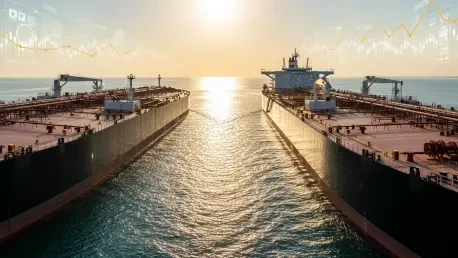

The geopolitical instability currently radiating from the Strait of Hormuz has transformed from a regional security concern into a direct financial burden for American insurance carriers and their commercial clients. While many observers focus on the immediate physical threats to vessels and cargo, the insurance industry operates on a predictive timeline, essentially pricing anticipation rather than waiting for a definitive catastrophe to occur. This forward-leaning risk assessment means that even in the absence of a total maritime blockade, the premiums for war risk coverage and hull insurance have already begun a steady upward climb. The Strait serves as a primary artery for global energy supplies, and any perceived threat to this narrow passage forces a massive recalibration of actuarial models. For U.S.-linked insurers and reinsurers, this is not merely a matter of regional conflict; it is a fundamental shift in the global risk landscape that demands immediate financial adjustments and a more cautious approach to underwriting maritime ventures in the Gulf region.
Systemic Integration of Global Energy Markets
The U.S. insurance market is inextricably linked to the volatile dynamics of the Persian Gulf through a complex web of layered reinsurance agreements and global maritime syndicates. When a localized incident occurs—such as a drone strike on a tanker or the temporary seizure of a commercial vessel—the financial shockwaves are instantly felt in London, New York, and Bermuda. This systemic integration means that American balance sheets are often the final backstop for losses that originate thousands of miles away. Because maritime shipping is the backbone of international trade, the rising cost of ensuring safe passage through the Strait of Hormuz creates a feedback loop that impacts every sector of the global economy. As carriers raise their rates to account for heightened risk, shipping companies must pass these expenses down the line to energy producers and logistics firms. Consequently, the volatility in the Middle East is not just a foreign policy issue but a tangible driver of operating costs for domestic businesses across the United States.
Beyond the immediate increase in premiums, this period of instability is forcing a broader restructuring of how risk is distributed among various stakeholders in the energy supply chain. Insurers are no longer willing to provide the broad, all-encompassing policies that were standard during more stable periods earlier in the decade. Instead, they are implementing more restrictive clauses that limit coverage in specific high-risk zones, effectively forcing shipowners to seek specialized, and far more expensive, war risk endorsements. This tightening of the market is particularly visible in the reinsurance sector, where the capacity to take on large-scale maritime liabilities is shrinking as capital providers seek safer havens. The result is a hard market where insurance is not only more expensive but also more difficult to obtain for certain types of high-volume energy transport. This lack of available coverage could eventually lead to a slowdown in shipping traffic, as many operators are legally or contractually unable to sail without comprehensive insurance protections.
Strategic Shifts in Underwriting and Risk Modeling
Traditional actuarial models, which rely heavily on historical data and predictable patterns, are struggling to keep pace with the modern reality of asymmetric warfare and rapid geopolitical shifts. The current environment in the Strait of Hormuz is characterized by sudden escalations that do not follow established military doctrines, making it nearly impossible for insurers to quantify the likelihood of a major disruption. To compensate for this uncertainty, underwriters are increasingly turning to real-time intelligence feeds and satellite monitoring to adjust their pricing on a week-to-week basis. This move away from static annual pricing represents a significant shift in the insurance industry’s operational philosophy, favoring agility over tradition. By leveraging advanced data analytics and predictive modeling, carriers hope to avoid the massive losses that would accompany a sudden closure of the shipping lanes. However, these technological solutions also require significant investment, which further adds to the overhead costs that are ultimately borne by policyholders and the broader consumer market.
The financial strain on the U.S. insurance sector is also prompting a reevaluation of the role of government intervention in stabilizing critical economic corridors. If premiums continue to rise at their current trajectory, there is a very real possibility that private insurance will become prohibitively expensive for all but the largest energy conglomerates. In such a scenario, the industry might look toward sovereign guarantees or government-backed insurance pools to maintain the flow of essential commodities. This potential shift toward public-private risk sharing highlights the severity of the current situation and the limitations of the private market in the face of systemic geopolitical threats. As the risk of a full-scale maritime conflict looms, the insurance sector is preemptively reducing its exposure, which in turn signals to the rest of the financial world that the era of low-cost energy transport may be coming to a close. This cautious stance by insurers serves as a leading indicator of broader economic shifts, providing a clear warning that the current stability of global supply chains is increasingly fragile and costly to maintain.
Future Considerations and Industry Adaptation
The long-term resilience of the American insurance sector was tested by the need to develop more sophisticated tools for geopolitical risk assessment that went beyond conventional maritime hazards. Leaders in the field moved toward integrating political analysts and intelligence experts directly into the underwriting process, ensuring that financial decisions were informed by the latest regional developments. This integrated approach allowed for more nuanced risk pricing, although it also necessitated a fundamental shift in corporate culture from purely mathematical analysis to a more holistic understanding of global power dynamics. Moving forward, businesses prioritized diversifying their supply routes and invested in alternative energy sources to mitigate their exposure to the volatile Hormuz corridor. Additionally, the industry saw the emergence of innovative financial instruments, such as parametric insurance products that triggered automatic payouts based on specific regional events, providing a faster and more predictable safety net. These adaptations ensured that while the cost of security remained high, the mechanisms for managing that risk became more robust and responsive to the realities of a fragmented world.
This period of transition forced American underwriters to reconsider the limits of private capital in the face of state-sponsored disruption. By 2026, many firms successfully transitioned to a hybrid model that utilized both advanced risk-prediction algorithms and human intelligence to stay ahead of the volatility curve. Rather than simply raising rates, the most successful insurers worked closely with maritime technology companies to implement improved defensive measures on commercial vessels, which helped to partially offset the rising premiums. These collaborations proved essential for maintaining the viability of the shipping industry during a time of unprecedented regional tension. Furthermore, the industry advocated for clearer international standards regarding maritime security, which provided a more stable framework for assessing liability and risk. The collective response of the insurance market during this crisis established a new blueprint for managing systemic global risks, emphasizing the importance of adaptability and technological integration in an era where geographic conflicts have immediate and profound impacts on the global financial system.