
The traditional mechanisms of commercial insurance are being fundamentally reshaped by a convergence of systemic global threats and unprecedented technological capabilities, demanding a complete overhaul of how risk is perceived, managed, and mitigated. As businesses confront an environment defined by volatility and interconnectedness, the insurance industry stands at a pivotal juncture, tasked with evolving from a reactive indemnifier of loss to a proactive partner in resilience. This shift is not merely a preference but a necessity, driven by the understanding that historical data alone is no longer a reliable predictor of future challenges. A recent confluence of expert insights reveals a clear trajectory toward a new paradigm—one where advanced data analytics and profound human expertise work in concert to build stronger, more adaptable enterprises. This evolving approach promises to redefine the value proposition of insurance, moving it from a simple financial backstop to a strategic enabler of sustainable growth.
The Dawn of a New Risk Paradigm in Commercial Insurance
Modern businesses are navigating a risk landscape characterized by an intensity and complexity unseen in previous generations. From geopolitical instability and supply chain disruptions to the pervasive threat of cyberattacks and the escalating impact of climate change, the nature of risk has become systemic and deeply interconnected. This environment renders traditional, static models of risk assessment increasingly obsolete. The old methods, which relied heavily on historical loss data and annual reviews, are ill-equipped to handle the dynamic and fast-evolving threats that can materialize with little warning and cascade across entire industries. The reactive posture of simply paying claims after a loss has occurred is no longer a sustainable model for insurers or a sufficient safeguard for their clients.
There is an urgent and widely recognized need for the insurance industry to pivot toward a more forward-looking and preventative model. This requires a fundamental change in philosophy, moving beyond the transactional nature of policy renewals to foster a continuous dialogue about resilience. The focus must shift from indemnification to mitigation, helping clients not only to recover from adverse events but to anticipate and prevent them in the first place. This evolution is critical for maintaining the industry’s relevance and for supporting the long-term viability of the businesses it serves. The challenge lies in creating a framework that is both sophisticated enough to handle complex risks and accessible enough for businesses of all sizes to implement effectively.
The collective wisdom gathered from industry leaders underscores this transformative moment. The insights point toward a future where risk management is not a siloed compliance function but an integral part of corporate strategy. This new approach is defined by its proactive nature, its reliance on real-time, data-informed decision-making, and its deep-seated appreciation for the irreplaceable value of human judgment. It is a human-centric model, augmented by technology, designed to empower businesses to thrive in an era of perpetual uncertainty by turning risk management from a defensive necessity into a distinct competitive advantage.
The Symbiotic Revolution Integrating Technology with Human Expertise
Bridging the Chasm From Corporate Boardrooms to SME Shop Floors
A profound disparity exists in the adoption and sophistication of risk management practices, creating a significant chasm between large corporations and small to medium-sized enterprises (SMEs). Large organizations, often equipped with dedicated risk management departments and substantial financial resources, have increasingly integrated proactive risk mitigation into their core strategic planning. For these enterprises, effective risk management is not merely about compliance or loss prevention; it is intrinsically linked to protecting brand reputation, ensuring operational continuity, and ultimately, driving commercial success. They possess the internal expertise to engage with insurers and brokers as sophisticated partners, collaboratively developing complex strategies to address a wide spectrum of threats.
In sharp contrast, many SMEs operate in a vastly different reality. Constrained by limited budgets, time, and personnel, they frequently perceive formal risk management as an unaffordable luxury rather than an essential investment. In a challenging economic climate, where survival often depends on managing day-to-day cash flow, long-term strategic planning for low-probability, high-impact events can feel like a distant concern. This perception is a major barrier to engagement, as the value proposition of proactive risk management is not always immediately apparent. For many smaller businesses, the impetus to engage with risk mitigation often comes only after a significant loss has occurred, at which point the intervention is reactive and focused on recovery rather than prevention.
The central challenge for the insurance industry, therefore, is to demonstrate tangible, accessible value and effectively communicate the “why” behind proactive risk management to SME owners. It requires moving beyond the abstract concept of risk and connecting mitigation efforts to outcomes that resonate with a business owner’s immediate priorities, such as employee safety, operational uptime, and long-term financial stability. Convincing a resource-strapped entrepreneur to invest in preventative measures demands a compelling case that frames risk management not as a cost center but as a vital component of sustainable business practice that protects their personal investment and livelihood.
Beyond the Jargon Crafting a New Language for Risk Engagement
The traditional methods of communicating risk have proven largely ineffective, particularly within the SME sector. The reliance on technical jargon, complex compliance documents, and one-size-fits-all recommendations often alienates business owners rather than engaging them. Insurers and brokers are recognizing that a new, more human-centric dialogue is necessary—one that strips away the complexity and speaks directly to the core concerns of the business. The industry is learning that overwhelming a client with dense reports or referencing obscure codes of practice is a formula for inaction.
This realization has spurred the development of innovative, real-world strategies designed to make risk management accessible and immediately relevant. For instance, instead of asking an SME owner for a formal “risk register,” a document they likely do not have and would find daunting to create, a more effective approach is to reframe the conversation. Asking a simple, relatable question such as, “What are the five things that keep you up at night?” can yield the same essential information in a way that is intuitive and non-threatening. This reframing transforms a bureaucratic exercise into a meaningful conversation about the business’s most pressing vulnerabilities, effectively creating a practical risk register on the spot.
This shift in communication signals a broader, industry-wide move away from fear-based messaging toward benefit-driven conversations. Experts caution that simply warning businesses about what has happened to others is often an ineffective motivator, especially for those who have never experienced a major loss themselves. A more powerful approach is to highlight the positive, tangible outcomes of good risk management. By emphasizing benefits such as improved safety for employees, enhanced business continuity that protects revenue streams, and the strategic advantage gained from being a more resilient organization, the conversation changes from a negative warning to a positive opportunity for improvement and growth.
From Defensive Posture to Strategic Advantage Redefining the Philosophy of Risk
An emerging trend across the insurance sector involves a fundamental redefinition of the philosophy of risk, moving away from a purely defensive posture of risk aversion toward a more sophisticated model that enables calculated, strategic risk-taking. The goal is no longer simply to eliminate all potential threats but to help businesses find the optimal balance where they can pursue growth opportunities confidently, knowing they have a robust framework to manage the associated uncertainties. This perspective reframes risk management from a restrictive, cost-based activity to a strategic enabler that supports innovation and expansion, marking a significant evolution in its role within an organization.
Achieving this strategic balance requires a dynamic and holistic approach that breaks down traditional operational silos. In many organizations, disciplines such as health and safety, supply chain logistics, and strategic planning operate in isolation, creating blind spots where interconnected risks can fester. A modern risk management framework uses real-time data and predictive analytics to create a unified view of the organization’s risk profile, revealing how a vulnerability in one area can impact another. For instance, a supply chain disruption is not just a logistical problem; it is a financial risk, a reputational risk, and a business continuity risk that must be understood and managed cohesively.
This holistic perspective directly challenges the outdated assumption that risk management is a static, annual exercise confined to a policy renewal discussion. In today’s volatile environment, where systemic threats can emerge and escalate within weeks, an annual review is dangerously inadequate. Instead, risk management must be treated as a continuous, ongoing process that is deeply embedded in the organization’s culture and decision-making. For many businesses, adopting this proactive and integrated approach is no longer a choice but a matter of survival, as the failure to anticipate and adapt to systemic events can have swift and catastrophic consequences.
The Double Edged Sword Harnessing Digital Tools Without Losing the Human Touch
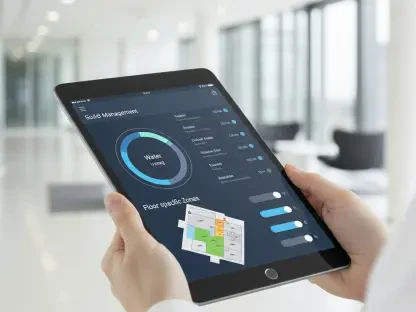
The proliferation of digital tools, including artificial intelligence (AI), the Internet of Things (IoT), and advanced sensors, holds transformative potential for the insurance industry. These technologies can automate routine monitoring tasks, such as tracking vehicle telematics to promote safer driving or using water sensors to prevent costly leaks, thereby providing a constant stream of data for preventative action. This automation can free up risk management professionals from performing basic audits and allow them to transition into higher-value advisory roles, focusing on strategic guidance, interpreting complex data, and helping clients build a stronger risk culture.
However, the rapid adoption of these technologies presents a double-edged sword, introducing significant new risks if not managed carefully. A comparative analysis reveals that while data-driven prevention offers immense benefits, it is highly dependent on the quality and accuracy of the underlying data. Inaccurate inputs can lead to flawed models and poor decision-making, while algorithmic bias can perpetuate or even amplify existing inequities. Furthermore, a new and serious threat is emerging in the form of ungoverned “shadow AI,” where employees use various external AI tools without corporate oversight, creating uncontrolled vulnerabilities related to data privacy, security, and intellectual property.
This reality reinforces a clear consensus among industry leaders: technology is a powerful accelerator, not a replacement, for human expertise. Digital tools can process vast amounts of data and identify patterns that a human might miss, but they lack the capacity for critical thinking, contextual understanding, and nuanced judgment. The indispensable human traits of curiosity, skepticism, and the ability to ask “why” are essential for validating data, interpreting results, and making sound strategic decisions. The future of effective risk management lies in a symbiotic partnership where technology provides the data and insights, but empowered human professionals provide the critical analysis and wisdom to turn that information into effective action.
Putting Insight into Action A Blueprint for the Modern Risk Professional
The core findings from across the industry converge on a clear and compelling summary: success in the new risk paradigm lies in the deliberate fusion of advanced technology with deep, consultative human expertise. Technology provides the “what”—the data, the patterns, the early warnings—while human insight provides the “so what,” translating raw information into actionable strategy. This synthesis is the foundation upon which modern resilience is built, enabling businesses not only to defend against threats but also to seize opportunities with greater confidence. The path forward is not a choice between automation and human touch but an integration of both.
For insurers and brokers, these insights translate into actionable recommendations. A primary imperative is the development of segmented communication strategies tailored to the unique needs and resource levels of different clients, especially SMEs. This means moving beyond generic advice to offer practical, digestible guidance that demonstrates immediate value. Concurrently, there must be a significant investment in upskilling professionals, shifting their training from a focus on technical audits to the development of consultative skills. The modern risk advisor must be a strategist, a communicator, and a behavioral coach who can help clients embed a positive risk culture throughout their organization.
For businesses, the guidance is equally clear: fostering a resilient organizational culture is paramount. This begins at the highest level, with the board actively championing risk management as a strategic priority rather than a compliance chore. However, this commitment must cascade down through every level of the organization, embedding risk awareness into daily operations and empowering employees on the front line to identify and flag potential issues. Resilience is not the sole responsibility of a single department; it is a collective mindset and a shared responsibility that, when truly embraced, becomes a powerful source of enduring competitive advantage.
Navigating the Future The Enduring Partnership of Insight and Innovation
The central conclusion reached by industry leaders was that the future of insurance is neither a purely tech-driven automated system nor a continuation of traditional human-led practices, but a powerful and necessary hybrid of the two. This partnership allows the industry to leverage the scale and precision of data analytics while retaining the invaluable nuance, empathy, and strategic thinking that only human professionals can provide. This blended model represents the most effective path forward for an industry tasked with navigating unprecedented levels of complexity and change.
This evolution is gaining importance as the insurance model itself begins to question the relevance of long-standing conventions, such as the annual renewal cycle. In an age of continuous data streams from IoT devices and other real-time sources, the static, once-a-year assessment seems increasingly anachronistic. A move toward a more dynamic, data-informed relationship could allow for insurance coverage that flexes with a business’s operations, rewarding proactive risk management in real time and fostering a more collaborative and less transactional partnership between the insurer and the insured.
Ultimately, the strategic takeaway from this industry-wide dialogue was that resilience is not built on data models and algorithms alone. It was concluded that its foundation rests on inherently human characteristics. The ability to remain curious, to question assumptions, and to maintain a perpetual willingness to learn and adapt are the traits that will define the most successful risk professionals and the most resilient organizations. In a world of constant change, the most valuable asset was, and remains, the capacity for intelligent evolution.