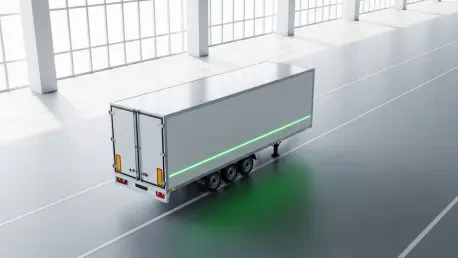

Fleet managers are no longer forced to rely on historical averages and generic tables to determine the safety risks and insurance costs of their commercial vehicles, as real-time telematics now provide a granular view of driver behavior and operational efficiency. This shift represents the comprehensive modernization of commercial motor insurance, moving from static actuarial models to a dynamic ecosystem where data dictates every premium. The integration of artificial intelligence and live monitoring allows providers to move beyond simple claim processing, focusing instead on active risk mitigation and fleet optimization. This review explores how these technical advancements are redefining the relationship between insurers and the logistics industry.
The Evolution of Data-Driven Fleet Coverage
The transition from traditional actuarial models toward dynamic risk assessment reflects a broader digital transformation across the financial sector. By leveraging real-time data collection, insurers can now analyze actual driving habits rather than relying on broad demographic assumptions. This evolution is particularly evident in how digital-first providers like Flock are reshaping established giants like the Admiral Group. Such collaborations indicate a move away from the slow-moving legacy systems of the past toward agile, software-driven solutions that prioritize safety and transparency for all parties involved.
Moreover, the integration of AI has accelerated this shift by allowing for the processing of vast datasets that were previously unmanageable. These systems facilitate a continuous loop of feedback, where risk is not just measured annually but monitored daily. This transition allows for a more equitable pricing structure, where safer fleets are rewarded with lower costs almost immediately. Consequently, the industry is witnessing a total departure from the “set and forget” mentality that dominated motor insurance for decades.
Core Pillars of Telematics Insurance Technology
AI-Powered Risk Analytics and Real-Time Monitoring
Modern risk analytics platforms utilize complex algorithms to identify hazardous patterns before they result in expensive insurance claims. By processing data on braking intensity, cornering speeds, and time-of-day operations, these systems offer fleet managers a clear understanding of where improvements are needed. The technology provides actionable insights that allow for targeted driver training, shifting the focus from punishment to professional development. This proactive approach significantly lowers the frequency of accidents by addressing the root causes of driver error.
Furthermore, the real-time nature of this monitoring provides a layer of operational visibility that traditional insurance could never match. Instant alerts allow managers to respond to incidents as they happen, ensuring that safety protocols are followed to the letter. This immediate connection between driving behavior and corporate overhead creates a powerful incentive for maintaining high standards on the road.
Integrated Telematics Hardware and Software Synergies
Technical synergy between GPS tracking and onboard diagnostics ensures a seamless flow of information from the vehicle to the insurer’s dashboard. By combining mobile interfaces with sophisticated hardware, providers offer a transparent experience that bridges the gap between the physical road and digital record. This connectivity reduces the technical friction often associated with black-box deployments, as modern systems are designed for high compatibility across various vehicle makes and models.
These hardware-software integrations also support the development of comprehensive driver scores that are easy to interpret. When a driver can see their safety performance reflected in a mobile app, it encourages a culture of self-correction and pride in their work. This technical infrastructure serves as the backbone of the modern fleet, providing the necessary data to justify usage-based premium adjustments.
Market Shifts and Strategic Industry Consolidation
Strategic consolidation has become the primary method for traditional insurers to acquire high-level technical expertise in an increasingly competitive environment. Admiral’s £80 million acquisition of Flock stands as a landmark deal, signaling a major move to diversify its portfolio beyond personal lines. This integration places Flock’s specialized team within the Admiral Pioneer innovation arm, synthesizing startup agility with the capital strength of a market leader. This trend suggests that the future of the sector lies in the hands of organizations that can balance financial stability with cutting-edge software development.
Financially, the move is supported by Admiral’s robust performance, including a reported 7% increase in motor profits to £1.02 billion last year. To facilitate this complex deal, Admiral was advised by GP Bullhound and Clifford Chance LLP, while Flock utilized Continuum and Osborne Clarke. Such high-profile acquisitions demonstrate that established insurers are willing to invest heavily to capture the high-value commercial fleet market through tech-specialized teams.
Practical Implementations in Commercial Logistics
Practical application is most visible in the haulage and heavy goods vehicle sectors, where the stakes of safety and efficiency are exceptionally high. Specialized insurance products for haulage now utilize these sensors to meet the rigorous demands of large-scale commercial transport. This deployment allows companies to manage the unique risks associated with long-haul routes and heavy payloads, ensuring that insurance costs remain manageable even in a volatile economy.
These implementations have already met with strong market demand, as fleet owners seek ways to lower their total cost of ownership. By utilizing telematics to prove their safety record, haulage operators can secure better terms and demonstrate compliance with increasingly strict road safety regulations. This real-world success proves that the technology is no longer an experimental luxury but a functional necessity for modern logistics.
Obstacles to Widespread Adoption and Technical Hurdles
Despite the clear benefits, high initial costs for hardware deployment and the complexity of regulatory approval remain significant barriers for many operators. Integrating sophisticated AI with antiquated legacy insurance systems often creates technical friction that slows down the adoption process. Additionally, the need for data standardization across different hardware providers makes it difficult for fleet managers to switch between insurance carriers without significant reinvestment.
Ongoing development efforts are focusing on mitigating these limitations through better user interfaces and modular software components. Improving the accessibility of data analytics will be crucial for smaller fleets that lack the resources of major logistics corporations. Addressing these technical hurdles is essential for ensuring that the benefits of telematics are felt across the entire transport industry rather than just at the top tier.
The Long-Term Trajectory of Fleet Safety Technology
The future points toward predictive accident prevention and fully automated, usage-based adjustments that happen in real time. These systems will likely evolve to anticipate mechanical failures or hazardous road conditions before they lead to collisions, moving the industry closer to a zero-accident goal. As autonomous and semi-autonomous vehicles become more prevalent, telematics will be the primary tool for assessing the risk of software systems and sensors rather than just human drivers.
Furthermore, the move toward fully integrated safety ecosystems will likely transform how global logistics standards are enforced. Tech-enabled solutions will provide a universal metric for safety, allowing insurers to provide global coverage with local precision. This trajectory suggests that the commercial insurance market will eventually become an extension of the vehicle’s own safety software, rather than a separate financial product.
Summary of the Technological Landscape
The review of the technological landscape showed that the synergy between established financial power and agile innovation redefined the market. The integration of Flock into Admiral Pioneer proved that data-driven models could scale effectively while significantly reducing road accidents. Stakeholders who adopted these proactive safety measures found themselves better positioned for the evolving regulatory environment. Looking forward, the industry should prioritize the transition toward modular, API-first insurance frameworks that can adapt to the rapid pace of technological change. Future-proofing will require a commitment to data standardization that facilitates even more precise predictive modeling across global logistics networks. While the transition involved high initial costs, the long-term gains in safety and financial predictability established a new standard for the commercial motor sector.