
A fundamental shift is quietly reshaping the risk management landscape, as long-standing, human-centric models prove increasingly inadequate against the complexities of the modern world. An overwhelming consensus emerging from hundreds of industry interactions—spanning conferences, webinars, and high-level meetings—indicates that insurers, brokers, and their clients are no longer satisfied with the status quo. There is a clear and urgent call for an evolution toward a more modern, scalable, and impactful approach to managing risk. This transformation is not a distant vision but a present-day reality, propelled by the practical and powerful application of advanced data analytics and artificial intelligence. The industry is moving beyond theoretical discussions and into an era of implementation, where technology serves not as a replacement for human expertise but as a critical enabler of a more strategic, resilient, and responsive risk management discipline fit for future challenges.
The Mandate for Modernization
Redefining Scalability and Impact
The demand for enhanced scalability represents a core driver of change within the risk management sector, signaling a decisive move away from boutique, high-touch models that are inherently limited in their reach. For services to be truly effective in a complex global economy, they must be accessible to a broader spectrum of clients, not just the largest enterprises. This requires a framework that is not only easier to implement but also simpler for clients to comprehend and engage with actively. Traditional methods, often reliant on time-intensive manual assessments and in-person consultations, create a significant bottleneck, preventing valuable insights from reaching a wider audience. The industry is now recognizing that true value lies in democratizing risk expertise. This means developing systems and platforms that can deliver consistent, high-quality guidance at scale, ensuring that businesses of all sizes can benefit from proactive risk mitigation strategies and fostering a more resilient commercial ecosystem for everyone involved.
Simultaneously, there is a growing insistence that risk management must deliver a more profound and measurable impact that extends far beyond the traditional metric of improving loss performance. While reducing claims is still a primary goal, the new paradigm calls for a positive influence on client sentiment, the cultivation of greater confidence in business operations, and a significant enhancement of the overall customer experience. Risk management is being reimagined as a strategic partnership that adds tangible value rather than being perceived merely as a necessary cost center. This shift requires a more holistic view of success, where data is used not just to identify hazards but also to demonstrate the return on investment in safety and resilience. By showcasing how targeted interventions lead to safer work environments, fewer disruptions, and a stronger bottom line, risk professionals can strengthen their relationships with clients, transforming their role from that of an inspector to a trusted strategic advisor.
Embracing a Fit for the Future Methodology
The collective sentiment across the insurance industry affirms that legacy models of risk assessment are no longer adequate for navigating the challenges of tomorrow, necessitating a fundamental change in methodology. This realization is pushing organizations to adopt a “fit-for-the-future” strategy that actively embraces innovation. What was once a forward-looking roadmap, such as a 2019 PwC report outlining a transition to augmented and autonomous risk management, now reads like a description of current events. The changes predicted in that report are no longer on the horizon; they are actively unfolding. This acceleration is driven by a clear understanding that a reactive, incident-driven approach is unsustainable. The industry is therefore pivoting toward a proactive and predictive stance, leveraging new technologies to anticipate and neutralize threats before they can materialize into significant losses, thereby building a more durable and forward-thinking operational framework.
This strategic evolution is largely propelled by direct client demand for clarity over noise. In an age of information overload, organizations are not interested in generic safety checklists or voluminous reports filled with non-specific advice. Instead, they demand actionable intelligence that helps them focus their limited resources on what truly matters. Business leaders need to know precisely which risks pose the greatest existential threat, which of their locations require priority attention, and which specific, targeted actions will yield a meaningful and measurable improvement in their risk profile. This client-driven expectation is naturally steering the industry toward a more strategic, risk-based approach. The focus is shifting from exhaustive site-by-site audits to an aggregated view of loss drivers, allowing for interventions that address systemic issues and create a much larger and more sustainable impact on organizational resilience and performance.
The Technological Catalyst for Change
Harnessing the Power of Intelligent Data
The proliferation of richer and more varied data sources has emerged as the primary catalyst for this industry-wide transformation. Information flowing from an ever-expanding network of sensors, combined with geospatial intelligence, historical claims patterns, and detailed operational information, provides an unprecedentedly deep and nuanced view of risk. However, the true significance lies not in the sheer volume of data itself, but in its strategic application to make risk management more consistent, to extend its reach to more people and locations, and to build greater organizational resilience. This wealth of information allows for the creation of sophisticated models that can identify subtle correlations and emerging trends that would be impossible to detect through manual analysis alone. By effectively harnessing this data, risk management professionals can move beyond intuition-based assessments to a more empirical and evidence-driven approach to mitigating potential losses.
Artificial intelligence has officially moved past its initial phase of industry hype and is now functioning as a practical and indispensable tool for navigating this new data-rich environment. In its current application, AI serves as a “smart assistant” capable of performing much of the “heavy lifting” associated with modern risk management. Its capabilities include organizing and structuring vast, disparate datasets, executing complex comparisons between different sites to benchmark performance, and automatically identifying patterns and anomalies that warrant human investigation. As these AI systems continue to mature, their role will expand from descriptive to predictive analytics. They will soon be able to help consultants precisely identify where loss frequency and severity are most likely to be concentrated, enabling highly targeted interventions focused where they will have the most significant and cost-effective impact, ultimately improving performance and strengthening client relationships.
The Evolving Role of the Human Expert
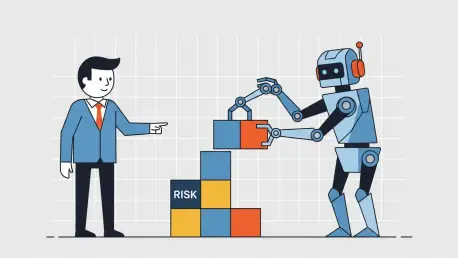
Crucially, the integration of these new digital tools and AI capabilities does not diminish the role of the human consultant; rather, it amplifies it, freeing professionals to focus on higher-value contributions. This “augmented approach,” where human expertise, advanced data analytics, and intelligent technology work in synergy, represents the future of the profession. By automating routine data collection and other process-oriented tasks, AI allows consultants to escape the administrative mire that has historically consumed a significant portion of their time. This liberation from mundane work is a critical element of the industry’s evolution, as it allows human talent to be redeployed from repetitive processes to complex problem-solving, strategic planning, and relationship management, where their skills are most valuable and impactful for the client.
In this new paradigm, the role of the risk consultant evolves dramatically from that of a data gatherer to a strategic advisor. With the burden of manual information processing lifted by technology, consultants can dedicate more of their time and intellectual energy to the uniquely human tasks of interpretation, exercising professional judgment in ambiguous situations, and providing nuanced strategic guidance. Their focus shifts from the mechanics of the process to the shaping of outcomes. They become interpreters of complex data, translating AI-generated insights into actionable business strategies and helping clients navigate the complex trade-offs inherent in risk management. This synergy between human and machine creates a more powerful, efficient, and effective risk management function, capable of delivering superior results and building deeper, more advisory-based relationships with clients across the board.
A New Era of Strategic Risk Mitigation
The risk management industry successfully navigated the initial steps toward a future where its services became more scalable, targeted, and aligned with stakeholder demands. By embracing an augmented approach, the sector demonstrated that human expertise, when combined with data and technology, could deliver a far greater impact than any single element could alone. Consultants were liberated from process-oriented tasks, allowing them to function as strategic advisors who focused more on shaping outcomes than on gathering information. This shift was not merely theoretical; it was a practical response to a clear industry mandate for a more modern and effective methodology. The result was a discipline that became better equipped to provide the actionable intelligence and clarity that clients had long sought, thereby cementing its value and relevance in an increasingly complex world.