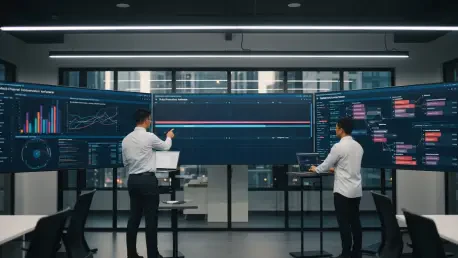

Simon Glairy has spent years at the intersection of insurance, risk management, and AI-driven assessment, where split-second decisions and disciplined iteration can make or break fraud outcomes. In this conversation, he opens up about the human routines that sharpen technical judgment, the real-time dashboards that anchor each morning, and the collaborative rituals that keep remote teams aligned. Themes include a judge’s view on separating AI hype from substance, a practical playbook for supporting victims of ghost broking, and the measured way he trains and retrains an in-house model built for niche demographics. Woven throughout are markers of cadence—half an hour of mindfulness, weekly stand-ups, monthly claims reviews, meeting-free Fridays—and the quiet power of recognition, focus time, and transparent KPIs to reduce false positives while lifting handler experience.
You start days with mindfulness before the family rush. How does that routine translate into sharper fraud decisions, and what specific habits or checklists anchor your focus? Could you share an example where it changed an outcome?
That first 30 minutes of mindfulness is my mental triage—slowing down the noise so I can spot the one anomaly that matters. I anchor the day with a three-part checklist: intent (what outcome must change today), integrity (which assumptions I’ll challenge), and impact (which decision moves the needle before noon). I pair that with a “red-flag sweep” across sales and fraud dashboards before email, so I’m not dragged into reactive mode. One morning, after that quiet reset, a subtle surge in quote attempts—spread across the hour rather than spiking—caught my eye; the pattern would have looked like background chatter if I’d skimmed. Because I’d pre-committed to verify data lineage before action, I validated the source, escalated a rule tweak, and we blocked the cluster. By lunch, the leakage closed without inflating false positives, and a potential end-of-year project delay was avoided.
Real-time sales and fraud dashboards guide your mornings. Which three KPIs matter most, and how do you triage spikes versus noise? Walk us through your step-by-step response to an unusual pattern.
My top three are conversion-to-bind variance by channel, fraud rule hit-rate versus investigator uplift, and handler overturns on model decisions. When an unusual pattern appears—a mid-morning swell in high-risk quote attempts with steady bind rates—I follow a set path: confirm data freshness, segment by source, and replay the last 24 hours to see if this is a growing wave or a one-off ripple. If it persists, I sandbox a temporary threshold change, then convene a quick remote huddle to sanity-check—no more than 10 minutes—to avoid over-correcting. Only after we see a consistent improvement in rule precision do we promote the change. The discipline is to treat dashboards as conversation starters, not conclusions, and to log every tweak so we can unwind it if handler experience degrades.
Remote teamwork can blur signals. What rituals or tools keep your fraud team tightly aligned, and how do you measure that alignment? Share an anecdote where this prevented a costly miss.
We open with a quick check-in every morning—camera on, agenda short, outcomes listed—so remote distance never becomes informational distance. Midweek, we hold a weekly stand-up that reinforces timekeeping and transparency, and we close the loop with asynchronous updates tied to KPIs rather than opinions. Alignment is measured by cycle times on investigative handoffs, model-to-handler overturn rates, and how consistently alerts are triaged within agreed SLAs. Once, a damp October evening in a car park, an analyst messaged our channel about quote-stuffing whispers from a broker; because our rituals make ad-hoc signals welcome, we slotted a rapid analysis block the next morning. The early read let us adjust a policy-level control the same week, averting what would have become a costly claims spike.
As a judge for AI and data analytics awards, what criteria separate hype from substance? Which metrics, validation methods, or deployment stories convince you a solution truly works at scale?
Substance shows up in disciplined problem framing and honest baselines. I look for clear uplift versus current operations—measured reductions in false positives, lower handler friction, and stable performance in out-of-time validation. Robustness matters: stratified cross-validation, drift monitoring, and a clean story for retraining cadence. What seals it is the deployment narrative—real-time monitoring, rollback procedures, and proof they survived a volatile week without firefighting. The best entries show weekly rituals, monthly reviews with claims partners, and transparent post-mortems, not just shiny ROC curves.
Supporting victims of ghost broking is complex. What early-warning indicators reveal a victimized policyholder, and how do you triage recovery steps? Please outline the playbook from first contact to resolution.
Early tells include mismatched contact details, policyholders who can’t verify basic policy terms, and payment routes that don’t align with legitimate channels. The playbook starts with calm first contact: confirm identity, secure the account, and freeze suspicious amendments without locking the customer out of essential cover. We then verify documents, compare quote histories, and coordinate with our claims provider to flag any exposure. Next comes education—walking them through legitimate steps and helping them rebuild safely. We close with a policy-level safeguard to prevent repeat attempts, plus a retrospective to update rules and the AI model so the next victim gets caught earlier in the journey.
A weekly, transparent company stand-up builds momentum. How does time discipline and open communication improve fraud outcomes, and what measurable effects have you seen on speed, quality, or false positives?
A weekly, all-hands stand-up sharpens focus; when leaders model punctuality and candor, teams ship sooner with fewer surprises. We convert that energy into shorter investigative cycles and cleaner acceptance criteria for model changes. Time discipline means the right work gets done before the end of the year, not in a last-minute scramble. Open communication decreases duplicated effort, and I’ve seen handler overturns drop after weeks where we clarified priorities in plain language. False positives edge downward when we align on risk appetite publicly, and team morale lifts when exceptional work gets recognized.
Recognition like Employee of the Month can shift behavior. Which behaviors in fraud prevention deserve celebration, and how do you tie rewards to measurable impact? Share a story where recognition unlocked a breakthrough.
Celebrate curiosity that finds root causes, discipline that documents decisions, and empathy that improves handler experience. We tie recognition to measurable outcomes: fewer false positives after a rule refactor, better model explainability, or a faster path from alert to resolution. In a month with four shout-outs, one analyst was spotlighted for reframing a stubborn alert class as a journey issue, not a rules issue. That moment of recognition emboldened the team to challenge “the way we’ve always done it,” leading to a streamlined step that lifted precision without slowing bind rates. The applause wasn’t just applause; it was permission to think differently.
Focus time fuels deep analytics. How do you protect those hours, and which analytical methods or model checks deliver the highest ROI? Give a concrete example with inputs, outputs, and decisions made.
I defend focus time like a scarce resource—afternoons are meeting-free where possible, and alerts are muted unless they’re genuinely urgent. The highest ROI comes from cohort drift checks, feature attribution stability, and counterfactual testing on borderline alerts. Recently, we pulled a week of sales inputs, segmented by channel and time-of-day, and tested Guardian’s top features against policy-level outcomes. The output showed attribution wobble on a single feature tied to device prints. Decision: rebalance feature weights, add a stability constraint, and update the handler UI to surface a clearer rationale. Result: fewer escalations and smoother throughput for legitimate customers.
Your in-house AI model, Guardian, targets a specific customer demographic. What data features are uniquely predictive there, and how do you combat drift? Please detail your training, validation, and retraining cadence.
In our niche, journey dynamics—quote sequencing, timing cadence, and subtle mismatches between declared use and telemetry—punch above their weight. Guardian is trained on stratified samples aligned to our demographic, with out-of-time validation to guard against temporal leakage. We monitor drift weekly at the feature and prediction levels, and we schedule a deeper review in the monthly cycle with our claims partner to fold emergent typologies into training. Retraining isn’t a calendar ritual alone; it’s event-triggered when drift crosses thresholds or handler overturns nudge upwards. That cadence keeps us a step ahead without thrashing the production environment.
Reducing false positives while improving handler experience is tricky. Which thresholds, feedback loops, and UX tweaks moved the needle most, and what before-and-after metrics prove it? Share your iterative process.
The breakthrough came from pairing threshold tuning with frontline feedback, not just chasing a prettier curve. We built a loop where handlers tag friction points and we feed that into Guardian’s learning and the UI. Small UX changes—clearer rationale text, grouped alerts, and better link-outs to source data—cut cognitive load. Before, borderline cases clogged queues; after, cases moved with confidence. We saw fewer back-and-forth pings and steadier investigator uplift. The key was iterating weekly, then revalidating monthly with claims to ensure the improvements held under pressure.
Collaboration between analysts and data scientists is central. How do you structure handoffs, define acceptance criteria, and resolve disagreements? Walk us through a sprint where this collaboration changed Guardian’s performance.
Handoffs are artifacts-first: a concise problem brief, labeled datasets, and a definition of success that includes both statistical and operational targets. Acceptance criteria cover precision at operational thresholds, handler overturns, and no regression in key cohorts. When disagreements arise, we prototype both paths, run a limited-time A/B, and let evidence settle it. In one sprint, analysts argued for a journey-only feature set to reduce noise, while scientists preferred a blended approach. The A/B showed the blend winning in out-of-time validation, but the journey-only variant performed best in a specific cohort. We merged the insights, adding cohort-aware rules around Guardian, and frontline friction dropped.
Monthly sessions with the claims provider surface trends. What fraud typologies are accelerating, and how do you translate claims intelligence into policy-level controls? Provide a recent example with measurable impact.
The monthly claims review is gold—fresh patterns, sharper post-bind insights, and a reality check on our assumptions. When they flagged a rise in coordinated applications with clean claims histories but suspicious journey pacing, we mapped that back to sales signals and added a pre-bind control. We also adjusted post-bind monitoring to watch for early-claim behaviors. The policy-level tweak meant fewer surprises downstream, and our teams left the session with clear actions rather than vague worries. The rhythm—once a month, consistently—keeps the feedback loop honest.
With meeting-free Fridays, how do you prioritize audits and next-week planning? Which checklists or metrics ensure nothing slips, and can you share a time this discipline averted a major issue?
Friday afternoons are for breathing space: audits, admin, and a crisp plan for the next week. My checklist anchors on model health, rules drift, handler feedback, and claims follow-ups. We verify what’s stable, what’s wobbling, and what must ship by early next week. Once, that discipline exposed a creeping documentation gap on a high-impact rule. Because it surfaced on a quiet Friday, we fixed it before Monday’s rush, avoiding a production misfire that would have slowed investigators and raised false positives. The calm is not a luxury—it’s guardrails.
Balancing family life with high-stakes work is demanding. What boundaries or rituals keep you resilient, and how do you recover after intense cases? Offer a personal anecdote and practical tips others can adopt.
I keep hard edges around family anchors—school pickups, evening drop-offs, and a shared laugh in the car after a long day. Movement helps reset the mind; even a quick class with my eldest rekindles perspective. And yes, sometimes it’s a waterside pause and a quiet glass to mark the week’s close. Practical tips: schedule recovery like work, practice micro-mindfulness before tough calls, and protect meeting-free blocks the way you protect production. Resilience isn’t bravado; it’s rhythm.
What is your forecast for AI-driven motor insurance fraud detection?
We’re heading into an era where AI becomes quietly embedded—less spectacle, more steady craft. Models like Guardian will specialize by demographic, retrain with weekly signals, and verify with monthly, claims-led reality checks. Expect fewer blunt rules and more context-aware decisions that lower false positives while easing handler workloads. The frontier isn’t just accuracy; it’s explainability that investigators trust and customers can live with. If we keep pairing half an hour of human clarity with disciplined data practice, we’ll stay one step ahead in 2026 and beyond.