The very ground beneath the global insurance industry is shifting, as the escalating ferocity of natural disasters redraws risk maps and challenges long-held actuarial certainties. In this new reality, insurers face unprecedented pressure to understand, model, and mitigate complex, interconnected threats that defy traditional methods. Consequently, the industry is turning to advanced technology like artificial intelligence not as a replacement for human intellect, but as a powerful amplifier for it. This analysis explores the trend of integrating AI-driven analytics with deep-seated human expertise, using the strategy of industrial insurer HDI Global as a central case study to illustrate how this hybrid model is shaping the future of risk management.
The Evolving Landscape of Data-Driven Risk Assessment
The Shift Towards High-Resolution Modeling
A pivotal trend reshaping natural catastrophe assessment is the proliferation of new global datasets, driven largely by advancements in remote sensing and satellite technology. Insurers are now able to move beyond previous data limitations that often resulted in broad, generalized risk profiles. This influx of information, as noted by experts like Dr. Melanie Fischer, a natural hazards and data analyst at HDI Global, is transformative. It allows for the modeling of hazards like floods, wildfires, and storms with a far higher degree of resolution and accuracy on a global scale.
This shift toward granularity gives risk managers a much clearer and more precise view of potential threats to specific assets within a vast portfolio. Instead of relying on regional assumptions, analysts can now pinpoint vulnerabilities at a near-property level, leading to more informed underwriting decisions and more effective risk mitigation strategies. This enhanced capability is becoming essential for navigating a world where climate change is altering the frequency and severity of catastrophic events, making historical data alone an insufficient guide to the future.
Real-World Application: The ARGOS 4.0 Platform
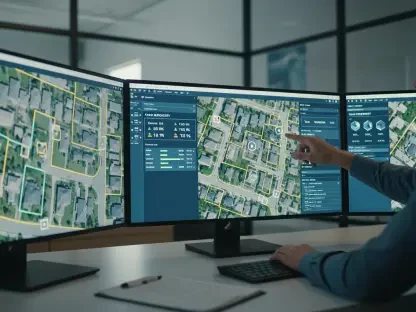
To effectively harness this explosion of data, leading insurers are developing sophisticated in-house platforms. A prime example of this trend is HDI Global’s proprietary tool, ARGOS 4.0, which is designed to empower clients with a powerful and accessible means of evaluating their global catastrophe exposures. The platform serves as a central hub where complex datasets are translated into actionable insights, providing a transparent view of portfolio risk.
A key innovation within ARGOS 4.0 is its AI-supported data importer, which directly addresses a persistent operational bottleneck: the processing of large volumes of unstructured or inconsistently formatted location data. The AI’s role is intentionally narrow and supportive; it automates the laborious tasks of data cleansing and preparation, rather than making underwriting decisions. By handling this high-volume, low-judgment work, the system significantly increases efficiency and frees up risk experts to dedicate their valuable time to higher-level strategic analysis, client consultation, and complex decision-making.
Championing the Human in the Loop Philosophy
Despite the clear benefits of AI, its adoption in high-stakes fields like insurance is often met with market mistrust, fueled by concerns about transparency, accountability, and the “black box” nature of some algorithms. Dr. Fischer acknowledges these legitimate concerns, emphasizing that building and maintaining trust is paramount. To address this, HDI Global champions a “human in the loop” philosophy, a governance principle that ensures technology remains a tool in the hands of experts.
This approach firmly positions AI as a supportive technology that assists and augments human capabilities, rather than an autonomous system that supplants them. Every output is subject to human oversight, preserving quality control and ensuring that the final judgment rests with seasoned professionals. This framework is also critical for meeting client expectations regarding data protection and security. It reinforces that AI is an enabler for technical staff and underwriters, with the ultimate goals of enhancing the client experience through added value and improving the effectiveness of internal operations.
Future-Proofing Risk Management in a Changing Climate
Integrating Forward-Looking Climate Scenarios
To address the profound and accelerating impact of climate change, the next evolution in risk modeling involves integrating forward-looking climate scenarios. HDI Global plans to enhance ARGOS 4.0 by incorporating this climate-scenario-informed data, moving beyond purely historical analysis. This development will allow the platform to model how weather-related perils may shift in the future under various warming pathways.
This forward-looking capability will empower clients to conduct vital comparative analyses, assessing their current exposures against potential future conditions. By understanding how the frequency and severity of hazards could evolve over the coming decades, businesses can adopt a more proactive stance on risk management. This facilitates the development of long-term resilience strategies, enabling organizations to make informed decisions about asset location, supply chain management, and capital investments in a rapidly changing world.
Bridging the Global Protection Gap
However, technology and advanced analytics alone cannot solve every challenge. A persistent and critical issue is the vast insurance protection gap, particularly in catastrophe-exposed economies across Asia and Africa. In some of these nations, insurance penetration for natural disasters remains below 10%, meaning the overwhelming majority of losses are absorbed directly by households, businesses, and governments, severely hampering economic recovery and long-term development.
This reality underscores the broader responsibility of the insurance industry. Insurers like HDI Global contend that their role extends beyond simply providing financial products to close these gaps. It also involves leveraging their deep reservoir of expert knowledge in risk prevention and engineering. By sharing this expertise, insurers can help communities and businesses build inherent physical resilience, reducing the potential for loss in the first place and creating a more stable foundation for economic growth.
A Synthesized Strategy: Integrating Analytics and Engineering
On-the-Ground Expertise in Risk Mitigation
To translate data-driven insights into tangible outcomes, the most effective strategies combine digital analytics with hands-on expertise. HDI Global exemplifies this by deploying a large, specialized team of risk engineers who work directly with clients on-site. These experts provide bespoke risk mitigation consulting, bridging the gap between a model’s output and the physical reality of a factory, port, or power plant.
The engineers conduct detailed analyses of specific assets and locations, identifying vulnerabilities that a purely data-based assessment might overlook. They then recommend practical, actionable measures to enhance resilience, from improving flood defenses and reinforcing structures to updating fire suppression systems. This engineering-based approach represents a proactive partnership in transformation, empowering clients to better protect their assets and operations by reducing the potential for loss before an event occurs.
Holistic Risk Consulting in Practice
This synthesis of analytics, AI, human oversight, and engineering is put into practice daily through operations like HDI Risk Consulting in the Asia-Pacific region. Led by Managing Director Philipp Glanz, this unit combines global standards with crucial local insights to serve diverse sectors, from renewable energy to marine transport. The core objective is to guide clients beyond simple risk identification toward the implementation of robust, long-term resilience measures.
This is achieved through a collaborative co-design process that leverages a suite of tools. For instance, HDI ARGOS 4.0 provides precision natural catastrophe intelligence and large-scale geocoding, while another tool, HDI GREEN 4.0, focuses on portfolio transparency and progress tracking for climate-related goals. These digital solutions are complemented by hands-on services like marine ship assessments, which provide rigorous, evidence-based evaluations of safety. Together, these elements form a holistic and integrated risk management service that addresses the full spectrum of modern challenges.
Conclusion: A Hybrid Future for Risk Management
The analysis of evolving risk management strategies underscored the ascendancy of AI-powered analytics as a critical tool for navigating the complexities of modern natural catastrophes. It became clear that the most successful frameworks did not treat technology as a standalone solution but integrated it within a philosophy that valued indispensable human oversight. This “human in the loop” approach addressed critical concerns around trust and accountability while maximizing the efficiency gains offered by automation.
Furthermore, the exploration revealed that data insights were most powerful when paired with on-the-ground engineering expertise. This combination allowed for the translation of digital models into tangible physical resilience, a crucial step in proactively mitigating losses. Ultimately, the trend pointed decisively toward a balanced, hybrid model where machine efficiency and human intellect worked in concert. This integrated approach proved essential for managing the escalating challenges of natural disasters and for building a more resilient future for businesses and communities worldwide.