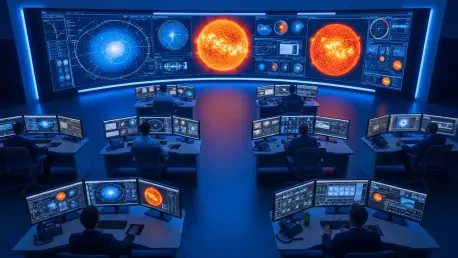

The intricate digital systems that power modern existence are increasingly vulnerable to the volatile behavior of the sun, a reality recently underscored by a critical government review. As high-voltage power grids and satellite navigation systems become the backbone of the global economy, the risk posed by solar flares and coronal mass ejections has transitioned from a scientific curiosity to a primary national security concern. The UK National Audit Office has recently evaluated the country’s readiness to face a severe solar event, tracing a decade of policy evolution and identifying persistent infrastructure vulnerabilities. This chronological analysis explores how the nation has attempted to shield its critical assets from celestial interference and where the defensive line remains dangerously thin.
A Chronological Evolution of Space Weather Strategy and Events
2011: Formal Recognition of Space Weather as a National Risk
During this pivotal year, the United Kingdom officially categorized space weather as a high-priority natural hazard. This formal recognition marked a paradigm shift in national security, as officials moved beyond traditional terrestrial threats to consider the impact of solar activity on critical infrastructure. The decision was driven by the realization that widespread power outages and the collapse of communication networks were no longer theoretical risks but potential realities that required a structured, interdepartmental approach to risk management and mitigation.
2021: Publication of the Space Weather Preparedness Strategy
A decade after the initial risk assessment, the government released a specialized strategy aimed at bolstering national resilience against solar storms. This document established twelve high-level commitments to coordinate efforts across various agencies and the private sector. While the strategy represented a milestone in policy development, it later faced scrutiny for lacking specific, measurable outcomes. It provided a framework for defense but left unresolved questions regarding how the government would define success or manage acceptable levels of risk during a period of intense solar activity.
2022: Assessment of Potential Economic Consequences
Economic modeling conducted during this period provided a sobering perspective on the financial stakes of space weather. Experts estimated that a severe event could drain approximately $11.4 billion from the British economy. This valuation was instrumental in justifying increased spending on monitoring technology and international partnerships. However, the assessment also revealed a significant lack of granular data concerning how disruptions to satellite services would cascade through transport and logistics supply chains, highlighting a persistent gap in scientific modeling.
Late 2025: Transition of Leadership to the Department for Science, Innovation and Technology
In an effort to centralize authority and technical expertise, the Department for Science, Innovation and Technology took over the primary responsibility for coordinating space weather resilience. This administrative shift was designed to streamline the decision-making process and ensure that scientific data remained at the heart of national policy. Despite the logic behind the move, the transition period exposed ongoing confusion regarding the specific roles and responsibilities of different government departments during the heat of an active emergency.
November 11: The X-class Solar Flare and Global Disruption
The urgency of the national audit was reinforced by a powerful X-class solar flare that erupted from the sun. As the most intense category of solar activity, this flare triggered significant geomagnetic storms and caused high-frequency radio blackouts across Europe, Africa, and Asia. The event forced NASA to delay mission launches and served as a real-world test for global monitoring systems. It provided a stark reminder that the window for reaction is often incredibly short, sometimes offering no advance notice before the electromagnetic impact reaches Earth.
2025 to 2026: Strategic Financial Commitments and Infrastructure Investment
The government allocated substantial funding to the Met Office’s Space Weather Operations Center to enhance its forecasting precision during this budgetary cycle. Furthermore, a long-term commitment was solidified through a major investment in the European Space Agency’s Vigil mission. These financial moves signaled a shift toward a proactive defense strategy, focusing on the acquisition of better data to provide earlier warnings for coronal mass ejections that could paralyze ground-level infrastructure.
2031: Targeted Launch of the Vigil Satellite
Looking ahead, the launch of the Vigil satellite represents the next major milestone in the national preparedness timeline. This mission is specifically designed to provide unprecedented views of the sun, allowing for much more accurate predictions of the arrival times of solar storms. It is intended to be the cornerstone of the nation’s long-term technical strategy, though its ultimate success depends on the continued integrity of monitoring sensors and the ability to translate complex satellite data into actionable warnings for industrial operators.
Synthesizing Turning Points and Strategic Vulnerabilities
The progression of the national strategy reveals a clear trend toward professionalization and heavy technical investment. Moving from the simple identification of risk to funding multi-million-dollar satellite missions represents a significant turning point in national security priorities. However, a friction remains between scientific advancement and operational implementation. While forecasting abilities have improved, the capacity to communicate these risks to the public and across diverse industrial sectors is still underdeveloped. A significant pattern identified in the audit is the disparity between the energy sector, which has well-integrated forecasting protocols, and sectors like logistics, which remain largely unprepared.
Nuanced Challenges and Emerging Perspectives in Space Resilience
Beyond high-level policy, several overlooked aspects of preparedness require urgent attention. A critical nuance is the potential for a “blind spot” in monitoring; if sensors are damaged by the initial radiation of a flare, the ability to track subsequent impacts would be lost. Additionally, the concept of “actionable insights” is a point of contention, as many businesses lack the expertise to interpret how Met Office data should change their daily operations. The audit suggests that without full-scale simulation exercises involving local responders and clear public communication strategies, theoretical plans may fail during a real-world disaster.
The UK successfully established a scientific foundation for solar monitoring, but the transition from data collection to a functional emergency response remained incomplete. Moving forward, the government focused on creating sector-specific toolkits to help businesses interpret solar warnings and initiated cross-border simulation drills with international partners to address the global nature of geomagnetic threats. The integration of artificial intelligence into forecasting models became a priority to extend warning times, while new engineering standards for grounding high-voltage equipment were considered to reduce the physical vulnerability of the national grid. For further insights into the specific technical requirements for shielding ground-based electronics, the reports from the Space Weather Operations Center provided detailed engineering benchmarks.