
Simon Glairy is a prominent figure in the insurance landscape, known for his deep understanding of how emerging technologies reshape risk management and operational frameworks. As the industry pivots toward a more digitized, data-driven future, his insights into large-scale infrastructure projects provide a roadmap for carriers looking to modernize without losing their competitive edge. In this discussion, we explore the strategic underpinnings of centralizing software development within global insurance groups and how such a move influences everything from back-end coding to the final customer experience. We delve into the complexities of the “Lifetime Partner 27” strategy, the expansion of shared platforms across diverse European markets, and the tangible impact of a billion-euro investment in artificial intelligence.
How does the launch of a centralized software factory align with your broader strategic goals for 2027, and what specific organizational changes are necessary to ensure this model effectively supports the unique needs of diverse business units?
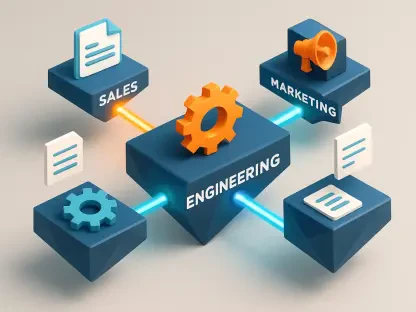
The creation of Generali Core Tech is a cornerstone of the “Lifetime Partner 27: Driving Excellence” plan, serving as the engine for our technological transformation. By centralizing our development capabilities into a single software factory, we are moving away from fragmented, local silos toward a unified architecture that promotes group-wide synergies. To make this work, we are deploying a team of 150 specialists who function as a center of excellence, bridging the gap between global scale and local market agility. The transition follows a deliberate, multi-step process: we first establish a robust, shared core and then work in tight collaboration with local business units to ensure their specific regulatory and cultural requirements are met. This structural shift is less about imposing a top-down mandate and more about creating a high-speed highway where local teams can build and deploy new services faster than ever before.
With the “Insurance in a Box” platform now expanding into markets like Portugal and Croatia, what are the primary technical hurdles in scaling to 15 million policies?
Scaling “Insurance in a Box” to manage approximately 15 million policies across diverse territories like Spain, Switzerland, and now Eastern Europe requires a delicate balance of standardization and local flexibility. One of the primary hurdles is ensuring the architecture remains performant while handling the massive data loads associated with both Life and Property & Casualty segments. We address this by utilizing a modular design that allows us to maintain a shared core infrastructure while plugging in localized features for specific markets such as Portugal or Hungary. This approach generates significant economies of scale and scope, effectively lowering the cost per policy as we expand. By partnering with platform providers like RGI, we ensure that our underlying technology is resilient enough to support millions of customers while remaining agile enough to pivot when local market conditions change.
Your team of 150 specialists is integrating Gen AI into the software development lifecycle. How are these tools specifically changing your coding workflows, and what role does the partnership with external platform providers play in evolving this shared core infrastructure?
Integrating Generative AI into our development lifecycle is radically changing how our experts build and deploy new systems across the Group’s entire footprint. Instead of spending hundreds of hours on boilerplate code, our 150 specialists use AI-powered tools to automate routine tasks, allowing them to focus on high-level architecture and complex problem-solving. This shift doesn’t just speed up production; it improves the overall quality and security of the code by identifying potential errors earlier in the process. Our partnership with external providers like RGI is crucial here, as it provides a stable but evolving core that we can augment with these cutting-edge AI capabilities. By weaving AI directly into the fabric of our workflow, we are essentially building a smarter, more adaptive version of “Insurance in a Box” that evolves alongside the technology itself.
Given the planned investment of over €1.2 billion in technology and AI, what specific metrics will define success for operational efficiency?
An investment of €1.2 to €1.3 billion is a serious commitment to our digital future, and we track its success through clear metrics focused on agility, cost-reduction, and customer satisfaction. We look closely at the speed-to-market for new products, aiming to see a significant reduction in the time it takes to move a concept from the software factory to a live policy in Croatia or Slovenia. On the back end, success is defined by the seamless integration of our digital infrastructure, which reduces redundant legacy costs and improves our overall operating model. Ultimately, the most important metric is the value delivered to the end customer; a more efficient back end translates into smoother digital interactions, faster claims processing, and a more personalized relationship. When our internal systems run better, our customers feel it through a more reliable and responsive service, reinforcing our position as a lifetime partner.
What is your forecast for the role of centralized software factories in the global insurance industry?
I believe the centralized software factory model will become the standard for any global insurer that wants to survive the next decade of digital disruption. We are moving toward a future where “insurance as a service” requires a level of technological agility that local, decentralized teams simply cannot maintain on their own. By consolidating talent and leveraging Gen AI at scale, companies can achieve the “industrialization” of software development, turning what used to be a bottleneck into a primary competitive advantage. In the coming years, we will see these factories evolve from mere delivery hubs into innovation engines that proactively identify risk trends and deploy solutions in real-time. The insurers that master this centralized-yet-flexible approach will be the ones that define the market, leaving those tied to legacy, fragmented systems struggling to keep pace.