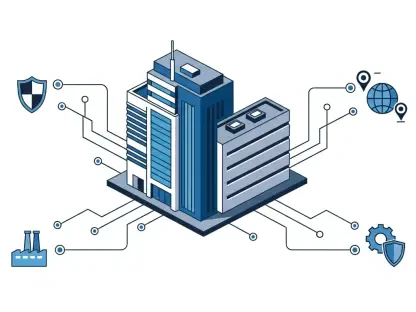

The silent hum of servers powering our interconnected world has become the new heartbeat of the global economy, yet a single power failure could now trigger a financial shockwave far greater than any physical catastrophe. This escalating reality is forcing the insurance industry to fundamentally rewrite its approach to the digital infrastructure that underpins everything from cloud computing to generative artificial intelligence. As data centers evolve from high-value properties into a systemic asset class, their risk profile has outgrown the traditional insurance policies designed to protect them, prompting a radical shift toward a more integrated and forward-thinking framework.
When the Cloud Goes Dark What Is the Real Price of an AI-Driven Outage
The exponential growth of AI has created an insatiable appetite for computational power, concentrating immense operational and financial risk within the walls of hyperscale data centers. A prolonged outage at one of these critical hubs no longer represents a simple property damage claim; it signifies a systemic failure with the potential to paralyze entire sectors of the economy. The intricate web of dependencies means a single grid failure or cyber event can trigger a cascade of contingent business interruption claims, as countless businesses that rely on cloud services grind to a halt.
This interconnectedness presents a profound challenge for insurers. The aggregation of risk is immense, with a localized blackout or fuel supply disruption having the potential to cause correlated losses across a vast digital supply chain. Insurers are now grappling with how to quantify and underwrite the staggering financial consequences of the cloud going dark in an AI-driven world, where downtime is measured not just in lost revenue but in the disruption of essential services and global commerce.
The New Digital Bedrock and Its Concentrated Risk
Data centers have transitioned from being specialized real estate assets to occupying a role as indispensable as that of utilities or major transportation networks. They are the bedrock of the digital age, and this elevated status demands a reclassification of their risk profile. Historically viewed through the lens of property insurance, these facilities are now recognized as a critical, interconnected infrastructure class whose stability is vital to global economic health. This re-evaluation acknowledges that their value is not merely in the hardware they contain but in the continuous flow of data they enable.
This shift, however, introduces a significant paradox. The same AI advancements that make data centers more critical also escalate their operational demands, particularly concerning energy consumption. The massive power requirements of modern AI-ready campuses create unprecedented vulnerabilities. The concentration of so much computational power in a single location amplifies the potential impact of localized hazards, from energy security threats to political instability, transforming a property risk into a systemic one.
Deconstructing the New Insurance Playbook for Digital Infrastructure
The traditional, siloed approach to insurance—where property, cyber, and liability are underwritten separately—is proving inadequate for the complex risk ecosystem of a modern data center. This one-size-fits-all model fails to capture the interdependent nature of the threats these facilities face, leaving dangerous gaps in coverage and creating potential conflicts between different policies during a claim. A fire, for example, is simultaneously a property loss, a business interruption event, and a potential trigger for a massive data liability crisis.
In response, a more holistic framework is emerging, one that views risk through an integrated, cross-class portfolio lens. Pioneering initiatives, such as the eight-point “digital infrastructure” framework from Willis, a WTW business unit, are moving the industry toward a unified model that combines property, construction, cyber, political risk, and other coverages into a cohesive strategy. This approach is designed to provide comprehensive, lifecycle protection that mirrors the interconnected reality of data center operations, from the initial construction blueprint to long-term operational uptime.
Sizing Up the Stakes in a Multi Billion Dollar Market
The financial scale of insuring the world’s digital backbone is staggering and continues to grow at an unprecedented rate. The market for data center insurance premiums has already become a US$10 billion segment, reflecting the immense value and risk concentrated within these facilities. Leading insurers are underwriting massive portfolios; for instance, FM Global alone insures approximately 1,100 data centers with a combined insurable value of around US$250 billion. This highlights the immense capital now dedicated to protecting these critical assets.
This growth is driven not just by property values but by the expanding exposure to business interruption. The market for dedicated data center business interruption coverage is ballooning, with standalone premiums already reaching US$3.9 billion. This surge underscores the industry’s heightened awareness of how grid failures and other disruptions can trigger cascading claims across the digital economy. As a result, major brokers have already secured over US$3 billion in dedicated capacity for new hyperscale projects, signaling a clear industry trend toward more specialized and robust coverage solutions.
A Strategic Guide to Adopting a Modernized Risk Management Framework
The most effective risk management strategies are no longer reactive but are proactively embedded into the very design and construction of a data center. By integrating risk mitigation from the earliest planning stages, operators can build in resilience against physical and digital threats, from fortifying power sources to implementing advanced cybersecurity protocols. This proactive stance is essential for minimizing the likelihood of disruption and ensuring operational continuity in an environment of escalating threats.
Ultimately, protecting these vital assets requires a customized approach that moves far beyond a simple property policy. A modernized framework aligns capital directly with exposure, creating a tailored balance sheet protection strategy that accounts for the full spectrum of risks. This involves integrating coverage for cyber threats, political risks, and complex construction projects into a single, coherent portfolio. This evolution in risk management treats data centers not as buildings, but as the dynamic, mission-critical systems they are.
The shift in the insurance landscape reflected a profound understanding that data centers had become the central nervous system of the global economy. The industry successfully moved beyond outdated models, embracing a holistic and lifecycle-oriented approach that recognized the systemic importance of digital infrastructure. This strategic pivot ensured that as the world became more reliant on AI and cloud computing, the framework designed to protect its foundation was resilient enough to support it.