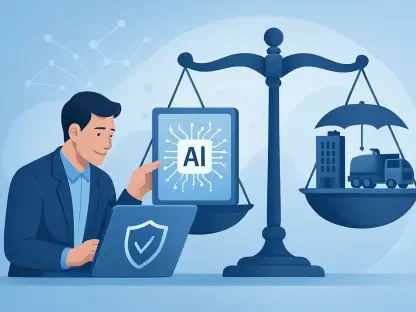

What happens when a technology designed to revolutionize efficiency turns into a silent threat lurking within the insurance industry? Artificial Intelligence (AI) has promised to transform underwriting, claims processing, and customer interactions with unparalleled speed. Yet, hidden beneath this digital progress lies a vulnerability—Model Context Protocol (MCP)—that could unravel entire systems with a single exploit. This emerging risk is not just a tech glitch; it’s a potential crisis for insurers navigating an increasingly connected world.
Why MCP Is the Hidden Danger Insurers Can’t Ignore
At the heart of AI’s integration into insurance lies MCP, a protocol that enables seamless, real-time interaction between AI models and digital ecosystems. Think of it as the bridge that connects data, tools, and applications. While this connectivity drives operational agility, it also creates an unseen attack surface. A misconfigured MCP server or overly permissive access control can become an open door for cybercriminals to steal sensitive data or manipulate records. This isn’t a distant possibility—it’s a pressing concern that demands attention.
The stakes are higher than ever as digital supply chains bind insurers, businesses, and clients into a tight web. A single breach through MCP doesn’t just affect one entity; it can ripple across entire portfolios, causing widespread damage. Insurers, often focused on the shiny promise of AI, might overlook this quieter threat. But ignoring MCP’s vulnerabilities risks financial losses, eroded trust, and regulatory scrutiny in an industry already under pressure to adapt.
AI’s Efficiency Comes with a Cyber Cost
The rapid adoption of AI in insurance has streamlined everything from risk assessment to customer service. Underwriters now process complex datasets in minutes, and claims are settled with automated precision. However, the very technology enabling these advancements introduces a paradox. MCP, the unsung enabler of AI scalability, lacks the robust security frameworks needed to fend off modern cyber threats. Traditional defenses, built for a less interconnected era, are ill-equipped for this challenge.
This gap in protection is more than a technical oversight. It’s a business survival issue. As insurers lean on AI to stay competitive, they inadvertently increase their exposure to attacks that exploit MCP flaws. The fallout from such breaches could undermine customer confidence and destabilize financial standings. What was once a tool for progress becomes a liability if not addressed with urgency and foresight.
The Domino Effect of Interconnected Vulnerabilities
MCP’s interconnected nature amplifies its risks to a staggering degree. Unlike isolated software flaws, a vulnerability in this protocol can cascade through organizations, impacting not just a single insurer but an entire network of partners and clients. Research highlights that as generative AI tools proliferate, MCP-related weaknesses are silently spreading through digital supply chains, creating a complex web of exposure that’s tough to untangle.
Real-world incidents paint a grim picture. Attackers have already begun targeting MCP to manipulate AI outputs or extract confidential information, showcasing how these flaws are not theoretical but active threats. For insurers, this means a breach in one corner of the market could trigger a chain reaction, affecting countless stakeholders. The scale of this interconnected risk underscores why static, outdated security measures are no longer enough to keep pace.
Experts Sound the Alarm on AI-Driven Threats
Industry voices are growing louder about the perils of unchecked AI integration. Andy Thomas, CEO and founder of a leading London-based cyber risk specialist, warns that the AI boom is racing ahead of existing security protocols, leaving dangerous gaps for exploitation. His insights, backed by extensive research, point to a surge in MCP-related attacks where cybercriminals distort AI models or siphon sensitive data with alarming ease.
These warnings are not mere speculation. Reports of rising incidents signal that the threat is already here, unfolding in real time. Insurers face a critical juncture—continue to prioritize innovation without safeguards, or confront this hidden frontier head-on. The consensus among experts is clear: inaction is not an option when the integrity of entire digital ecosystems hangs in the balance.
Strategies to Shield Insurers from AI Risks
To combat these evolving dangers, proactive measures are essential. Continuous monitoring across portfolios offers a vital first step, enabling insurers to detect shifts in risk profiles as they happen. This isn’t just about watching individual clients but also scrutinizing the broader digital supply chain for MCP vulnerabilities. Staying ahead of threats means spotting weak links before they spiral into systemic crises.
Beyond vigilance, smarter risk selection hinges on better data. High-quality cyber intelligence can refine how insurers assess exposure, factoring in AI-specific risks like MCP flaws. Moreover, policy language must evolve to explicitly cover incidents tied to AI and its protocols, ensuring clarity for underwriters and clients alike. This not only reduces financial exposure but also signals a commitment to tackling modern challenges.
Finally, resilience demands a dual focus—strengthening individual organizations while addressing market-wide dependencies. Shared vulnerabilities in the AI era mean that a breach anywhere is a threat everywhere. Collaborating on industry standards for MCP security could prevent widespread fallout from a single exploit, fostering a collective defense against cyber risks that no insurer can face alone.
Reflecting on a Path Forward
Looking back, the journey through AI’s integration into insurance revealed a stark reality: innovation often walked hand-in-hand with vulnerability. The lessons learned from grappling with MCP’s hidden dangers underscored the need for balance between technological leaps and security readiness. Insurers who hesitated to adapt found themselves exposed, while those who acted gained a foothold in a shifting landscape.
The next steps crystallized around collaboration and foresight. Industry leaders pushed for shared frameworks to secure MCP and similar protocols, while individual firms invested in dynamic monitoring and updated policies. A commitment emerged to harness AI’s potential without succumbing to its pitfalls, ensuring that the promise of efficiency never overshadowed the imperative of protection. This collective resolve paved the way for a safer, more resilient future in insurance.