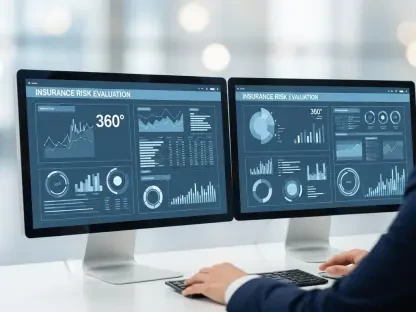

The era of the weary actuary buried under stacks of thousand-page technical manuals is rapidly giving way to a more efficient landscape where data speaks directly to the professionals who manage it. For decades, the insurance industry relied on manual navigation of dense documentation to build and maintain risk models, a process that often delayed critical decision-making. The emergence of the FIS Insurance Risk Suite AI Assistant signifies a definitive shift in this paradigm, replacing hours of manual research with a generative interface that understands the nuances of complex risk modeling.
This transformation represents a fundamental reconfiguration of how human expertise interacts with institutional data. By moving away from static data lookups, insurance firms are beginning to utilize instantaneous intelligence to streamline their operations. The change is not merely an incremental software update but a strategic pivot that allows actuaries to focus on high-level analysis rather than the mechanical task of searching through technical literature.
The End of the Manual Actuarial Bottleneck
Traditional insurance operations have long been hindered by the necessity of manual data retrieval, which created a significant bottleneck in the risk assessment process. Actuaries were often anchored by the requirement to cross-reference multiple technical sources before they could even begin the actual modeling work. This manual labor consumed valuable time that could have been spent on strategic risk mitigation, leading to a reactive rather than a proactive business posture.
The integration of generative AI into the FIS Insurance Risk Suite changed the nature of this work by providing an intuitive layer of interaction between the user and the system. Instead of navigating thousands of pages, professionals now utilize an AI-driven interface that retrieves relevant information in seconds. This democratization of information ensures that technical insights are no longer siloed within specific documents but are available to the entire actuarial team instantly.
Why Real-Time Risk Modeling Is No Longer Optional
The global insurance industry currently faces a volatile environment where traditional quarterly modeling cycles are becoming obsolete. Extreme climate events and the rapid proliferation of cyber threats have created a reality where risk variables shift faster than manual processes can track. To maintain solvency and a competitive advantage, insurers require a level of agility that matches the pace of global market fluctuations.
Modern financial ecosystems demand a more responsive approach where speed and precision are simultaneous requirements. By integrating generative AI, FIS addressed the urgent need for tools that can process real-time data and provide immediate insights. This transition toward more frequent and accurate modeling allows firms to adjust their strategies dynamically, ensuring they remain resilient in the face of sudden environmental or digital disruptions.
Breaking Down the FIS Insurance Risk Suite AI Assistant
The AI Assistant serves as a sophisticated bridge between the actuary and the underlying modeling software, offering features that extend well beyond simple search functions. One of its primary advantages is instantaneous multilingual technical support, which provides immediate guidance on model construction across global teams. This ensures that a firm operating in multiple jurisdictions can maintain uniform efficiency and standards without the delays typically caused by language barriers or regional documentation differences.
Furthermore, the tool is evolving toward a low-code future through autonomous code generation and maintenance. By automatically generating code segments, the assistant significantly reduces the margin for human error in complex calculations. It also handles automated error documentation and explanation, identifying calculation errors and providing detailed descriptions to accelerate the validation process. These capabilities are bolstered by the massive data intelligence engine provided by the $13.5 billion TSYS acquisition, which refined the accuracy of predictive risk models.
Expert Perspectives on the Shift to Agentic Commerce
Industry leaders view the FIS Insurance Risk Suite AI Assistant as a foundational component of a broader movement toward agentic commerce. This vision involves AI digital assistants that do not merely suggest actions but autonomously source, negotiate, and complete transactions on behalf of the organization. As these agents become more autonomous, the industry must adopt “Know Your Agent” (KYA) protocols, which serve as a digital evolution of traditional compliance standards.
This shift is projected to secure a significant foothold in an autonomous commerce market that could reach $5 trillion by 2030. FIS positioned itself as a central orchestrator in this machine-to-machine economy, where AI agents handle the bulk of transactional friction. Strategists suggested that the transition to these autonomous frameworks would allow insurance firms to operate with unprecedented scale and efficiency, provided they integrated these agents into established fraud and authorization systems early.
Strategies for Integrating AI-Driven Risk Infrastructure
Organizations that successfully navigated the transition to AI-driven infrastructure adopted a deliberate framework for implementation. They moved away from fixed quarterly updates and toward a continuous modeling cycle supported by AI-assisted data processing. This shift enabled a more dynamic response to market changes, ensuring that risk assessments remained current. The democratization of technical knowledge through AI assistants also bridged the gap between senior actuaries and junior analysts, allowing specialized expertise to flourish across entire departments.
The focus on data intelligence synergy became a priority as firms leveraged combined power from massive data engines. These organizations integrated AI agents into their existing fraud systems, preparing for the rise of agentic commerce before it became a standard market requirement. By focusing on these strategic areas, the industry ensured that the move toward a dynamic, intelligence-driven infrastructure mirrored the fast-paced nature of modern global markets, ultimately securing a more stable and profitable future.