
The unprecedented arrival of Storm Austen and Storm Boelo within a mere twenty-four-hour window has forced the insurance industry to reevaluate its catastrophic response protocols while facing a surge of claims across the United Kingdom and Ireland. This atmospheric cluster represents a departure from typical seasonal patterns, presenting a dual-front crisis that challenges both physical infrastructure and the financial reserves of major carriers. As the transition from immediate emergency response to the logistical recovery phase begins, the significance of this event lies in its ability to expose vulnerabilities in modern risk modeling. This article explores how the convergence of these two systems creates a unique burden for the sector, analyzing the intricacies of policy language and the shifting landscape of liability in an increasingly volatile climate.
Navigating the Dual-Front Atmospheric Crisis: Economic Ripples
The intensity of these weather systems was marked by extreme wind speeds and record-breaking precipitation that crippled regional stability. Observations recorded gusts reaching up to 85 mph in coastal regions, while inland elevations faced rainfall levels exceeding 130 mm in localized pockets. Such conditions resulted in tragic human consequences, including fatalities and significant injuries from structural failures, which immediately signaled a high-frequency claims environment for insurers. The speed at which Storm Boelo followed Austen prevented traditional restoration efforts from taking hold, creating a compounding effect that exacerbated existing damage and hindered the mobilization of adjusters.
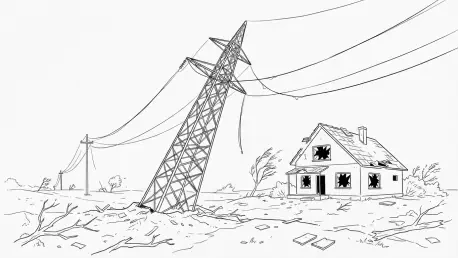
Beyond the immediate human toll, the economic ripples are evidenced by the massive failure of power grids and transportation networks across multiple territories. Approximately 838,700 properties lost electricity, with restoration timelines stretching over several days due to the hazardous conditions. Rail services and maritime operations faced complete shutdowns, with storm surges in coastal towns pushing vessels into residential areas. These disruptions have created a significant backlog in the supply chain, as utility providers and transport authorities struggle to stabilize operations. For the insurance sector, this means the focus is not only on property restoration but also on the systemic losses associated with a paralyzed economy.
Industry leaders observe that the current situation is a precursor to a more complex era of atmospheric management. The rapid succession of these storms suggests that the time between events is shrinking, leaving little room for organizational recovery. Consequently, the financial strain is not localized to a single region but is felt across the entire European insurance market. This section of the crisis highlights the need for a more integrated approach to catastrophe planning, where the interplay between meteorological severity and infrastructure resilience is examined through a more critical lens.
Assessing the Financial and Operational Strain: The Insurance Sector
The sheer volume of incoming claims has placed an immense administrative burden on carriers, requiring a rapid deployment of digital and field resources. Financial analysts are closely monitoring the situation to determine if the loss totals will rival previous record-breaking seasons, noting that the operational strain is intensified by the geographical spread of the damage. This dual-storm event requires insurers to manage thousands of simultaneous assessments, a task that tests the limits of their internal processing capacity and third-party contractor networks.
Furthermore, the complexity of these events introduces a layer of scrutiny regarding the financial stability of smaller niche providers. While larger organizations may have the capital to absorb the initial shocks, the cumulative nature of Austen and Boelo could trigger significant shifts in the competitive landscape. As firms assess the total payout, the focus shifts toward the technicalities of the insurance contract, where the difference between a minor loss and a catastrophic insolvency often resides in the fine print.
The “Two-Storm” Deductible DilemmPolicy Interpretation
One of the most contentious issues arising from this disaster is the interpretation of deductibles when two distinct storms strike the same location within a single day. Industry experts are debating whether a property damaged by both Austen and Boelo should be subject to one or two “excess” payments. If an initial gust from Austen weakened a structure and a subsequent blast from Boelo destroyed it, the claim process becomes a forensic exercise in determining which event was the primary cause of the final loss.
Policyholders often view these events as a single period of turmoil, but many standard homeowners’ policies treat every named storm as a separate occurrence. This distinction creates a potential friction point between brokers and their clients, as paying multiple deductibles can significantly reduce the net recovery for the insured party. Adjusters are being encouraged to look toward specific policy wording to see if an “anti-concurrent causation” clause exists, which might simplify the process but could also lead to more rigid and unfavorable outcomes for the consumer.
Reinsurance Triggers: The 72-Hour Aggregation Clause
For the primary insurer, the ability to recover funds from global reinsurers depends heavily on the “hours clause” found in most treaty agreements. These clauses typically allow an insurer to aggregate all losses occurring within a 72-hour window into a single “occurrence” for the purpose of meeting a reinsurance trigger. Because Austen and Boelo fell well within this timeframe, many firms are hopeful that they can treat the twin storms as one event, thereby hitting their retention limits more quickly and accessing reinsurance capital.
However, some reinsurance contracts are more restrictive, defining an occurrence by the meteorological identity of the storm rather than a simple timeframe. If a reinsurer argues that the two systems were distinct atmospheric entities, they may require the insurer to meet two separate retention limits. This debate illustrates the inherent risks in current reinsurance modeling, as the industry shift toward more frequent “secondary perils” makes the traditional 72-hour aggregation clause a focal point of future legal and contractual negotiations.
Categorizing the Loss: Structural Failures and Business Interruption
The categorization of losses following these storms reveals a diverse array of claims, ranging from common property damage to complex commercial interruptions. Property damage remains the dominant category, featuring roof collapses, flood-related degradation, and arboreal impacts. Motor vehicle insurance also faces high volumes, as falling debris and wind-thrown objects have caused extensive damage in urban centers. Specialized marine insurance has been particularly impacted, as the surge-driven displacement of boats in coastal towns represents a niche but high-value segment of the loss pool.
In contrast, business interruption claims present a more nuanced challenge for the sector. While physical damage to a storefront typically triggers coverage, many businesses suffered losses solely due to the extended power outages or road closures that prevented customer access. Most standard policies require physical damage to the insured property to activate business interruption payouts. This gap in coverage often leaves small businesses vulnerable, leading to calls for more flexible extensions that account for the systemic failure of utilities and infrastructure.
Liability Landscapes: The Complexity of Foreseeable Damage
Liability claims are emerging as a significant long-term concern for the industry, particularly concerning injuries sustained from falling trees or collapsing temporary structures like scaffolding. Legal analysts are examining the concept of “foreseeable damage” to determine if property owners or contractors took reasonable steps to secure their assets before the storms arrived. If a scaffolding system in London failed because it was not properly weighted for the predicted wind speeds, the contractor could face substantial negligence claims that fall under their professional liability coverage.
Similarly, landowners are being scrutinized for the maintenance of trees on their property. A falling tree that strikes a pedestrian or a neighboring home is not always considered an unavoidable accident; if the tree was diseased or poorly maintained, the owner’s liability insurance may be called upon to provide compensation. These cases often hinge on expert testimony regarding the health of the tree and the severity of the winds, adding another layer of complexity and cost to the adjustment process.
Strategic Mitigation: Best Practices for Recovery Management
Managing the recovery following such a massive meteorological event requires a proactive and highly organized approach from both insurers and policyholders. Claims adjusters recommend that documentation begin immediately, with high-resolution photography and detailed notes on the timing of damage. Distinguishing between the impacts of Austen and Boelo is vital for the adjustment process, as it allows for a more accurate application of deductibles and a smoother path toward final settlement.
Retaining receipts for emergency “make-safe” repairs is another critical step in the recovery journey. Insurers generally compensate for the costs incurred to prevent further damage, such as tarping a roof or boarding up shattered windows, provided these actions are well-documented. Additionally, policyholders should check for specific coverage regarding food spoilage and alternative living expenses, which can provide immediate financial relief during the days when a home remains uninhabitable or without power.
Professional brokers play a central role in navigating the nuances of compensation, especially when dealing with utility providers. It is important for consumers to recognize that compensation for long-term power outages often comes from the network operator rather than the insurance company. By understanding the distinction between statutory utility payments and insurance claims, policyholders can maximize their recovery and ensure that all avenues of financial support are explored during the difficult weeks following the storms.
Future-Proofing the Industry: Increasing Meteorological Volatility
The insurance sector recognized that traditional response frameworks were no longer sufficient for managing the fallout of atmospheric clusters. Leaders within the industry highlighted the necessity of granular data collection and real-time adjustment to navigate the surge in claims. By prioritizing transparency and clearer policy language, firms aimed to bridge the gap between consumer expectations and contractual obligations. The transition toward more resilient underwriting models became a defining strategy for organizations seeking to remain solvent in an era of heightened volatility.
The strategies implemented following these events focused on the long-term integration of climate data into daily operations. This approach allowed carriers to refine their risk assessments and provide more accurate pricing for properties in high-risk zones. The industry concluded that while the physical storms had passed, the lessons learned from Austen and Boelo would dictate the trajectory of insurance for years to come. Moving forward, the focus must remain on developing innovative coverage solutions that address the reality of back-to-back catastrophic events, ensuring that the financial safety net remains intact for all stakeholders.