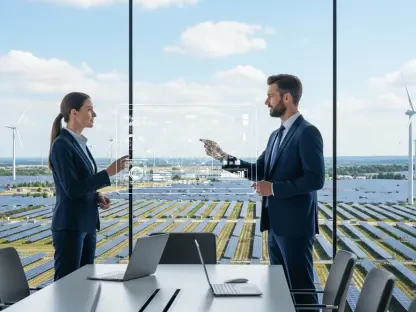

Modern insurance providers increasingly struggle to evaluate property risks in a landscape where climate instability and urban density create unprecedented layers of complexity for traditional underwriting methods. To address these mounting challenges, Cytora has established a strategic partnership with Altitude Intelligence to integrate high-resolution geospatial intelligence directly into digital workflows. This collaboration signals a definitive move away from the era of manual data collection, where underwriters spent hours cross-referencing static maps and historical records. By embedding Altitude’s multi-source data fusion capabilities, the platform now automatically enriches incoming submissions with precise environmental and structural insights. This shift allows commercial carriers to bypass the administrative bottlenecks that once plagued the industry, enabling a more responsive approach to risk selection. As the industry moves forward between 2026 and 2028, the emphasis remains on establishing a seamless digital ecosystem that prioritizes accuracy and speed. This integration ensures that every submission is assessed against a backdrop of real-time geospatial data, transforming the role of the underwriter from a data gatherer into a strategic decision-maker.
The Integration Of Advanced Multi-Source Data Fusion
The technical foundation of this evolution rests on the sophisticated combination of open-source intelligence and specialized geospatial analysis to produce a granular view of asset-level exposure. By converting fragmented and unstructured submission data into structured intelligence, the partnership allows underwriters to visualize physical risks with unprecedented clarity. This process involves the seamless injection of external data sources into the enrichment stage of the underwriting lifecycle, ensuring that climate-related vulnerabilities are quantified long before a policy is issued. Instead of relying on broad regional averages, the system analyzes specific coordinates to determine the proximity of hazards such as flood zones, wildfire paths, or coastal erosion. The ability to fuse diverse data streams—ranging from satellite imagery to local building permits—creates a comprehensive risk profile for any commercial asset. This methodology eliminates the high margin for error associated with human entry and provides a bedrock of factual evidence for pricing. As organizations look toward the period from 2026 to 2030, the adoption of these automated workflows will likely distinguish market leaders from those hampered by legacy systems.
Strategies For Future Proofing Commercial Insurance Workflows
Leaders who successfully navigated these technological shifts prioritized the alignment of automated data extraction with proactive risk management strategies. They moved beyond basic hazard mapping and invested in platforms that supported resilient decision-making through specialized intelligence. The integration of high-resolution climate insights allowed firms to refine their capacity allocation, ensuring that capital was deployed where it was most protected from volatility. Organizations that adopted these tools early recognized that precise geospatial context was the fundamental requirement for maintaining profitability in a complex global market. These firms established rigorous protocols for data verification, which significantly reduced the time spent on manual research while simultaneously increasing the accuracy of policy pricing. Moving into the next cycle of development, the focus shifted toward expanding these capabilities to include real-time monitoring of insured assets during extreme weather events. This proactive stance empowered insurers to offer better advisory services to clients, ultimately fostering a more stable and predictable underwriting environment. Decision-makers consolidated their technology stacks to ensure that every analyst had access to a unified source of truth regarding property vulnerabilities.