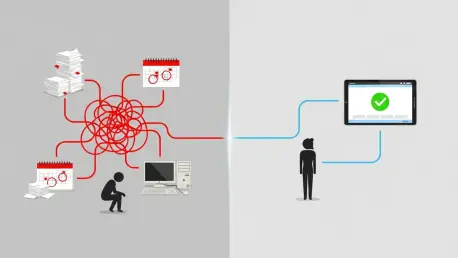

In the relentless pursuit of national expansion, many insurance organizations are unknowingly anchored by an invisible drag on their growth: an outdated and manual approach to producer licensing. This is not merely an administrative inconvenience; it represents a significant operational risk that can stifle growth, drain resources, and expose a firm to severe regulatory penalties. As the industry becomes more complex and competition intensifies, the way an organization manages its producer compliance is no longer a back-office task but a critical indicator of its strategic foresight and operational maturity. The central question for leaders is whether their licensing function operates as a reactive, costly burden or a proactive, strategic asset that enables secure and efficient expansion.
The Silent Sabotage of Manual Licensing Management
At the heart of legacy compliance systems lies a dependency on obsolete tools that are fundamentally unsuited for the dynamic regulatory landscape. Spreadsheets, while familiar, quickly become a primary source of risk. A single file shared among team members devolves into a version-control nightmare, where data is often outdated the moment it is entered. This creates a fragmented and unreliable picture of an organization’s compliance posture, fostering a false sense of security while critical renewal dates pass unnoticed.
This flawed foundation is often compounded by a reliance on producer self-reporting, a practice that shifts the administrative burden onto sales-focused individuals whose priorities lie elsewhere. While individual lookups on the National Insurance Producer Registry (NIPR) and state portals are possible for one-off checks, the method is entirely unscalable for managing a network of hundreds or thousands of producers. Consequently, compliance teams are trapped in a cycle of manual data entry and cross-referencing, diverting valuable time and effort away from strategic initiatives and toward administrative firefighting.
Reaching the Breaking Point in a Multi-State Environment
The inherent weaknesses of manual systems are magnified exponentially in a multi-state operational environment. Each state functions as a distinct regulatory jurisdiction with its own unique rules, renewal schedules, and continuing education (CE) mandates. Navigating this fragmented gauntlet without a centralized system is an overwhelming task, fraught with the potential for human error. A missed deadline in one state can have a cascading effect, jeopardizing a producer’s ability to conduct business and generating compliance red flags.
The consequence of inaction is a predictable and damaging bottleneck that directly impedes business objectives. When compliance teams are bogged down by manual processes, the onboarding of new producers slows, and expansion into new territories is delayed. More critically, the lack of real-time visibility into license statuses exposes the organization to significant compliance risks, including fines and sanctions. This reactive posture ultimately translates into lost revenue, as producers may be unable to sell while their credentials are in limbo, turning a manageable administrative function into a major liability.
Shifting from a Reactive to a Proactive Compliance Stance
The definitive solution to these challenges lies in the adoption of modern, automated licensing platforms that transform the compliance function from reactive to proactive. The cornerstone of these systems is the establishment of a single source of truth through direct, real-time integration with the NIPR. By leveraging a producer’s National Producer Number (NPN), these platforms instantly retrieve and centralize a complete profile, including all licenses, lines of authority, and expiration dates. Daily synchronization ensures this data remains consistently accurate, eliminating the need for manual verification.
This centralized data hub powers the automation of core compliance functions. Proactive renewal management tools send automated alerts at strategic intervals—such as 90, 60, and 30 days before expiration—to both producers and managers. These systems provide state-specific workflows, offering direct links to renewal portals or necessary forms. Similarly, comprehensive CE monitoring tracks credit hours, ensures subject-specific mandates are met, and empowers producers with self-service dashboards to manage their own educational progress, fostering accountability while reducing the administrative load on compliance teams.
Unlocking a Strategic Advantage Through Modernization
The benefits of a modernized approach extend far beyond administrative efficiency, unlocking a tangible competitive advantage. A crucial feature is the ability to forge an unbreakable link between licensing and appointments, ensuring a producer is fully licensed and verified in a state before they can be appointed to sell. This automated verification prevents non-compliant sales activities and allows for smarter financial decisions by flagging inactive producers for whom unnecessary state appointment fees are being paid.
The bottom-line impact is substantial. By streamlining workflows and reducing manual intervention, modern licensing tools can reduce operational costs by up to 70 percent. This efficiency also strengthens an organization’s readiness for regulatory audits, providing a centralized and easily accessible trail of all compliance activities. Furthermore, by removing administrative hurdles and creating a seamless experience, these platforms improve producer satisfaction and retention. When producers can focus on selling rather than paperwork, they are more productive and more likely to remain with the organization.
A Blueprint for Transforming Licensing into a Strategic Function
Transitioning licensing from a cost center to a strategic enabler requires a clear, methodical approach. The first step is to make licensing verification the initial checkpoint in the onboarding process, ensuring compliance from day one. Next, organizations must implement intelligent automation, configuring customized reminders and workflows that account for varying state-specific processing times to prevent any lapses.
A successful transformation also hinges on empowering producers. Providing them with self-service tools fosters a sense of ownership and accountability for their compliance obligations, freeing up internal teams to focus on higher-value tasks. Meticulous documentation is the final pillar, creating a clear, auditable trail of all communications and compliance actions. While hurdles like incomplete NIPR data or unresponsive producers are inevitable, they can be effectively managed by establishing clear procedures and escalation paths, ensuring the integrity of the compliance framework remains intact.
The evolution from manual, burdensome licensing management to an automated, strategic function represented a pivotal shift for forward-thinking organizations. The decision to invest in modern platforms was not merely about upgrading technology; it was a fundamental change in mindset. Firms that successfully made this transition viewed compliance not as an obstacle to overcome but as an integrated component of their growth strategy. They recognized that operational efficiency and rigorous compliance were two sides of the same coin, and by addressing both simultaneously, they built a more resilient, agile, and competitive enterprise. The choice became clear: proactively modernize processes to support expansion or wait until compliance failures and competitive pressures dictated the change.