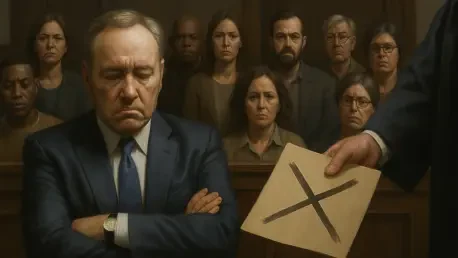

The high-stakes legal battle between the production company Media Rights Capital and its primary insurance provider has finally reached a definitive conclusion in a Santa Monica courtroom, signaling a major shift in how the entertainment industry manages the fallout from celebrity scandals. Media Rights Capital, the independent studio behind the political drama, sought to recover approximately twenty-nine million dollars in losses that were incurred after the sudden removal of their lead star, Kevin Spacey, during the height of the social movements that reshaped Hollywood standards. This particular case centered on the interpretation of specialized cast insurance policies and whether they provide a financial safety net when a performer’s personal behavior leads to a total production shutdown. Following a rigorous five-week trial, a jury determined that the insurer, Fireman’s Fund, was not liable for these massive costs, highlighting a critical legal distinction between a genuine medical incapacity and strategic business decisions made to mitigate public relations damage.
Distinguishing Medical Incapacity From Public Relations Crisis
The central dispute of the trial focused heavily on whether the removal of the lead actor was a medical necessity or a calculated move to preserve the brand’s integrity. Media Rights Capital’s legal strategy hinged on the argument that the actor’s unavailability was a direct result of a clinical diagnosis involving sexually compulsive behavior, which should have triggered the sickness clause of their policy. By framing the actor’s stay at a specialized treatment facility in Arizona as a response to a legitimate health crisis, the studio attempted to categorize the production delay as an insured event similar to a physical injury or a viral infection. They maintained that the medical diagnosis effectively rendered the star unable to perform his duties, leaving the production company with no choice but to pause operations and seek financial restitution. This creative legal framing sought to bridge the gap between psychological health and the contractual requirements of a high-budget television production.
In contrast, the defense presented by Fireman’s Fund argued that the decision to terminate the actor’s contract was almost entirely driven by the catastrophic bad publicity that emerged during the time. Their legal team emphasized that the studio made a proactive business choice to distance itself from the star to protect the commercial viability of the series and the reputation of the network. The insurer maintained that the policy was never intended to serve as a guarantee against the moral failings or controversial behaviors of a cast member. They pointed out that the decision to halt production occurred almost immediately after public allegations surfaced, long before any formal medical evaluation had been conducted or presented to the studio leadership. The jury ultimately sided with this perspective, concluding that the primary catalyst for the actor’s departure was the public scandal and the ensuing media firestorm rather than a covered medical condition that would have mandated an insurance payout.
The Financial Impact of Production Disruptions
The sudden and forced removal of the primary character, Frank Underwood, created a logistical nightmare for the creative team, resulting in substantial financial losses that the studio hoped to recover. In the wake of the firing, production was completely halted for several weeks as the writing staff scrambled to overhaul the narrative for the final season, which originally featured the lead actor in every major scene. This creative pivot was not just a narrative challenge but a massive financial burden that involved scrapping two fully completed episodes and several dozens of unused scripts. To maintain the show’s continuity and deliver a final product to the streaming platform, the studio was forced to reduce the season’s length from thirteen episodes to only eight. These drastic measures were cited as the primary reason for the twenty-nine million dollar deficit, as the studio had to pay for extended production timelines, new set constructions, and the salaries of a cast and crew that remained on standby during the hiatus.
Beyond the immediate costs of rewriting and reshooting, the studio argued that the insurance policy was their only defense against the unpredictable nature of lead performers in the modern entertainment landscape. Cast insurance is traditionally viewed as an essential safeguard for independent studios that lack the deep pockets of major conglomerates, providing a way to mitigate the risks of a production being derailed by unforeseen circumstances. The studio’s lawyers argued that the disruptions were exactly the kind of catastrophic events that these policies were designed to cover, regardless of whether the cause was physical or psychological. They asserted that without such protections, the financial viability of high-budget dramas would be permanently compromised by the personal actions of their stars. However, the court’s focus remained strictly on the language of the contract itself, evaluating whether the specific circumstances of this production stoppage met the narrow definitions of a covered loss under the sickness and disability provisions of the agreement.
A Complex Alliance and Strategic Settlement
One of the most strategically complex and unusual aspects of this legal battle involved the evolving relationship between the production studio and the actor they had previously removed. Initially, the two parties were embroiled in a bitter legal dispute that resulted in a thirty-one million dollar arbitration award in favor of the studio after it was determined the actor violated internal harassment policies. However, as the insurance litigation progressed, the studio realized they needed the actor’s cooperation and access to his confidential medical records to bolster their sickness claim. This led to a striking settlement agreement where the studio agreed to reduce the actor’s massive debt to a mere one million dollar payment in exchange for his testimony and full support in the lawsuit against the insurer. This arrangement created a peculiar dynamic in the courtroom, where the production company was essentially aligned with the very individual they had successfully sued for misconduct, all in a shared attempt to secure funds from a third-party insurance provider.
The mechanics of this settlement were highly specific, requiring the actor to pay the reduced one million dollar amount in installments representing ten percent of his after-tax income over a period of several years. This deal was not just a financial compromise but a tactical necessity for the studio’s legal team, as it allowed them to present a unified narrative regarding the actor’s alleged medical condition during the period of production. By securing the actor’s participation, the studio hoped to provide the jury with firsthand accounts of the psychological struggles that allegedly led to the diagnosis of sexually compulsive behavior. This partnership highlighted the lengths to which production companies will go to protect their financial interests, even if it means reconciling with a controversial figure who was previously deemed a liability. The strategic alliance was a gamble that ultimately failed to convince the jury, but it remains a fascinating example of the pragmatic and often unpredictable nature of corporate legal strategies in the high-stakes world of Hollywood television production.
Testimonial Conflicts and Industry Implications
During the trial, the testimony provided by the actor himself introduced several hurdles that likely complicated the studio’s efforts to maintain a consistent medical narrative for the jury. While he confirmed that he had received a diagnosis and sought treatment at a facility during the production hiatus, he also admitted under cross-examination that he did not personally believe the diagnosis was accurate. This admission created a significant rift in the studio’s argument, as it suggested that the sickness might have been a convenient explanation rather than a debilitating condition that made him unable to work. The jury’s decision to reject the claim reflects a consensus that insurance contracts must be interpreted literally rather than as broad safety nets for managing a company’s brand or public image. It underscores the reality that even if a performer seeks medical or psychological treatment following a scandal, the insurer is not obligated to pay if the studio’s decision to sever ties is fundamentally rooted in commercial protection or a response to public outcry.
The outcome of this case established a landmark precedent that forced entertainment companies to reevaluate their risk management strategies and the limitations of standard cast insurance policies. It clarified that insurers are not liable for losses resulting from business decisions made to mitigate reputational damage or respond to a shifting social climate. Moving forward, studios were advised to implement more robust behavioral clauses and contingency plans that do not rely solely on traditional insurance payouts for financial recovery. Legal experts suggested that production entities must now prioritize extensive vetting processes and internal oversight to identify potential behavioral risks before they escalate into production-ending scandals. The jury’s findings reinforced the idea that the financial burden of a star’s personal conduct remains a business risk that must be absorbed by the studio rather than offloaded to an insurance provider. By strictly defining the boundaries of medical incapacity, the court provided a clear roadmap for future litigation, ensuring that the distinction between a health crisis and a public relations crisis remains legally distinct.