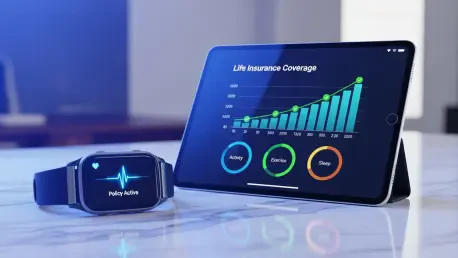

The initial wave of enthusiasm surrounding digital health-tracking applications in the insurance sector has recently encountered a sobering reality where participation rates often collapse within ninety days of initial enrollment. While many carriers successfully attracted policyholders through sleek interfaces and introductory rewards, a persistent disconnect emerged between the promise of long-term health monitoring and the actual daily habits of consumers. This engagement gap represents a significant hurdle for an industry that increasingly relies on continuous data to refine risk models and improve policyholder longevity. Most users initially perceived these tools as novelties rather than essential components of their financial or physical well-being. Consequently, when the novelty faded, the apps were frequently uninstalled or ignored, leaving insurers with incomplete datasets and a fragmented understanding of their customers’ health trajectories. Bridging this specific divide requires more than just better software; it demands a fundamental shift in how insurance companies perceive their role in the life of the insured.
Structural Barriers: Why Early Wellness Programs Stalled
Most existing wellness programs failed to maintain traction because they were originally designed as short-term promotional campaigns rather than comprehensive ecosystems built for continuous daily interaction. This marketing-heavy approach often prioritized high initial signup numbers over the sustained utility that keeps a user returning to a platform. When the advice provided by these systems remained generic—such as broad suggestions to walk ten thousand steps or drink more water—it failed to resonate with the specific, nuanced lifestyles of diverse policyholders. Without a personalized narrative, the digital experience became white noise, easily discarded once the initial sign-up incentive was claimed. Furthermore, these platforms frequently operated in isolation, completely detached from the core insurance benefits that consumers value most. This siloed existence meant that an individual’s effort to improve their health had no visible impact on their premium costs or policy terms, leading to a perception that the effort lacked any tangible economic or personal purpose.
Modern analysis reveals that the disconnect between wellness activities and core insurance functions created a significant psychological barrier for users who expected a more integrated relationship. When the data collected by a wearable device does not influence the underwriting process or result in immediate policy benefits, the incentive to maintain consistent reporting diminishes rapidly. Technology providers like dacadoo have observed that programs lacking a direct link to the insurance product lifecycle often struggle to move beyond the superficial level of digital badges or leaderboard status. These gamification elements, while useful for initial activation, proved insufficient for fostering the deep-seated behavior change necessary to impact mortality and morbidity rates over several years. As the industry moves toward 2027 and beyond, the focus is shifting toward creating a unified value proposition where health management is no longer an optional add-on but a central feature of the contract. This transition requires overcoming technical debt and legacy systems that have historically kept policy administration and wellness data in separate domains.
Behavioral Science: The Key to Sustained Digital Retention
Successfully maintaining user interest over long durations relies on a sophisticated synthesis of behavioral science and advanced data analytics to create a truly individualized experience. Instead of relying on static health assessments, leading insurers are now utilizing real-time data streams from a variety of wearable devices to adapt recommendations dynamically. This means that a platform might adjust its suggestions based on a user’s recent sleep patterns, nutrition trends, or cardiovascular strain, ensuring that the guidance remains relevant to the individual’s current physical state. By moving away from one-size-fits-all health tips, carriers can position themselves as proactive partners in a user’s wellness journey. This level of personalization is the primary driver of retention, as it transforms the app from a passive monitoring tool into an active, intelligent advisor. When a user feels that a platform understands their unique challenges and celebrates their specific milestones, they are much more likely to remain active for years rather than months.
Transitioning from superficial rewards to tangible incentives represents another critical evolution in bridging the engagement gap within the life insurance market. While digital trophies and social sharing features provide a temporary boost in activity, they do not offer the long-term motivation required for permanent lifestyle changes. Insurers are now implementing tiered benefit structures where verified health improvements, such as consistent blood pressure management or sustained physical activity, result in direct financial advantages. These might include premium discounts, enhanced death benefits, or even contributions to health savings accounts, providing a clear and measurable return on the user’s investment of time and effort. This approach replaces the “campaign” mindset with a “lifestyle” mindset, grounding the digital interaction in concrete economic reality. By aligning the financial interests of the insurer with the physical health of the policyholder, companies create a self-sustaining cycle of engagement that benefits both parties and leads to a more resilient, data-driven business model.
Data Utilization: Transforming Risk Assessment Through Constant Connectivity
The transition toward continuous engagement platforms provided insurers with a wealth of dynamic data that fundamentally altered the traditional approach to risk profiling and underwriting. Unlike the traditional medical exam, which captured only a single moment in time, these digital systems allowed for the monitoring of longitudinal trends in nutrition, sleep, and physical activity. This stream of information enabled a more granular understanding of risk, allowing for the identification of subtle health shifts long before they manifested as chronic conditions or acute medical events. By integrating this data into the broader product lifecycle, insurers moved away from the reactive stance of simply paying claims and toward a proactive model of prevention and risk mitigation. The ability to track real-time health metrics also facilitated more flexible policy structures, where terms could be adjusted based on the actual behavior of the insured. This shift not only improved the accuracy of pricing but also fostered a sense of transparency and fairness that was often missing from the traditional underwriting experience.
Strategically, the move toward integrated wellness platforms proved that the industry was capable of evolving beyond its historical constraints to meet the expectations of a modern, health-conscious consumer base. Organizations that prioritized deep integration over superficial marketing features successfully reduced policy churn and enhanced customer loyalty by becoming an indispensable part of the user’s daily routine. The data collected during this period served as the foundation for the next generation of life insurance products, which were increasingly characterized by their ability to adapt to the changing needs of the individual. As insurers looked toward the future, the lessons learned from overcoming the engagement gap became a blueprint for broader digital transformation efforts. Moving forward, the focus was placed on expanding these capabilities to include mental health monitoring and environmental risk factors, further solidifying the role of the insurer as a comprehensive wellness partner. This transformation ensured that the industry remained competitive in a rapidly changing landscape, where the value of a policy was measured as much by its daily utility as by its eventual payout.