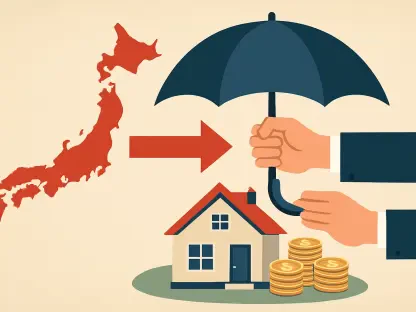

The escalating volatility of global weather patterns has forced a radical recalculation of risk, transforming once-stable residential zones into precarious financial voids known as insurance deserts. These regions are defined by an environment where extreme weather events have rendered traditional coverage either prohibitively expensive or entirely unavailable for the average homeowner. The central challenge for the modern economy involves bridging a staggering $162 billion annual gap in disaster-related costs while preventing the complete collapse of private market stability.
Addressing this crisis requires navigating a complex dual threat where technology acts as both a mechanism for exclusion and a potential catalyst for long-term resilience. While advanced modeling allows for more precise underwriting, it also risks isolating vulnerable communities by identifying hazards with surgical accuracy. Successfully managing this transition depends on whether the industry uses these tools to abandon high-risk zones or to provide the necessary data for targeted structural reinforcements.
Analyzing the Mechanics of Climate-Driven Insurance Exclusion
Insurance deserts emerge when the mathematical probability of loss exceeds the premium threshold that a local economy can support. As frequency and severity of storms increase, the traditional pooling of risk begins to fail, leading to a scenario where insurers retreat from entire coastal or fire-prone regions. This market withdrawal creates a vacuum that leaves property owners without a safety net, often triggering a secondary crisis in the mortgage and real estate sectors.
The primary obstacle remains the massive $162 billion annual discrepancy between insured losses and the actual cost of recovery from natural disasters. Bridging this gap is not merely a matter of increasing premiums; it requires a structural overhaul of how risk is shared between the public and private sectors. Technology plays a pivotal role here, as high-resolution data can pinpoint specific vulnerabilities, allowing for more nuanced coverage options that incentivize property-level mitigation rather than total market abandonment.
The Growing Crisis of Uninsurability in a Warming World
Recent data indicates that the financial burden of natural disasters has surged, with costs more than doubling the average recorded during the early 21st century. This escalation is not a temporary spike but a sustained trend driven by the intensification of atmospheric hazards and the expansion of human settlements into high-risk areas. Consequently, the insurance industry is facing an existential pressure to remain solvent while serving a public that is increasingly exposed to catastrophic loss.
The societal implications of this trend extend far beyond property damage, manifesting in long-term health and economic disruptions following events like the Maui and Los Angeles wildfires. These disasters demonstrate that the true cost of uninsurability includes displaced populations and the erosion of local tax bases. Without intervention, a regional fragmentation is likely to occur, creating a tiered system where only the most affluent residents can secure the financial protection necessary to rebuild after a crisis.
Research Methodology, Findings, and Implications
Methodology
The research involved a comprehensive analysis of global economic data and disaster trends through August 2025 to quantify the intensifying financial strain on the insurance sector. This assessment prioritized the deployment of Internet of Things (IoT) sensors, artificial intelligence, and satellite imagery to evaluate their efficacy in real-time risk monitoring. By examining these technological integrations, the study sought to determine if predictive tools could effectively lower the cost of coverage through better early warning systems.
Furthermore, the investigation reviewed specific adaptation models that have shown success in high-risk environments, such as the resilient infrastructure of Babcock Ranch and Italy’s legislative framework for mandatory insurance. These case studies provided a baseline for understanding how proactive engineering and regulatory mandates can stabilize markets. The methodology also included a review of data-sharing practices between government agencies and private insurers to identify barriers to collective risk management.
Findings
A significant discovery was the identification of “cherry-picking” behaviors, where insurers utilized high-resolution satellite data to exclude the most vulnerable properties while retaining lower-risk clients. This trend threatens to widen the protection gap unless regulatory safeguards are implemented to ensure equitable access to coverage. However, the data also documented the high efficiency of proactive measures, revealing that every $1 spent on resilience infrastructure yields $13 in long-term economic savings.
Technology-led interventions have already demonstrated their value in diverse settings, such as the flood prediction systems used in Jakarta and hail damage forecasting for the agricultural sector. These tools allowed stakeholders to mitigate immediate losses by taking preemptive action before a disaster struck. The findings suggest that when data is used to drive physical resilience rather than just premium adjustments, the likelihood of a region becoming an insurance desert decreases significantly.
Implications
The results advocate for a fundamental transition from a reactive claims-processing model to a proactive, data-driven management strategy. Instead of simply paying for damage after it occurs, the industry must prioritize investments in risk reduction and early intervention. This shift requires a movement toward collective resilience models, where cross-sector collaboration between governments and private insurers becomes the standard for protecting high-risk zones.
Regulatory policy must also evolve to ensure that predictive technologies promote broad-based protection rather than market exclusion. By mandating transparency in how AI models determine risk, authorities can prevent the unfair “redlining” of climate-vulnerable communities. Such oversight will be essential for maintaining a functional marketplace where insurance remains a tool for economic stability rather than a luxury reserved for low-risk environments.
Reflection and Future Directions
Reflection
Balancing the solvency of insurance providers with the public’s urgent need for accessible coverage proved to be a delicate and often conflicting task. The industry’s internal fragmentation and the historical lack of robust data-sharing between various stakeholders have historically limited the effectiveness of large-scale resilience efforts. Overcoming these barriers required a shift in perspective, viewing insurance not just as a financial product but as a critical component of public infrastructure.
Future Directions
Future efforts will likely focus on the long-term viability of mandatory climate insurance programs across diverse global economies to see if they can prevent market collapse. There is also a growing need to investigate the integration of secondary climate impacts, such as escalating public health costs and long-term economic displacement, into standard property and casualty underwriting. Expanding the scope of risk assessment to include these human factors will provide a more accurate picture of a disaster’s true financial footprint.
Bridging the Gap Through Shared Expertise and Collective Resilience
The stabilization of the global insurance landscape depended heavily on the formation of robust cross-sector partnerships that pooled both capital and expertise. By aligning the interests of technology firms, government regulators, and insurance providers, a framework emerged that prioritized long-term community survival over short-term profit margins. The realization that a $13-to-$1 return on resilience investment was achievable served as the primary motivator for these new economic policies.
This collaborative approach moved the industry away from a strategy of abandonment and toward a sustainable model of adaptation and protection. Legislative mandates and predictive data were utilized to reinforce the built environment, ensuring that financial security remained accessible even in the face of increasing environmental threats. Ultimately, these proactive measures established a foundation for a more resilient global economy that valued human and economic stability as the highest priority.