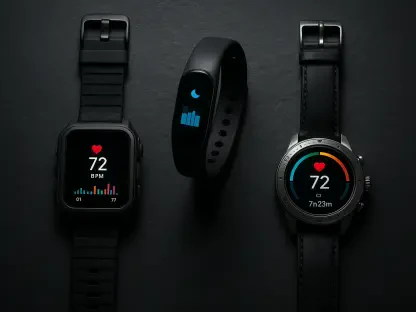

Navigating the dense thicket of modern consumer electronics often requires a discerning eye for the subtle distinctions between a genuine technological bargain and a mere imitation of quality. While the top tier of the wearable market remains dominated by flagship devices that command premium prices, a significant transformation has occurred in the mid-range and budget sectors. Today, the choice of a smartwatch is less about how much one can spend and more about how effectively a device integrates into a specific lifestyle without demanding an unnecessary financial sacrifice.
The current market distinguishes between “budget” as a lack of features and “budget” as a strategic selection of core utilities. For most users, the sweet spot exists under the $250 mark, where functionality, durability, and ecosystem integration converge. This price bracket is no longer a graveyard for slow processors and dim screens; instead, it has become the most competitive battleground in the industry, forcing manufacturers to innovate at an accelerated pace to capture the attention of a cost-conscious but tech-savvy public.
Understanding the value proposition of these devices requires looking past the glossy marketing campaigns and focusing on the underlying hardware and software synergy. As supply chains have stabilized and sensor technology has reached a point of high-volume efficiency, the “luxury tax” on smart features has significantly diminished. The result is a selection of wearables that offer nearly 90% of the functionality found in $800 flagships for a fraction of the cost, fundamentally changing the expectations of the average consumer.
Beyond the Hype: Can a $79 Device Really Outperform a Premium Flagship?
The emergence of the Nothing CMF Watch 3 Pro has sent shockwaves through the industry by proving that a sub-$100 device can successfully mimic the look and feel of a high-end timepiece. Priced at a remarkably accessible $79, this device rejects the traditional compromise of “cheap” materials in favor of a precision-milled metal housing and a expansive 1.43-inch AMOLED display. The visual clarity and responsiveness of the interface rival devices costing three times as much, challenging the long-held assumption that a low price point necessitates a second-rate visual experience.
Technological integration on this budget powerhouse extends beyond mere aesthetics, as it incorporates a sophisticated voice assistant powered by ChatGPT. This allows users to engage in complex queries and receive summarized information directly on their wrist, a feature that was once the exclusive domain of high-priced silicon. Moreover, the inclusion of dual-band GPS ensures that outdoor tracking remains precise even in dense urban environments or heavy tree cover, matching the performance of specialized fitness watches that retail for significantly higher prices.
Despite its impressive specifications, the device does present certain trade-offs that separate it from true flagship territory. The utilitarian design, while sturdy, occasionally lacks the refined texture of premium alloys, and the software ecosystem is notably more insulated than the expansive app stores found on more expensive platforms. However, for a user who prioritizes core functions like clear notifications, accurate step counting, and a battery that lasts nearly two weeks, the value offered here is nearly impossible to ignore.
The Shift Toward Essential Utility in the 2026 Wearable Landscape
The broader wearable market has undergone a fundamental shift toward prioritizing essential utility over extraneous gimmicks that often clutter the user experience of premium models. Consumers are increasingly rejecting the “kitchen sink” approach to features, where every possible sensor is included regardless of its actual daily usefulness. Instead, the focus has moved toward perfecting the basics: readable displays, reliable notification syncing, and health data that provides actionable insights rather than just raw numbers.
A major driver of this change is the democratization of high-quality display technology, with AMOLED screens now serving as the baseline expectation even for entry-level models. In previous years, budget watches were often hindered by low-resolution LCD panels that struggled under direct sunlight, but the current generation of devices offers vibrant colors and high peak brightness. This improvement ensures that the primary function of a watch—providing information at a glance—is never compromised by environmental conditions or cost-cutting measures.
Furthermore, the integration of health sensors has reached a level of maturity where even the most affordable options provide surprisingly accurate heart rate and sleep tracking. Manufacturers have realized that a budget device with a reliable sensor is more valuable than an expensive one with a suite of medical-grade features that the average user never utilizes. This shift toward essentialism has allowed brands to trim the fat from their product lines, delivering streamlined experiences that focus on the features people actually use every single day.
Evaluating the Heavy Hitters: AI Integration, Battery Supremacy, and Specialized Fitness Data
For those who remain within specific mobile ecosystems, the Apple Watch SE 3rd Gen represents a masterclass in strategic value. By utilizing the same S10 chip found in the flagship series, Apple ensures that its most affordable watch remains fluid and responsive for years to come. The integration of advanced health alerts, such as sleep apnea notifications and skin temperature sensing, allows budget-conscious iPhone users to access critical wellness data without the need to upgrade to the most expensive titanium models.
In contrast, the Garmin Forerunner 165 targets a completely different demographic by focusing on specialized fitness metrics that general smartwatches often overlook. While it may not offer the same level of app integration as its competitors, it provides athletes with deep insights into running power, cadence, and the physiological impact of their workouts. This data-driven approach is supported by a battery life that comfortably lasts a full week, providing a reliable companion for those whose lives are defined by physical activity rather than constant digital connectivity.
The Google-led Fitbit Versa 4 bridges the gap between these two worlds by combining a health-first philosophy with the power of the Google productivity suite. Users benefit from the Google Health Coach, an AI-powered assistant that synthesizes activity data into understandable wellness summaries, helping to demystify complex health metrics. With the addition of Google Wallet and Google Maps, the device becomes a functional extension of the smartphone, proving that “smartness” in a watch is about more than just a large screen.
Analyzing the Industry Consensus: Sensor Accuracy and the New Standard for Budget Displays
Expert evaluations across the industry have reached a consensus that the gap in sensor accuracy between budget and premium devices has effectively vanished for the majority of use cases. Rigorous testing against medical-grade chest straps and high-end fitness trackers shows that budget models, like those from Nothing and Samsung, consistently deliver heart rate readings with a negligible margin of error. This reliability has leveled the playing field, making it difficult for premium brands to justify their prices based on data accuracy alone.
The standardization of display quality has similarly transformed consumer expectations, as the “budget” look of the past has been replaced by sleek, bezel-less designs. The industry now expects a minimum level of aesthetic refinement, where the watch face occupies nearly the entire front surface of the device. This focus on industrial design ensures that wearing a budget smartwatch is no longer a visible sign of compromise, as these devices often look indistinguishable from their more expensive counterparts to the casual observer.
Moreover, the cross-platform compatibility of many budget models has become a significant selling point in an era where consumers frequently switch between mobile operating systems. Unlike flagship watches that are often locked to a specific brand of smartphone, many budget-friendly options offer full functionality on both Android and iOS. This flexibility provides a layer of future-proofing that adds to the overall value, allowing the watch to remain useful even if the user decides to change their primary mobile device.
A Strategic Approach to Selecting a Budget Smartwatch Without Sacrificing Quality
The selection process for a budget wearable in the current climate required a disciplined focus on individual needs rather than a fascination with the longest possible list of specifications. It was observed that the most successful consumers were those who identified a single “must-have” feature—be it long battery life, deep ecosystem integration, or specialized athletic tracking—and chose the device that excelled in that specific area. This targeted approach ensured that the final purchase felt like a tailored solution rather than a collection of unnecessary compromises.
Historical data from this year showed that the Nothing CMF Watch 3 Pro emerged as the leader for general utility, while the Apple Watch SE 3rd Gen remained the logical choice for those already invested in the Apple ecosystem. For the fitness-oriented, the Garmin Forerunner 165 proved that specialized data was worth more than a dozen generic smart features. These conclusions highlighted a market that had become incredibly efficient at delivering high-quality technology to a wide variety of users, regardless of their budget constraints.
As the industry moved forward, the lessons learned from the 2026 lineup suggested that the future of wearables would continue to favor those who prioritized software optimization and sensor reliability over physical luxury. The market successfully demonstrated that high-level health monitoring and seamless connectivity were no longer privileges of the few, but accessible tools for the many. Ultimately, the budget smartwatch segment matured into a vibrant ecosystem where value was defined not by what was missing, but by how much the device enhanced the daily life of the person wearing it.