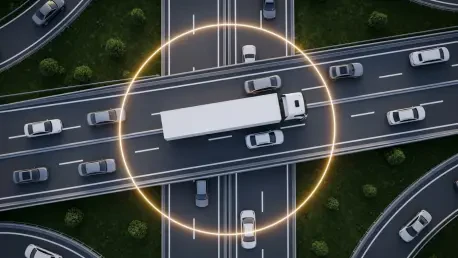

Every time a commercial driver pulls onto the interstate, they are entering a high-stakes environment where the greatest threat often stems from the financial negligence of others sharing the road. While fleet managers invest heavily in top-tier maintenance and driver training, they cannot control the insurance decisions of the thousands of passenger vehicles surrounding their assets. In an industry where a single piece of equipment can cost hundreds of thousands of dollars, the lack of responsibility on the part of a single “other guy” can lead to catastrophic fiscal consequences.
The Hidden Threat: Sharing the Road With Your Fleet
Recent data reveals a staggering reality: approximately one in seven drivers currently operates without any insurance coverage whatsoever. This statistic translates to a massive pool of liability roaming the highways, ready to collide with high-value commercial assets. When an uninsured driver causes an accident, the burden of the damage does not simply vanish; instead, it shifts directly onto the shoulders of the fleet owner. Without the proper safeguards, a company is left to foot the bill for a disaster they did not cause.
The vulnerability of modern commercial equipment is particularly acute in this low-coverage environment. A minor fender-bender for a sedan can easily result in a total loss or specialized repair for a heavy-duty truck. Because commercial vehicles are high-value targets, the “other guy’s” lack of financial responsibility becomes an immediate drain on a company’s capital. This exposure is not a hypothetical risk but a daily operational reality that requires a specific insurance strategy to overcome.
The Rising Tide: Uninsured and Underinsured Motorists
A widening gap now exists between legal minimum liability limits and the actual cost of modern commercial trucking equipment. Most state-mandated minimums were established decades ago and have failed to keep pace with the inflation of repair costs and the sophisticated technology embedded in today’s fleets. Consequently, national trends indicate that nearly one in three drivers is under-protected relative to the needs of the trucking industry. Even when a motorist is “insured,” their policy often pales in comparison to the actual value of a commercial trailer or its cargo.
The financial exposure created by “minimum limit” policies is most evident in high-impact or multi-vehicle collisions. If a driver carrying only $25,000 in property damage liability totals a $150,000 tractor, the fleet owner is left with a six-figure deficit. This shortfall can paralyze a small to mid-sized operation, as the legal system often moves too slowly to recover funds from an individual who likely lacks the personal assets to cover the difference. Reliance on the other party’s policy is, quite simply, a gamble that many fleets cannot afford to take.
Defining the Shield: UMPD and UIMPD Explained
Uninsured Motorist Property Damage (UMPD) serves as the ultimate safety net for instances where there is a total absence of liability coverage from the at-fault party. It ensures that the fleet owner is not left holding the bag when hit by a driver who has completely ignored their legal insurance obligations. In contrast, Underinsured Motorist Property Damage (UIMPD) acts as a critical bridge. It covers the financial chasm between a meager settlement from a low-limit policy and the true cost of returning a vehicle to the road.
These coverages extend far beyond the bumper to address the full scope of a collision’s aftermath. They allow for the recovery of diminished value, acknowledging that a repaired truck is often worth less than one with a clean history. Furthermore, specialized towing fees and storage costs, which can escalate into the thousands within days, are often eligible for reimbursement under these protections. The shield also addresses the ripple effect of an accident, including the logistical costs of cargo transfer and the immediate expenses of driver relocation after a breakdown.
The Expert Perspective: Risk Mitigation and Business Continuity
Legal and insurance professionals frequently point to the “invisible” costs of downtime as the most damaging aspect of an accident. When a truck is sidelined, it is not just a repair bill at stake; it is the loss of daily revenue and the potential strain on shipper relationships. A single incident with an uninsured driver can disrupt an entire supply chain, leading to missed delivery windows that damage a carrier’s reputation. Protecting against these gaps is not just about asset management; it is about maintaining the flow of business.
Case studies demonstrate that UMPD and UIMPD coverage prevent out-of-pocket losses from draining operational capital that should be used for growth. Companies that bypass these options often find themselves forced to dip into emergency funds or take on debt to replace equipment. By integrating these protections, fleet managers ensure that an external driver’s negligence does not become an internal financial crisis. The cost of the premium is consistently outweighed by the security of knowing that a total loss will not result in a total financial setback.
Strategic Framework: Evaluating Fleet Coverage
Fleet managers should begin by conducting a comprehensive gap analysis, comparing their current policy limits against the actual replacement value of their newest equipment. It is no longer sufficient to settle for standard minimums that do not reflect the reality of modern logistical costs. By involving risk managers in the review process, companies can identify specific units within their fleet that may be under-protected. This proactive approach ensures that every asset, from the oldest trailer to the newest electric rig, is shielded from external liability gaps.
Calculating “Actual Financial Exposure” involves looking at the worst-case scenario: a total loss caused by a driver with no assets and no insurance. Fleet owners moved toward a model where coverage levels were determined by these realistic valuations rather than arbitrary industry norms. They also implemented strict protocols for documenting accidents to ensure that UMPD and UIMPD claims were processed efficiently. These strategic steps allowed businesses to maintain continuity and protect their bottom line despite the unpredictable nature of sharing the road with millions of other motorists.