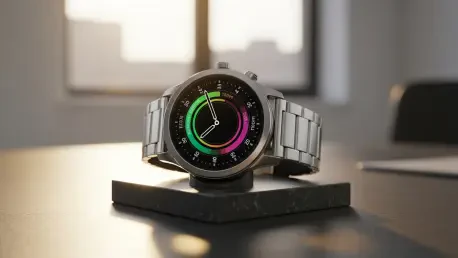

The intersection of advanced semiconductor technology and personalized medical diagnostics has reached a critical juncture where wearable devices are no longer mere extensions of a smartphone but essential life-monitoring systems. As industry leaders prepare to unveil the next generation of wrist-worn hardware, the focus has shifted entirely from step counting to the sophisticated analysis of internal metabolic processes and cardiovascular resilience. The upcoming release of the Galaxy Watch 9 and its high-performance counterpart, the Ultra 2, represents a significant leap toward this clinical integration, promising to bridge the gap between consumer electronics and professional medical equipment. This transition is driven by a global demand for continuous, non-invasive health data that can predict potential medical emergencies before they manifest physically. By incorporating next-generation sensors and refined data processing algorithms, these devices aim to redefine how individuals interact with their own physiological metrics on a minute-by-minute basis.
Advanced Sensor Technology: The Core of Physiological Precision
Modern health tracking depends heavily on the accuracy of the underlying hardware, and the new BioActive sensor array is expected to set a new benchmark for light-based physiological monitoring. Central to this advancement is the refinement of photoplethysmography (PPG) sensors, which now utilize a broader spectrum of light to penetrate deeper into the skin tissue for more precise readings. This improved depth allows for the more consistent monitoring of blood oxygen levels and heart rate variability. Furthermore, the integration of an advanced infrared sensor suite aims to provide a more reliable assessment of skin temperature changes, which serves as a crucial early warning sign for impending illness or hormonal fluctuations. By optimizing the signal-to-noise ratio within the sensor housing, the hardware minimizes the interference caused by movement or ambient light. This technical precision ensures that the data collected is not only frequent but also high in quality, providing a solid foundation for all subsequent analysis.
While the standard model focuses on daily wellness, the Ultra 2 variant is engineered to push the boundaries of durability and specialized environmental sensing for high-performance athletes. The incorporation of a Grade 4 titanium chassis and a redesigned sapphire crystal display provides the structural integrity needed to withstand significant pressure changes and physical impact. Beyond physical toughness, this model is rumored to include specialized sensors for atmospheric pressure and water depth, making it a viable tool for deep-sea diving and high-altitude mountaineering. The dual-frequency GPS system has also been overhauled to ensure that location tracking remains pinpoint accurate. This focus on hardware resilience is complemented by a high-capacity battery designed to sustain these power-intensive sensors for several days on a single charge. Consequently, the device functions as a comprehensive field instrument that tracks not just the user’s health, but also their relationship with the surrounding physical environment.
Intelligence and Analytics: Transforming Data Into Actionable Insights
Raw data serves little purpose without a sophisticated interpretive layer, which is why the integration of generative AI within the Galaxy ecosystem has become the most transformative aspect of health tracking. This intelligence layer synthesizes disparate data points—such as sleep quality, caloric intake, and resting heart rate—to create a holistic view of the user’s current physiological state. For instance, if the device detects a period of poor recovery alongside elevated stress levels, it might suggest a modified workout intensity or specific breathing exercises to mitigate the risk of burnout. The machine learning models are trained on vast datasets to identify subtle patterns that might escape the human eye, such as minor irregularities in sleep architecture that could indicate underlying health issues. This level of analysis transforms the smartwatch from a reactive notification hub into a proactive health assistant that provides users with a comprehensive understanding of their biological trends over extended periods.
The evolution of these wearable platforms demonstrated that the primary value of technology lay in its ability to facilitate meaningful lifestyle changes through data transparency. Users who leveraged the advanced metrics of the Galaxy Watch 9 and Ultra 2 gained a deeper understanding of how daily habits influenced long-term wellness outcomes. To maximize these benefits, it became clear that integrating this data with professional medical consultations was the most effective strategy for preventive care. Professionals recommended that individuals regularly export their health reports to share with primary care physicians, ensuring that digital monitoring complemented rather than replaced traditional clinical expertise. Furthermore, maintaining a consistent wear schedule, particularly during sleep, proved essential for establishing the baseline data required for the AI to function with maximum accuracy. The industry moved toward a model where hardware and software worked in perfect synchronization to empower users to take control of their health journeys.