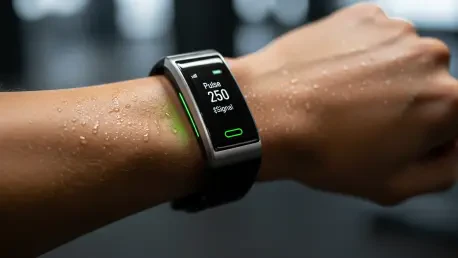

The pursuit of peak athletic performance often hinges on the granularity of biometric data, yet many users found that the Fitbit Air’s high-tech facade masked a frustrating inability to record consistent heart rate metrics during the most critical moments of a workout. While the device was launched with significant fanfare regarding its advanced sensor array, many professional athletes and data-driven hobbyists noted a significant lag in biometric reporting when heart rates exceeded one hundred and sixty beats per minute. This discrepancy is not merely a cosmetic issue; it affects the underlying metabolic calculations that determine caloric expenditure and cardiovascular strain scores. Users discovered that during high-intensity intervals, the device often flatlined for several seconds before abruptly jumping to a higher reading, leading to fragmented data sets that undermined the reliability of long-term health tracking. Addressing this specific technical hurdle has become a priority for engineers attempting to preserve the brand’s reputation for accuracy in the competitive market of 2026.
1. Analyzing the Core Performance Deficiencies
The primary culprit behind the Fitbit Air’s tracking inconsistency lies in the photoplethysmography sensor’s inability to filter out signal noise caused by rapid movement and perspiration during vigorous exercise. Optical sensors function by shining green light into the skin to measure blood flow changes, but when the device moves even slightly against the wrist, the resulting light leakage creates significant artifacts in the data stream. In the case of the Air model, the hardware design prioritized a slim profile, which reduced the surface area of the sensor’s contact point compared to bulkier competitors. This physical limitation meant that the software had to work twice as hard to interpret a compromised signal, often resulting in the “staircase effect” where data points are updated in jarring increments rather than a smooth curve. For users engaged in activities like CrossFit or rowing, where wrist flexion is constant, the sensor often lost track of the pulse entirely, reverting to a default estimation based on less reliable motion patterns.
Furthermore, the discrepancy extended into the Global Positioning System integration, where the Fitbit Air showed a tendency to drift significantly when used in dense urban environments or under heavy tree cover. This drift led to inflated distance metrics, which in turn skewed the pace calculations that runners rely on for training precision. When a device records a run as being five percent longer than it actually is, the user’s perceived exertion does not match the digital feedback, creating a frustrating disconnect between physical reality and data representation. This phenomenon, known as the “urban canyon” effect, was exacerbated by the Air’s internal antenna placement, which prioritized the device’s sleek metallic finish over optimal satellite reception. For serious marathon trainers, such inaccuracies rendered the device nearly useless for pace-specific workouts, forcing many to revert to secondary hardware to verify their performance. This accumulation of technical flaws necessitated a radical rethinking of how the firmware handles incoming satellite pings.
2. Implementing Algorithmic Solutions for Data Integrity
The recent firmware update, designated as version 2.4, introduces a sophisticated predictive modeling system that aims to compensate for hardware limitations through advanced machine learning inference. Instead of relying solely on the raw data captured by the PPG sensor at any given millisecond, the new algorithm analyzes historical biometric trends and motion sensor input to fill in the gaps during periods of high signal noise. For example, if the accelerometer detects a high-cadence running motion while the heart rate sensor reports a sudden drop, the software now identifies this as a tracking error rather than a physiological event. By applying a more nuanced smoothing filter, the Fitbit Air can now maintain a plausible heart rate curve even when the physical connection is momentarily compromised. This shift from reactive data logging to proactive estimation represents a significant milestone in wearable technology, as it acknowledges that perfect sensor contact is an unrealistic expectation during real-world athletic performance in 2026.
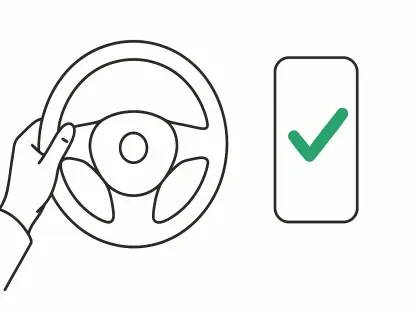
The community adopted several specific strategies to complement the firmware changes, such as wearing the band higher on the forearm to ensure a more consistent blood flow reading during sprints. It was also discovered that allowing the device to synchronize with a smartphone’s local positioning data before starting a run significantly reduced the time needed for a satellite lock. These minor adjustments in user behavior worked in tandem with the internal software improvements to deliver a much more stable tracking experience. The manufacturer ultimately succeeded in addressing the most significant criticisms by providing a patch that went beyond simple bug fixes and fundamentally altered how sensor data was interpreted. By the end of the rollout, the Fitbit Air proved to be a reliable companion for serious athletes who had previously doubted its technical merit. This transformation restored confidence in the product line and set a new standard for how software can overcome hardware limitations through intelligent processing.