
Simon Glairy is a distinguished figure in the insurtech landscape, renowned for his strategic insights into how digital ecosystems are reshaping traditional risk management. With extensive experience in navigating the intersection of insurance capacity and cutting-edge technology, he has been instrumental in helping global brands integrate complex financial products into seamless consumer journeys. His expertise provides a unique lens into the evolving role of intermediaries and the technological orchestration required to sustain high-performance embedded insurance programs in a tightening regulatory environment.
How does integrating orchestration technology like APIs and AI-supported claims specifically reduce the technical burden for non-insurance brands, and what are the immediate operational trade-offs when shifting from a standalone model to an embedded one?
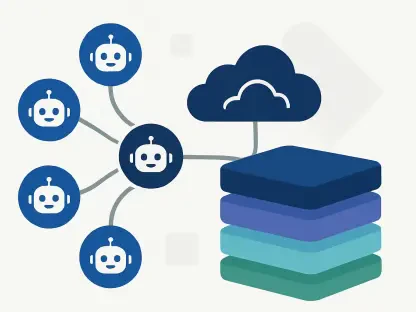
The primary advantage of orchestration technology is that it removes the need for a non-insurance brand to build its own incredibly complex insurance infrastructure from scratch. By using APIs, a retailer or automotive firm can plug directly into a pre-built ecosystem that handles everything from policy issuance to AI-supported claims handling, which significantly lowers the barrier to entry. However, the trade-off involves a shift in control; the brand moves away from a standalone model where insurance is a separate silo and instead must integrate it deeply into their existing digital front-end. This requires a high level of trust in the intermediary’s tech stack to maintain a consistent brand experience while the heavy lifting of compliance and risk remains hidden “under the hood.”
When deploying insurance at e-commerce checkouts or within automotive mobility services, what are the primary hurdles in customizing the user experience while managing data requirements?
The biggest hurdle is balancing the “frictionless” expectation of a digital checkout with the rigid data demands of insurance underwriting. In an e-commerce or mobility setting, you have only a few seconds to capture interest without causing the customer to abandon their primary purchase, so the data exchange must be near-instantaneous. We solve this by ensuring the connected infrastructure behind the proposition is flexible enough to pull relevant data points automatically from the partner’s platform, reducing the number of questions a user has to answer. Success depends on the ability to tailor these journeys across various industry verticals, ensuring that the insurance feels like a natural extension of the service rather than a disruptive add-on.
Regulators are increasingly focused on product governance and fair value for bundled offerings; what specific metrics should firms prioritize to prove positive outcomes?
With the spotlight intensifying on bundled products, firms must move beyond simple sales volume and prioritize metrics that demonstrate genuine customer value, such as claims loss ratios and speed of settlement. Real-time dashboards are no longer a luxury but a necessity, as they provide the visibility needed to monitor how products are sold and used across the entire distribution chain. By tracking data feeds that highlight coverage clarity and exclusion transparency, we can proactively identify if a product isn’t performing as intended for the end-user. This level of oversight is the only way to satisfy the heightened requirements for product governance and ensure that the “fair value” mandate is being met consistently.
Transitioning from domestic to pan-European embedded programs requires navigating complex environments; what are the practical steps for scaling a program across thirty different markets?
Scaling a program to cover more than 30 European markets requires a robust legal and technological framework that can adapt to varying local regulations while maintaining a unified core. The first practical step is partnering with an orchestrator that already has a footprint in those regions, which simplifies the cross-border regulatory and operational hurdles. This shift changes the relationship with regional capacity providers, as they must now align with a centralized digital ecosystem rather than fragmented local systems. It allows for a more cohesive pan-European strategy where carriers and MGAs can deploy capacity more efficiently across multiple jurisdictions through a single point of entry.
As competition intensifies for placement on major digital platforms, which technical differentiators matter most for brokers and insurtechs?
In a crowded market, the winners are determined by their speed to market and their ability to provide pricing sophistication without breaking the user experience. Technical differentiators like the flexibility of the API and the maturity of the AI used in claims are what separate the top-tier players from the rest. However, speed shouldn’t come at the cost of stability; you have to balance rapid deployment with a very tight grip on underwriting profitability and data feedback loops. Firms that can feed data from partner platforms back into their pricing models in real-time will have a significant edge in maintaining a sustainable and profitable program.
What is your forecast for embedded insurance distribution?
I believe we are moving toward a future where embedded insurance is the default rather than the exception for most consumer-facing digital transactions. As technology becomes more sophisticated, we will see a shift away from “one-size-fits-all” add-ons toward hyper-personalized coverage that adapts to the specific risk profile of the transaction in milliseconds. The role of the broker will continue to evolve into that of a technology orchestrator, where the ability to manage complex ecosystems of data and capacity becomes the primary value proposition. Ultimately, the programs that survive will be those that prioritize transparency and fair value, proving that they benefit the customer just as much as the brand and the insurer.