
Imagine a world where insurance doesn’t just help you recover from disasters but actively prevents them. Currently, insurance companies are navigating this transformative shift, largely driven by the Internet of Things (IoT). Insurers using IoT technology are moving toward an era of proactive risk management, turning potential liabilities into competitive advantages. But how can your business get started? This article explores how IoT helps and influences the insurance industry, focusing on its potential to shift from a reactive to a proactive response in preventing losses.
The Limits of a Backward-Looking Model
Traditional underwriting methods use generalized assumptions based on demographic and historical data, such as a driver’s age, credit score, or zip code, to assess risk. While these serve as broad indicators, they fall short of capturing the complexities of individual behaviors and real-time risks. For instance, a conscientious driver living in a high-risk area might face higher premiums despite a safe driving record, simply because of their location. Similarly, older buildings that are well-maintained may still incur higher insurance costs because of their age, overlooking the factors that actually reduce risk.
Overconfidence in these legacy systems assumes that historical data alone suffices for accurate risk assessment. These generalized approaches lead to pricing discrepancies, often creating a disconnect between insurers and their customers, who may engage only with their insurers during claim submissions or policy renewals. This interaction model is increasingly inadequate in today’s environment, as it fails to deliver the personalized, dynamic risk assessment that modern technology enables.
Customers now expect insurance services that reflect real-time data and individual circumstances, necessitating a shift toward more precise, data-driven solutions. By leveraging IoT technologies, insurers can move beyond outdated proxies to create more accurate, responsive, and customer-centric risk assessments.
IoT as a Real-Time Risk Management Tool
IoT technology fundamentally reshapes risk assessment by providing a steady stream of precise, real-time data that exceeds the limitations of traditional proxy-based models. Rather than merely placing sensors, insurers are leveraging comprehensive data flows to build dynamic risk engines that revolutionize underwriting, claims processing, and customer interaction.
In the realm of commercial auto insurance, telematics goes beyond GPS tracking by meticulously recording driving metrics, including acceleration, braking, cornering speeds, and vehicle health indicators. This granular data enables insurers to identify risky driving behaviors and proactively offer tailored coaching, helping enhance driver safety. These insights contribute to the growing trend of usage-based insurance, projected to reach over $80 billion by 2028, emphasizing its expanding role in the industry.
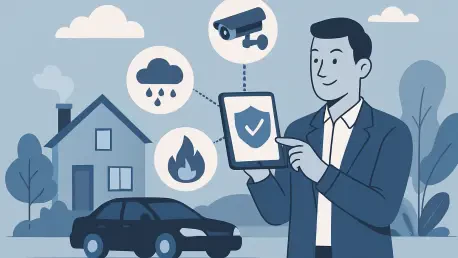
The integration of IoT technology brings significant advantages to property insurance. Smart home devices, designed to detect issues such as water leaks, smoke, or sudden temperature changes, serve as frontline defenses against potential disasters. For commercial properties, IoT sensors are crucial to monitoring systems such as HVAC, electrical panels, and structural components, enabling early detection of irregularities before they escalate into significant failures or safety risks. This proactive approach not only mitigates risk but also transforms the insurer-policyholder relationship by embedding continuous, value-added engagement into everyday interactions.
A New Foundation for Customer Engagement
The shift to a proactive model redefines the insurer-policyholder relationship. Instead of being an invisible utility that only appears when something goes wrong, the insurer becomes a visible partner in risk mitigation. This transition is critical for customer retention in a crowded market.
A common misunderstanding many companies face is assuming that technology alone drives this transformation. But the real challenge is in redefining the relationship dynamics between insurers and their clients. Technology helps to get this engagement started.
For example, take the impact of a smart water sensor. When a small leak is detected, the system can automatically shut off the water main and send an alert to the homeowner and the insurer. The insurer can then proactively recommend a vetted plumber through its network. This single interaction prevents a costly claim, saves the homeowner significant hassle, and demonstrates tangible value beyond a policy document.
This proactive engagement model repositions insurance as a service that adds value, rather than a grudging necessity. Smart home devices can reduce the frequency of property damage claims, differentiating insurers in the market. By aligning premium discounts and value-added services with IoT adoption, insurers not only enhance customer satisfaction but also forge long-term relationships. This strategic use of IoT serves as both a retention tool and a significant competitive advantage in an evolving market landscape.
Underwriting with Precision, Not Proxies
IoT data provides the specificity needed for hyper-personalized insurance policies, allowing insurers to set premiums with exceptional accuracy based on real-world asset usage and maintenance. Beyond achieving fairer pricing models, this strategy is instrumental in attracting and retaining the most desirable clients by aligning premiums with actual risk levels.
For example, a logistics company with a fleet of 100 trucks previously paid a flat-rate premium based on industry averages and its claims history. After equipping its fleet with advanced telematics, its insurer offered a dynamic pricing model informed by real-time data. The system tracked several critical metrics, including route risk, driver fatigue levels, and compliance with maintenance protocols.
Through real-time feedback and safety scoring, drivers were prompted to adjust their behaviors, resulting in a 15% reduction in harsh braking incidents and a 10% decrease in average highway speeds within a year. These changes led to a 12% reduction in insurance premiums and, more importantly, a significant drop in accidents, which improved driver retention and operational uptime.
While the potential of IoT in underwriting is clear, its implementation comes with challenges. Successfully navigating these difficulties is essential for maximizing the benefits of IoT technology in insurance.
Navigating the Implementation Challenges
The transition to IoT-driven tools goes beyond adopting new technology and requires a profound strategic and cultural transformation within organizations. Insurers may need to anticipate these challenges:
Data Security and Privacy: As insurers gather a constant influx of personal data, safeguarding this information becomes critical. Establishing strong cybersecurity defenses is essential to protect sensitive data from breaches. At the same time, transparency about data use is important for building customer trust. Insurers must also navigate stringent regulations, such as the GDPR, to ensure compliance and maintain customer confidence.
Infrastructure and Analytics: The volume of data generated by IoT devices requires substantial investment in infrastructure to process and analyze it effectively. This includes leveraging cloud computing resources, developing expansive data lakes, and employing skilled data scientists who can distill valuable insights from vast datasets. Without these elements, the potential of IoT data to inform decision-making and enhance services remains untapped.
Customer Adoption: While IoT offers significant benefits, many consumers remain wary of sharing personal data, even in exchange for potential discounts. To overcome this barrier, insurers need to focus on building trust by emphasizing the tangible benefits of proactive risk management and clearly communicating the value proposition. It’s crucial to shift the narrative from data collection as a surveillance mechanism to one of prevention and personalized service. Surveys indicate that while over 60% of consumers are open to usage-based insurance, data privacy concerns are the primary issue.
Addressing these challenges is integral to fully realizing IoT’s potential in the insurance sector. As businesses look to the future, understanding how to balance technological advancement with customer-centric strategies will be pivotal. This paves the way to move beyond current problems and embrace a proactive insurance model that genuinely enriches the customer experience.
Embracing a Proactive Model
Integrating IoT into the insurance industry represents a fundamental reinvention of the business model. The future of insurance lies in delivering outcomes, not just selling policies. Insurers who embrace this transformation will move from being passive capital providers to active risk-management partners.
Achieving this success requires a clear vision and a willingness to dismantle legacy systems and mindsets. Leaders should focus on several key strategic priorities, including:
Build a Data-First Culture: Organizations must train all departments, from underwriting to claims, to leverage real-time data effectively in their decision-making processes. This shift to a data-centric approach facilitates more agile and informed responses to emerging risks.
Focus on Value-Added Services: Insurers need to offer more than competitive pricing by developing services that empower customers to actively manage and mitigate their risks. This could involve personalized risk assessments, targeted advice, and proactive alerts to prevent potential losses.
Invest in Trust and Transparency: Addressing customer concerns about data privacy through explicit policies and strong security frameworks is essential. Building trust through transparency will encourage wider adoption and acceptance of IoT-driven solutions.
The journey from a reactive to a proactive model is complex, but the path forward is clear. Insurers that leverage technology to accurately assess risk and proactively address potential issues will position themselves as industry leaders.
Conclusion
The insurance industry must decide whether to embrace the transformative potential of IoT or risk falling behind. But keep in mind that remaining locked in outdated, reactive models not only limits growth but also exposes companies to the risk of losing relevance in an increasingly competitive landscape. As IoT continues to redefine risk assessment and customer engagement, the risk of inaction intensifies daily.
Leaders must confront this reality and weigh the consequences of maintaining the status quo against the long-term benefits of adopting a proactive, IoT-driven framework. Those who choose not to act may find themselves unable to meet evolving expectations in a world where personalized, data-driven services are rapidly becoming the norm for customers. Will your organization seize this opportunity to lead and innovate, or will it resist change, clinging to familiar but increasingly ineffective practices?