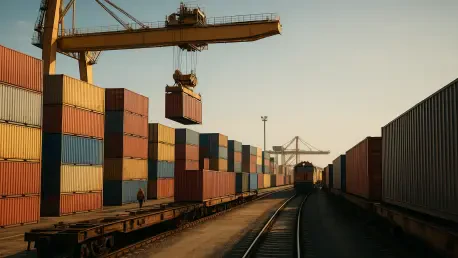

Expanding coverage to include motor vehicle damage and railway logistics is essential for keeping the internal Ukrainian market connected to European trade partners. The Ukraine Recovery and Reconstruction Guarantee Facility (URGF) stands as a testament to strategic financial innovation during an era of unprecedented geopolitical strain. Managed by the global firm Aon, this specialized reinsurance mechanism has recently expanded its operational capacity from €110 million to €150 million. This nearly 40% increase in capital allocation serves as a necessary buffer against the systematic destruction of civilian infrastructure that has characterized recent military operations. By offering a robust safety net for physical assets, the facility prevents the total stagnation of the private sector, which would otherwise be unable to secure traditional insurance. This initiative does not merely provide financial relief; it establishes a predictable framework for business continuity in a region where risk often defies standard calculation.
Building a Resilient Financial Infrastructure
The Tripartite Model: Coordinating Global and Local Risk
The operational success of the URGF is built upon a sophisticated tripartite structure that bridges the gap between international capital and local needs. At the foundation of this model, the European Bank for Reconstruction and Development (EBRD) provides a critical loss guarantee, which acts as the ultimate security layer for the entire program. This backing allows global reinsurers like MS Amlin to step into the Ukrainian market with confidence, offering the high-level capacity required to cover war-related damages. Without such a guarantee, the private reinsurance market would likely remain closed to Ukrainian risks due to the volatility of the conflict. By leveraging the financial strength of the EBRD, the facility creates a pathway for global expertise to support domestic stability. This collaborative approach ensures that the systemic risks of war are shared among various stakeholders, preventing any single entity from bearing an unsustainable burden while maintaining commerce.
This international framework directly empowers local Ukrainian insurance companies, including established players such as INGO, Colonnade, and UNIQA. These domestic firms act as the front line for the facility, issuing policies directly to Ukrainian businesses that require protection for their fleets, cargo, and facilities. By offloading the most extreme war risks to their international partners through the URGF, these local insurers can maintain their own solvency and continue to operate within the national economy. This capability is essential for preserving the integrity of Ukraine’s domestic financial sector, which might otherwise collapse under the weight of conflict-driven claims. The inclusion of new participants like UNIVERSALNA and USG further broadens the reach of this insurance, ensuring that businesses across various regions and sectors have access to the same level of security. Through this layered system, the facility transforms high-risk environments into manageable commercial landscapes.
Performance Metrics: Evaluating Commercial Market Viability
Current data suggests that the Ukrainian war risk insurance market is performing significantly better than many analysts initially projected. Since its inception, the facility has supported nearly 10,000 individual insurance policies, covering a diverse array of assets valued at more than €500 million. These figures indicate a high level of demand and trust from the Ukrainian business community, which views the facility as a lifeline for ongoing operations. Rather than acting as a purely charitable endeavor, the URGF has demonstrated the characteristics of a functioning commercial ecosystem. The volume of policies issued reflects a resilient private sector that is eager to maintain activity despite the threat of physical destruction. This high participation rate also allows for a broader distribution of risk across the economy, which contributes to the overall stability of the facility. The success of this initiative proves that even in extreme circumstances, organized risk management can create a viable path.
In the final assessment of this period, the facility established that war risk insurance was the most essential tool for attracting foreign direct investment back into the region. Policymakers and financial leaders concluded that the next actionable phase involved transitioning the facility from a conflict-focused guarantee system into a permanent reconstruction insurance market. This required the development of standardized risk assessment protocols that could be adopted by other international markets facing similar volatility. Efforts were made to formalize the data collected during the operation of the URGF, providing a repository of knowledge for future global risk management. By turning the lessons of the Ukrainian conflict into a structured financial framework, the international community created a sustainable model for sovereign resilience. This transition ultimately paved the way for more traditional forms of capital to return to the market, as risks were finally met with a proven, data-driven system.