
A flickering light in a Berlin apartment or a stalled assembly line in Munich no longer signals a simple maintenance failure but rather the chilling precision of a new kind of invisible conflict. As the landscape of security in Germany undergoes a radical transformation in 2026, the traditional boundaries of domestic safety have dissolved into a landscape of strategic interference. The recent targeting of national defense facilities and critical power grids marks a decisive departure from traditional property damage toward a calculated strategy of national destabilization. While a burnt cable bridge or a compromised substation might once have been dismissed as isolated domestic extremism, the sheer coordination of recent events suggests a more professional, state-aligned hand at play. As physical assets become the front line for geopolitical friction, the European insurance market faces a fundamental question: when does a criminal act of sabotage evolve into an excluded act of war?
This transition represents a systemic risk that threatens the very foundations of infrastructure coverage. The stability of the continent relies on these assets, yet the legal frameworks designed to protect them are buckling under the weight of “grey zone” warfare. This story is not just about broken equipment; it is about the financial and legal struggle to define modern conflict in an era of deniable aggression. As underwriters and risk managers navigate this volatility, the distinction between a local protest and a foreign intelligence operation has become the most expensive variable in the global insurance market.
The Blurred Line: Vandalism and State-Directed Warfare
The current wave of disruption in Germany highlights a sophisticated evolution in how infrastructure is compromised, moving far beyond the scope of traditional vandalism. Historically, property damage was the work of disorganized individuals or local activist groups, resulting in localized losses that insurers could easily categorize. However, the present environment reveals a shift toward highly technical operations that target the most sensitive nodes of the national economy. These acts are no longer aimed at mere publicity but are designed to degrade the operational capacity of the state itself. By focusing on critical intersections of energy and defense, these actors are creating a cumulative effect that mimics the impact of a military strike without the use of conventional weapons.
This strategic ambiguity is the hallmark of modern conflict, where the intent behind an act of arson is just as important as the physical damage caused. When a defense contractor’s facility is targeted, the loss is not merely the cost of repair; it is the delay in essential security projects and the erosion of public trust in national safety. For insurers, this creates a significant challenge in determining the “peril” at play. If the motive is to weaken the nation on behalf of a foreign power, the event begins to look more like an act of war than a criminal offense. This shift forces a total re-evaluation of how risk is priced, as the potential for coordinated, multi-site attacks increases the likelihood of catastrophic, systemic losses.
Understanding the Shift: Hybrid Warfare in Europe
The stability of Germany’s critical infrastructure is currently being tested by a “grey zone” of conflict that operates just below the threshold of conventional military engagement. This strategic ambiguity is not accidental; it is specifically designed to exploit the legal loopholes and financial vulnerabilities inherent in Western capitalist systems. By operating in the shadows, aggressors can achieve their objectives while avoiding the direct military retaliation that a formal declaration of war would trigger. This method of conflict relies on the interconnectedness of modern society, where a single point of failure in a power grid can lead to cascading economic consequences across multiple borders.
A primary component of this shift is the rise of deniable proxies, where foreign intelligence services leverage local extremist groups to maintain a layer of plausible deniability. These groups often adopt the slogans of domestic political movements, masking the underlying foreign direction of their activities. This makes Germany’s energy and defense sectors the primary theater for hybrid operations, as they are both the most vital for national sovereignty and the most complex to secure. The resulting economic ripple effect extends from localized property loss to a broader systemic risk that threatens the continuity of the European power market, leaving the insurance industry to grapple with the financial fallout of a war that has not been officially declared.
Analyzing the Patterns: Modern Sabotage in Focus
The transition from theoretical threat to material loss is evidenced by a series of coordinated strikes that have exposed the fragility of traditional risk models. A notable case involves the politically motivated arson attack near the Munich headquarters of Rohde & Schwarz, a firm specializing in counter-drone and radar systems. This event was not merely a random fire; it was a targeted strike against a company providing the very technology used to defend against hybrid threats. The apprehension of foreign nationals in connection with the fire suggests a level of logistical support that exceeds the capabilities of standard domestic protesters.
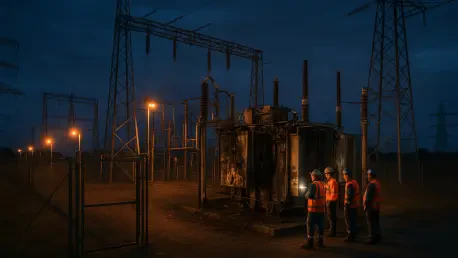
Beyond the defense sector, the national energy backbone has faced systematic interruption through attacks on substations in Brandenburg and North Rhine-Westphalia. These incidents illustrate a clear pattern of targeting the grid’s most vulnerable points during periods of peak demand. Similarly, the attribution of drone interference at the Leipzig/Halle airport to foreign actors highlights the vulnerability of logistics and aviation infrastructure. These events do not exist in isolation; they are part of a broader campaign that includes the January 2026 attack by the “Vulkangruppe” in Berlin, which caused massive power failures for thousands of households. Each of these strikes demonstrates how modern sabotage creates cascade failures that disrupt both social stability and industrial productivity.
The Underwriting Crisis: Navigating Definitional Ambiguity
Insurance professionals are currently grappling with policy language that was drafted for a world where the distinction between a common criminal and a state actor was clear. The primary hurdle is the “War Exclusion Dilemma,” which creates a legal stalemate when an attack is suspected to be state-sponsored but remains formally unproven. If a government stops short of official attribution, the policyholder is left in a “protection gap,” as the insurer may argue that the nature of the attack transcends standard property coverage. This creates a high-stakes environment for claims settlement, where the outcome depends on intelligence reports that are rarely shared with the private sector.
Furthermore, the role of government-backed reinsurance pools like Pool Re is being re-evaluated to determine if they are equipped to handle state-proxy sabotage. These entities were largely established to manage traditional terrorism, yet the current threat landscape involves a convergence of physical and digital risks that do not fit neatly into historical categories. As manufacturers of defensive technology become the primary targets of the very threats they aim to mitigate, a feedback loop of risk emerges. This convergence means that a physical attack on a facility can have the same disruptive impact as a massive cyber breach, further complicating the task of determining which policy should respond to the loss.
Strategic Frameworks: Mitigating Hybrid Risks
In response to the evolving threat landscape, underwriters and brokers must adopt a more proactive and specialized approach to infrastructure coverage. The first step involves rigorous policy audits that redefine “sabotage” and “war” clauses to reflect current geopolitical realities. By eliminating legal limbo through more precise definitions, the industry can provide the certainty that policyholders require to maintain their operations. This requires a shift away from “all-risks” templates toward bespoke wording that accounts for the possibility of state-directed interference via third-party actors.
Beyond policy wording, insurers must prioritize geographic and sector accumulation analysis to understand how a single coordinated campaign could trigger simultaneous claims. Identifying these clusters of risk allows for better capital management and more accurate pricing. Enhanced client engagement is also essential, as many policyholders are unaware of the limits of their current coverage in the face of hybrid warfare. By integrating political risk intelligence into the underwriting process, insurance providers can anticipate potential infrastructure targets before physical damage occurs. This proactive stance is the only way to bridge the protection gap and ensure the long-term viability of the infrastructure insurance market.
The insurance industry recognized the urgent necessity of evolving alongside the shifting tactics of modern conflict. Leaders within the sector successfully implemented new transparency standards that integrated real-time geopolitical intelligence into their daily underwriting models. By re-evaluating the boundaries of “act of war” clauses and modernizing the role of national reinsurance pools, the market provided the essential clarity needed to stabilize the energy and defense sectors. These organizations moved beyond reactive claims handling, instead building a resilient framework that accounted for the inherent ambiguity of state-sponsored sabotage. Ultimately, these strategic adjustments secured the continuity of critical German infrastructure during a period of unprecedented external pressure.