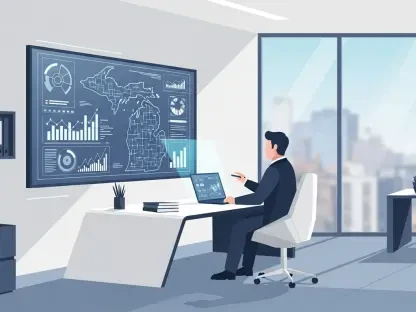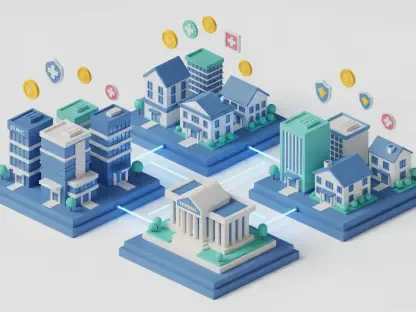

The modern corporate risk environment has shifted so fundamentally that a single technical glitch in a server room can now spark a global financial crisis, yet many insurance policies still operate as if these worlds are entirely separate. This persistent fragmentation is the primary target for industry veterans like Reid Eanes, Executive Vice President at Lockton, who argues that the era of compartmentalized coverage is rapidly coming to an end. As businesses face a “collision” of volatile factors, the industry is forced to move away from rigid, isolated products toward a more fluid and integrated risk architecture. This transition is not merely a matter of administrative convenience; it is a critical evolution required to protect the complex infrastructure of a digitally dependent global economy.
The End of Compartmentalized Risk in a Connected World
The specialty insurance landscape is currently undergoing a radical transformation as the traditional boundaries between various coverage lines begin to dissolve. In an era defined by rapid technological advancement and intricate regulatory frameworks, the practice of managing risks in isolation is quickly becoming a relic of the past. Experts point to a specific convergence where a single event can trigger liabilities across multiple sectors simultaneously. Dismantling these silos is no longer a luxury for the avant-garde but a necessity for survival among brokers and carriers alike.
Understanding this shift remains vital for any business aiming to navigate an increasingly volatile global economy. When the physical and digital worlds overlap, the old method of placing risks into “neat buckets” fails to account for how a failure in one area cascades into another. This interconnectedness demands a new perspective where risk is viewed as a single, cohesive challenge rather than a series of independent hurdles. For the modern enterprise, the goal is to build a resilient framework that mirrors the complexity of their actual operations.
The Evolution of Specialty Lines and the Traditional Silo Model
Historically, the insurance industry was built on a foundation of extreme specialization, where risks were neatly categorized into distinct segments such as construction, financial services, or casualty. This compartmentalized approach allowed for deep technical expertise within specific domains but often ignored the potential for cross-sector contagion. For decades, this “siloed” architecture functioned effectively because the risks themselves were relatively static and predictable, allowing underwriters to focus on narrow data sets without considering the broader operational ecosystem.
However, as the digital and physical worlds began to merge, the limitations of these rigid structures became strikingly apparent. The traditional model, while technically sound in a vacuum, lacked the flexibility to address “blended” exposures that do not fit into a single policy form. This realization has set the stage for the integrated risk architecture required today. Industry leaders are now tasked with redesigning legacy products that were built for a world that existed a decade ago, replacing them with solutions that are as dynamic as the companies they protect.
Key Drivers of Risk Convergence and Industry Integration
The primary catalyst for dismantling insurance silos is the emergence of complex industries that defy traditional categorization. Modern projects now require a holistic underwriting approach that considers how various exposures interact in real-time. By observing how these sectors operate, it becomes clear that the old boundaries are not just blurring; they are being rewritten by the very nature of modern technology.
Integrated Risk in Data Center Construction
The development of data centers represents the ultimate nexus of construction, professional liability, and cyber exposure. These projects are no longer viewed simply as real estate or construction endeavors; they are the backbone of the global digital infrastructure. A simple physical flaw during the building phase can lead to environmental penalties or, more critically, massive data breaches and business interruptions. This reality links property and tech Errors and Omissions (E&O) inseparably, requiring a unified strategy from the moment the first stone is laid.
The Blended Liability of Autonomous Vehicles
Self-driving technology further complicates the landscape by blurring the lines between traditional product liability and software failure. When a vehicle malfunctions, insurers must determine if the root cause was a mechanical part, which falls under casualty, or a coding error, which triggers cyber and tech coverage. This ambiguity necessitates a unified policy structure that accounts for both possibilities, ensuring there are no gaps in coverage during a multi-party legal dispute.
The Multi-Faceted Governance of Artificial Intelligence
AI deployment introduces a complex web of professional liability, intellectual property disputes, and privacy regulation hurdles. Managing AI risk requires a strategy that simultaneously addresses cybersecurity threats and the shifting legal landscape of digital governance. Because AI impacts everything from hiring practices to financial forecasting, its risks cannot be contained within a single department or a single insurance policy, demanding a comprehensive approach to corporate governance.
What Sets the Modern Risk Architect Apart
The dismantling of silos has fundamentally changed the criteria for excellence in the insurance field, shifting the focus from sales to strategy. What distinguishes the leading professionals today is a move away from the transactional identity of a “salesperson” toward becoming a strategic business consultant. These modern “risk architects” possess a deep intellectual curiosity and an intimate understanding of their clients’ operational workflows. They are not satisfied with simply renewing policies; they seek to understand the underlying mechanics of the business they are protecting.
By moving beyond renewals and focusing on high-level advisory, these architects can identify “moving target” risks that traditional, siloed brokers might overlook. Whether it is evolving biometric data laws or shifting cybersecurity reporting mandates, the modern broker acts as a navigator. This proactive approach ensures that a client’s coverage is not just present, but correctly structured to meet the legal and operational requirements of the current moment. This shift marks the transition of the broker from a vendor to an essential member of the client’s executive advisory team.
The Current State of Specialty Insurance and Future Collaboration
Today, the industry is focused on redesigning products to better reflect the realities of the current year. Efforts are centered on creating more fluid insurance solutions that can adapt to rapid regulatory shifts and technological breakthroughs without requiring a total policy overhaul. This spirit of modernization is epitomized by industry gatherings like InsuranceFest, where over 1,500 innovators and brokers meet at the Santa Monica Pier. Such events serve as a critical forum for collective problem-solving, emphasizing that the challenges of distribution disruption and catastrophe strategy cannot be solved by firms working in isolation.
The atmosphere at these gatherings reflects a broader trend toward transparency and shared intelligence. By bringing together seasoned veterans and younger professionals, the industry fosters a culture of mentorship and “sending the elevator back down.” This collaborative environment is essential for tackling the intellectual stimulation and volatility of integrated risk cycles. It highlights the fact that the industry’s greatest strength is no longer just its capital reserves, but its collective ability to innovate under pressure.
Reflection and Broader Impacts
The transition away from silos represents a maturation of the insurance industry, though it brings both significant advantages and complex hurdles that require constant attention.
Reflection
The greatest strength of this new model was its ability to provide comprehensive protection that mirrored the complexity of modern business. However, the challenge lay in the human element; it required a workforce that was not only technically fluent but also capable of constant adaptation. The shift demanded a heavy investment in mentorship to ensure younger professionals could handle the intellectual demands of integrated risk cycles. This focus on human capital proved to be the deciding factor in which firms thrived during the transition and which ones struggled to keep pace.
Broader Impact
Beyond the insurance sector, the dismantling of silos encouraged greater transparency and resilience across the entire global supply chain. As brokers and carriers demanded better data and more integrated safety protocols, businesses were forced to improve their own internal governance. This trend signaled a future where insurance was not just a financial safety net, but a primary driver of operational excellence and technological ethics. The resulting environment fostered a higher standard of corporate responsibility that benefitted both shareholders and the public at large.
Navigating the New Integrated Insurance Frontier
The erosion of specialty insurance silos marked a definitive turning point for the industry, moving it toward a more collaborative and strategic future. To remain competitive, firms should prioritize the cross-training of their underwriting and brokerage teams, ensuring that every professional understands the interplay between cyber, casualty, and financial risks. Organizations must also invest in data-sharing platforms that allow for real-time risk assessment, breaking down the internal information barriers that previously hindered holistic decision-making.
Looking ahead, the industry should focus on the development of “parametric-hybrid” solutions that trigger coverage based on specific technological failures rather than just traditional loss assessments. Businesses should seek out partners who demonstrate a deep understanding of their specific industry’s regulatory trajectory rather than those who offer the lowest premiums. By embracing this interconnectedness and seeking out the expertise that bridges the gap between traditional coverage and modern exposure, the sector was able to protect the innovations of a new era. Success in this environment belonged to those who viewed risk not as a series of isolated problems, but as a single, cohesive challenge to be solved through partnership and innovation.