
The Dawn of a New ErAI as Both Shield and Sword
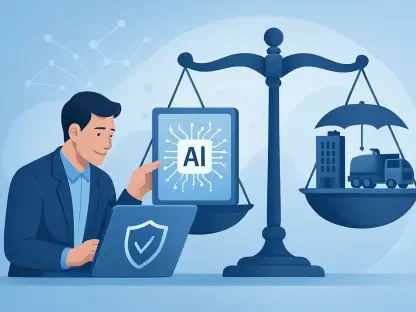
Artificial intelligence is no longer a futuristic concept but a present-day force actively reshaping industries, and the cyber insurance market is at the epicenter of this transformation. Acting as both a powerful shield for defenders and a sophisticated sword for attackers, AI has created a complex, high-stakes environment where risk and opportunity coexist. The days of static, checklist-based underwriting are numbered as insurers grapple with AI-powered threats that can bypass traditional defenses with unprecedented speed and scale. This article explores how AI is fundamentally revolutionizing cyber insurance, from redefining risk assessment and fueling a new generation of threats to driving the creation of innovative policies designed for our increasingly automated world. The insights that follow will illuminate the dual nature of AI and its profound impact on the future of cyber resilience.
The Evolving Landscape: From Static Checklists to Dynamic Threats
Historically, the cyber insurance market relied on static snapshots to price risk. Underwriters assessed a company’s security posture through detailed questionnaires and historical breach data, a process that proved increasingly inadequate in the face of fast-evolving digital threats. This model began to crack as ransomware and sophisticated supply chain attacks became commonplace, leading to a period of market volatility with soaring premiums and shrinking coverage. The industry, now valued between $16 billion and $20 billion and projected to surge to as much as $50 billion by 2030, is in a state of flux. While pricing has recently stabilized for many, the underlying threat landscape has only grown more complex. The fact that the frequency of claims dropped while the severity and cost per incident rose in 2023 underscores a critical reality: the old methods of risk assessment are no longer sufficient for a world where threats are dynamic, automated, and intelligent.
The AI-Driven Revolution in Cyber Insurance
Precision Underwriting: AI’s Role in Assessing Modern Risk
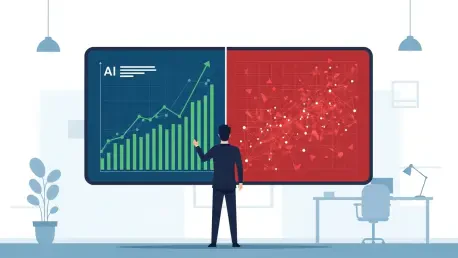
The most significant shift driven by AI is in underwriting and risk assessment. Insurers are now leveraging AI and machine learning algorithms to move from periodic assessments to continuous, real-time monitoring. These systems can scan a potential client’s entire digital footprint—from network vulnerabilities and software patches to employee security behaviors—to create a dynamic risk score. This data-driven approach allows for far more accurate and nuanced pricing, rewarding organizations with strong security postures while identifying specific weaknesses in others. By analyzing vast datasets of past incidents and emerging threat intelligence, AI can identify patterns and correlations invisible to human analysts, enabling insurers to proactively advise clients on mitigating specific risks before they lead to a claim. This marks a pivotal transition from a reactive, post-breach compensation model to a proactive, preventative partnership.
The New Frontier of Threats: Insuring Against AI-Powered Attacks
While insurers adopt AI as a defensive tool, malicious actors are weaponizing it to create more sophisticated and effective attacks. AI can generate hyper-realistic phishing emails, automate the discovery of software vulnerabilities, and create deepfakes for social engineering schemes. This new class of AI-powered threats is a primary concern for the industry, with recent data showing that AI-related security incidents are most commonly linked to supply chain compromises (30%), model inversion (24%), and model evasion (21%). Ransomware groups like Scattered Spider are also shifting their tactics from simple data encryption to more complex data exfiltration and extortion campaigns, which AI can amplify. As a result, insurers are forced to model and price entirely new risk categories, moving beyond traditional data breaches to cover threats unique to the AI ecosystem.
Innovating Coverage: Crafting Policies for an AI-Centric World
The emergence of AI-specific risks is compelling the insurance market to innovate its products. Standard cyber policies are often ill-equipped to cover the unique liabilities associated with artificial intelligence. In response, carriers are beginning to introduce specialized, standalone AI policies and endorsements. These new products are designed to cover niche scenarios, such as the significant costs of retraining a machine learning model that has been compromised or “poisoned” with bad data. Insurers are also tightening policy language around areas like contingent business interruption to clarify what is covered when a critical AI-driven service from a third-party vendor fails. This product evolution reflects a broader market adaptation to a world where a company’s most valuable asset may not be its data but the algorithm that processes it.
Charting the Future: Predictive Analytics and the Next Wave of Cyber Risk
Looking ahead, the role of AI in cyber insurance is set to evolve from assessment to prediction. The next frontier is predictive analytics, where AI models will not just evaluate current security postures but also forecast the likelihood of future attacks against specific industries, technologies, or even individual companies. This could usher in an era of “prescriptive” insurance, where policies come with dynamically adjusted premiums and coverage based on the insured’s real-time adherence to AI-generated security recommendations. As businesses integrate AI more deeply into their core operations, new risks related to algorithmic bias, AI model failure, and regulatory compliance will become central underwriting concerns. Regions like the Asia-Pacific, which are poised for the highest rate of growth, will likely see these AI-driven insurance models adopted rapidly as they build out their digital infrastructure.
Strategic Imperatives: Navigating the AI-Altered Insurance Ecosystem
In this transformed landscape, all stakeholders must adapt their strategies. For businesses seeking coverage, demonstrating a mature approach to both cybersecurity and AI governance will be essential for securing favorable terms. This means not only deploying AI-driven defensive tools but also understanding and mitigating the risks inherent in their own AI systems. For insurers, the imperative is to invest heavily in the technology and talent needed to stay ahead of AI-powered threats and accurately price emerging risks. Finally, brokers and risk managers must evolve into strategic advisors, helping clients navigate the complex interplay between AI technology, security controls, and the new generation of insurance products designed to protect them.
The Unavoidable Symbiosis: AI and the Future of Cyber Resilience
The relationship between artificial intelligence and cyber insurance has become an unavoidable symbiosis. AI is simultaneously the source of unprecedented risk and the most promising tool for managing it. As the technology continues its rapid advance, it is forcing the insurance industry to become more dynamic, data-driven, and proactive than ever before. The future of cyber resilience will not be defined by building impenetrable walls but by achieving a sophisticated understanding of a constantly shifting risk landscape. For businesses and insurers alike, embracing AI is no longer an option but a strategic necessity for survival in the next decade of digital risk.