
The 2025 Strata Market Report highlights that proactive AI risk mitigation is becoming a primary factor in stabilizing insurance premiums for high-density buildings. This finding reflects a significant shift in the Australian residential landscape, where artificial intelligence has moved beyond a luxury novelty into a fundamental component of property management and economic sustainability. In 2026, the transition toward intelligent living environments is driven by a combination of escalating energy costs, climate-related vulnerabilities, and a rapidly aging population that requires more sophisticated care solutions. These pressures have compelled developers and homeowners to seek systems that do more than just follow scheduled timers. Instead, the market is prioritizing platforms that analyze environmental data and occupant behavior to make autonomous decisions that protect assets and reduce overhead. This evolution is reshaping how properties are valued, insured, and maintained, turning the traditional home into a high-functioning data ecosystem that prioritizes long-term resilience over simple connectivity.
The current Australian economic climate has made energy management one of the most critical applications for residential intelligence. With the Australian Energy Regulator and the National Electricity Market overseeing a landscape of fluctuating tariffs, homeowners are increasingly adopting solar and battery optimization systems. These platforms utilize predictive models to analyze historical consumption patterns alongside real-time feeds from the Bureau of Meteorology. By forecasting cloud cover and temperature shifts, the AI can determine the most profitable moments to store energy, consume it, or export it back to the grid during peak pricing windows. This level of active asset management allows households to mitigate the impact of rising electricity prices while supporting grid stability through virtual power plant participation. As the “duck curve” continues to challenge traditional grid management, these intelligent homes provide a distributed solution that aligns individual economic benefits with national energy security goals.
1. Leading Use Cases for AI in Australian Residential Environments
Environmental risk monitoring has emerged as a non-negotiable feature for properties located in Australia’s peri-urban and regional corridors. The integration of AI into home safety systems allows for a sophisticated analysis of bushfire risks that static smoke detectors simply cannot match. By correlating local humidity levels, wind velocity, and satellite-derived particulate data, these systems calculate ignition probabilities at a micro-location level. In the event of a high-risk signal, the AI can autonomously initiate protective measures, such as sealing ventilation pathways to prevent smoke ingress or activating ember protection sprinklers. This shift from reactive alerting to probabilistic prevention is redefining safety standards for regional developments, providing a level of localized intelligence that supports broader emergency coordination efforts and protects high-value assets in high-risk zones.
Water damage remains a pervasive concern for strata managers and insurers, particularly within the high-density apartment blocks characterizing Sydney, Melbourne, and Brisbane. AI-driven leak detection systems utilize ultrasonic acoustic sensors and flow telemetry to establish a baseline of “normal” usage for every individual unit. When the system identifies a deviation—even a minor one indicative of a pinhole leak or a faulty valve—it can execute a staged water shut-off before structural damage permeates the building. This predictive oversight is far more effective than traditional moisture sensors, which often only trigger after significant damage has already occurred. For institutional asset owners, the ability to prevent large-scale remediation projects translates directly into preserved capital and improved insurability, making water management a core pillar of the modern smart building’s operational strategy.
2. Strategic Integration for Specialist Housing and High-Density Governance
The expansion of the National Disability Insurance Scheme has accelerated the demand for assisted living technologies that prioritize participant autonomy without sacrificing safety. AI-powered smart homes for independent living now utilize movement telemetry and vibration signatures to monitor participant well-being in a non-invasive manner. Unlike camera-based systems that can feel intrusive, these AI models analyze gait variations and appliance usage patterns to identify potential health declines or fall risks. If a significant shift in daily activity is detected, the system can automatically adjust environmental lighting to reduce hazards or notify caregivers. This application of technology is vital for the Specialist Disability Accommodation sector, as it allows for a higher standard of care while reducing the physical workload on support staff and preserving the dignity of the residents.
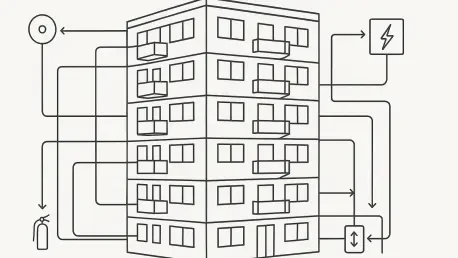
Within the realm of urban densification, strata and apartment governance have become increasingly complex, requiring AI to manage shared infrastructure effectively. Modern apartment complexes now employ vibration and thermal telemetry to monitor critical assets such as lift motors, communal HVAC pumps, and central boiler systems. By identifying fatigue signals before a mechanical breakdown occurs, AI allows body corporates to schedule maintenance during off-peak hours, thereby avoiding the high costs associated with emergency repairs and resident dissatisfaction. Furthermore, these systems modulate common-area energy loads to avoid peak-demand surcharges, ensuring that the building’s collective operating costs remain predictable. This asset-level governance turns building management into a proactive science, where data informs every maintenance decision and helps maintain the competitive value of the property in a crowded market.
3. Step-by-Step Implementation Framework for Intelligent Property Assets
Identify a Use Case with Quantifiable ROI. The first step in a successful AI deployment is selecting a specific objective that offers a measurable financial or operational return. For an Australian property developer, this might mean focusing on solar energy optimization to achieve a higher NatHERS rating, or for a strata manager, it could involve targeting water leak prevention to lower annual insurance premiums. Stakeholders must define the baseline costs and the target improvement percentages before any hardware is installed. By grounding the project in clear financial metrics, organizations can justify the initial capital expenditure and create a roadmap for future expansion. This phase ensures that the technology serves the business strategy rather than existing as a standalone experimental feature.
Build the Infrastructure for Data and Integration. Once the objectives are defined, the focus shifts to establishing a robust data foundation that can support intelligent decision-making. This involves deploying high-quality sensors and ensuring they can communicate seamlessly with external data feeds, such as energy market pricing or local weather reports. In the Australian context, it is crucial to establish secure data pipelines that adhere to local residency requirements, ensuring that telemetry is handled within domestic borders. This stage also requires a technical audit of existing building systems to identify any integration gaps that could hinder the AI’s ability to ingest clean, standardized data. A well-designed infrastructure is the prerequisite for reliable model performance and long-term system scalability across multiple assets.
Introduce Automation with Human Oversight. The third phase involves deploying the AI models with “guardrail” protocols that ensure safety and build user trust. Rather than giving the system total autonomy immediately, initial implementations should focus on augmented decision-making where the AI provides recommendations or handles low-risk tasks. For example, a system might suggest an optimal cooling schedule based on the next day’s heat forecast but allow the resident or manager to approve the change. It is essential to implement clear manual override options and transparent escalation paths for any automated action. This approach allows the system to calibrate its accuracy against real-world feedback while ensuring that human residents feel in control of their living environment.
Expand Connectivity Across Entire Portfolios. The final step is to take the lessons learned from a successful pilot and standardize the protocols across an entire property portfolio. This requires a shift from property-specific management to a centralized dashboard that monitors multiple buildings or regions simultaneously. Standardization of hardware and software communication is vital to prevent fragmentation and ensure that maintenance teams can support the technology efficiently. By scaling the solution, organizations can leverage aggregate data to find even deeper efficiencies, such as benchmarking energy performance between different buildings or negotiating better insurance rates based on portfolio-wide risk reduction. This stage transforms the project into a permanent infrastructure capability that enhances the value of every asset in the group.
4. Economic Benchmarks and Financial Lifecycle of Smart Home Development
Investing in AI for the Australian residential market requires a clear understanding of the financial commitments involved in developing and maintaining these systems. A Minimum Viable Product for solar energy optimization typically requires an investment ranging from $70,000 to $150,000, covering the initial software development and hardware integration. For more complex integrated residential platforms that handle multiple safety and environmental functions, costs can scale to between $150,000 and $350,000. Large-scale strata ecosystems or multi-property deployments often exceed $700,000 due to the extensive engineering required for reliable connectivity and compliance. These figures reflect the high standards of cybersecurity and data residency mandated by the Australian market, ensuring that the systems are not only functional but also legally defensible and secure against emerging threats.
The budget allocation for these projects must be distributed across the entire development lifecycle to ensure structural integrity. Approximately fifteen percent of the total budget is typically dedicated to discovery and architecture, where feasibility studies and tech stack selections are finalized. Data and IoT integration often consume twenty percent of the investment, as connecting local sensors and smart meters requires significant engineering effort. Model development and the engineering of the backend infrastructure represent another forty percent of the cost, while the remainder is spent on security hardening, quality assurance, and staged deployment. It is also important for stakeholders to account for ongoing operational expenses, including cloud storage for continuous telemetry and periodic model retraining to account for changing energy tariffs or seasonal behavior shifts. This total cost of ownership model provides a more accurate picture of the investment required to sustain a high-performance intelligent home.
5. Regulatory Adherence and National Data Governance Standards
The deployment of AI in Australian homes is strictly governed by a regulatory framework that prioritizes privacy and national security. The Privacy Act 1988 and the associated Australian Privacy Principles dictate how behavioral patterns and biometric data must be handled. Any smart home platform must incorporate data minimization strategies, ensuring that the system only ingests the specific telemetry needed for its predictive functions. Furthermore, anonymization of personal information at the source is a standard requirement to prevent the accidental disclosure of resident identities during cloud transmission. For developers and service providers, adhering to these privacy standards is not just a legal obligation but a critical factor in maintaining the trust of the residents who inhabit these monitored environments.
Data residency and cybersecurity posture are equally important considerations under the guidance provided by the Australian Signals Directorate. There is a strong institutional preference for hosting residential data within Australian-based cloud environments to mitigate jurisdictional risks, a requirement that is often non-negotiable for projects funded by government bodies like the NDIS. Implementing the ASD Essential Eight framework is the baseline for securing these systems, involving hardware-level encryption, automated firmware updates, and multi-factor authentication for all user interfaces. By building these security protocols into the core architecture, developers can protect against the growing threat of IoT vulnerabilities and ensure that the digital infrastructure of the home remains as resilient as its physical structure. This commitment to sovereign data governance is a defining characteristic of the Australian AI landscape.
6. Addressing Deployment Barriers and Technical Mitigation Strategies
One of the most significant risks in smart home implementation is the proliferation of unregulated devices and fragmented hardware brands. When an organization integrates multiple IoT vendors without a centralized governance policy, it often leads to software conflicts and significant integration debt. To mitigate this, developers must enforce strict hardware standards and utilize a centralized fleet management system that ensures all connected devices are compatible and up to date. Establishing a unified communication protocol from the start of the project prevents the operational friction that occurs when different parts of a building’s infrastructure cannot talk to one another. This disciplined approach to hardware selection is essential for maintaining a stable and maintainable AI ecosystem over a multi-year lifecycle.
Connectivity failures and infrastructure incompatibility also pose substantial challenges, particularly in regional Australia or within older buildings with legacy wiring. A system that relies entirely on cloud-based inference is vulnerable to network instability, which could be catastrophic for safety-critical functions like fire alerts or water shut-offs. The solution lies in a hybrid “Edge” processing architecture, where critical decisions are made locally at the property level while non-urgent analytics are handled in the cloud. This ensures that the home maintains its baseline safety functionality even during a total internet outage. Additionally, performing comprehensive technical audits before a full rollout allows engineers to identify and rectify legacy bottlenecks, ensuring that the new AI software can effectively interact with the existing physical infrastructure of the building.
7. Sustainable Outcomes and Actionable Directions for Property Stakeholders
The industry successfully transitioned from a period of experimental automation to one of integrated, data-driven residential governance. Stakeholders determined that the most effective way to stabilize insurance premiums and energy costs was to invest in systems that actively mitigated risk and optimized consumption. Property developers who prioritized these technologies early on realized higher terminal values for their assets, as buyers and tenants increasingly favored homes with verified efficiency and safety records. The integration of AI into the NDIS and strata sectors proved that technology could support both social equity and financial sustainability by reducing the burden on caregivers and improving the operational predictability of high-density housing. This period of growth established a new baseline for what constitutes a high-quality residential development in the Australian market.
Moving forward, the focus shifted toward the continuous refinement of these systems to ensure they remained relevant as environmental and economic conditions evolved. The industry adopted a culture of ongoing performance monitoring, where AI models were regularly retrained to account for new energy market structures and emerging climate patterns. Organizations that maintained strong partnerships with technology providers were better positioned to navigate the complexities of data sovereignty and cybersecurity. This proactive stance ensured that the digital infrastructure of Australian homes was prepared for the challenges of the late 2020s. By treating residential intelligence as a dynamic asset rather than a static installation, the property sector secured a more resilient and economically viable future for all participants in the Australian housing ecosystem.