
In the complex world of global commerce, few individuals possess the strategic vantage point of Simon Glairy. As a seasoned expert in insurance and Insurtech, he has spent his career dissecting how geopolitical shifts and technological advancements redefine risk management for the world’s largest enterprises. Our conversation explores the massive wave of Japanese capital entering the American market, the evolving landscape of natural catastrophes, and the delicate art of maintaining a competitive edge during a shifting insurance cycle.
Japan has pledged roughly $550 billion in investment into the U.S., targeting infrastructure and manufacturing sectors. How do these massive capital flows reshape your underwriting strategy for complex risks, and what specific operational steps are you taking to capture this growth?
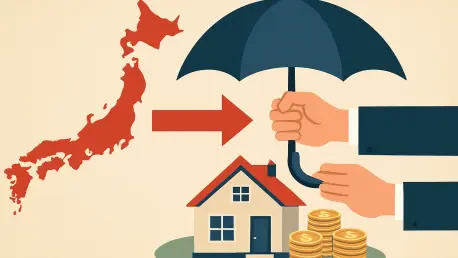
This unprecedented commitment of $550 billion acts as a massive engine for the U.S. economy, specifically within the industrial and manufacturing sectors that require sophisticated protection. From an underwriting perspective, we are shifting our focus to the entire lifecycle of these investments, moving from initial construction phases to long-term operational liabilities for OEMs and retail firms. We are specifically enhancing our technical expertise in sectors like renewable energy and high-tech manufacturing, such as lab-grown diamonds, to ensure we can price these risks accurately. Operationally, we are tightening our ties with our Japanese clientele to capture a significant “slice of the pie” as these capital flows cascade into new property, workers’ compensation, and umbrella placements. It is an exciting period where we are essentially building the safety net for the next generation of American infrastructure.
Exposure models are shifting from traditional earthquake and hurricane risks toward secondary perils like wildfires and convective storms. How are these evolving catastrophe trends impacting your resilience strategies, and what practical measures are necessary to close the growing protection gap for commercial clients?
The historical reliance on earthquake and hurricane modeling is no longer sufficient in an era where secondary perils, such as California wildfires and severe convective storms, are causing mounting losses. We are actively recalibrating our exposure models to account for these “invisible” risks that were once considered outliers but are now becoming frequent disruptions. To close the protection gap, we are focusing on a more purposeful approach to risk management, providing clients with the data and tools needed to harden their assets against floods and tornadoes. Our strategy is built on the belief that a resilient society is one where businesses can continue to operate despite volatility, so we are investing heavily in predictive analytics to stay ahead of these shifting weather patterns. We want our clients to feel that even in the face of a changing climate, their operational continuity is backed by rigorous, forward-looking financial security.
Operating alongside diverse sister companies like Philadelphia Insurance and Tokio Marine HCC creates a unique corporate ecosystem. How do you coordinate a holistic proposition for multinational clients, and what are the trade-offs when balancing individual brand identities with the need for group synergy?
Managing a portfolio that includes specialized entities like Philadelphia Insurance, Tokio Marine HCC, and PURE requires a delicate balance between autonomy and integration. Our primary goal is to present a holistic proposition to multinational clients, where we can seamlessly blend standard commercial lines with niche products like D&O, representations and warranties, and excess workers’ compensation. The trade-off often involves ensuring that while each brand maintains its unique market reputation and specialized focus, the client experience remains unified and frictionless. We achieve this through a shared mission of “group synergy,” where we leverage collective expertise across the group to solve complex problems that no single entity could handle alone. This collaborative ecosystem allows us to act as a one-stop shop for global enterprises, providing both the scale of a giant and the precision of a specialist.
The insurance market appears to be gravitating toward a softer cycle after several years of hard market conditions. As you prepare your 2027–2029 midterm plan, what specific metrics or milestones will define sustainable growth, and how will you maintain a competitive edge during this transition?
Transitioning into a softer market cycle after five years of strong performance requires a pivot from aggressive rate increases to a focus on operational efficiency and client retention. For our 2027–2029 midterm plan, the defining metrics will be our combined ratio stability and our ability to expand our market share in emerging sectors despite price pressures. We are prioritizing sustainable, profitable growth by deepening our relationships with long-term partners who value stability over the lowest possible premium. To maintain our edge, we are doubling down on our underwriting discipline and ensuring that our “purposeful business” model remains the core of our value proposition. We are not just looking at premium volume; we are looking at the quality of the risk and the longevity of the partnership, which are the true hallmarks of a market leader during a downward cycle.
With a formal U.S. presence approaching the 50-year mark, your organization has navigated numerous economic shifts. How does this historical perspective influence your current mission, and how do you ensure the business remains agile enough to adapt to modern political and economic volatility?
Reaching the 50-year milestone in 2026—and reflecting on a heritage that traces back to 1880—provides us with a profound sense of “institutional memory” that guards against knee-jerk reactions to market volatility. This historical perspective allows us to view current political and economic shifts as part of a larger cycle that we have successfully navigated many times before. Our mission remains rooted in serving our core Japanese clientele while adapting our service model to meet the needs of a modern, fast-paced American market. We maintain agility by fostering a culture of constant learning and by empowering our leadership to make decisions that reflect current realities rather than just following past scripts. This blend of historic stability and modern flexibility is what allows us to thrive even when the external environment feels unpredictable.
What is your forecast for the impact of Japanese foreign direct investment on the U.S. insurance landscape over the next decade?
I believe that Japanese foreign direct investment will be a primary catalyst for the re-industrialization of the United States, creating a robust “super-cycle” of demand for complex commercial insurance. Over the next decade, we will see these $550 billion in investments mature into fully operational manufacturing hubs and infrastructure networks, requiring a more integrated and globalized approach to risk management. The U.S. insurance landscape will become increasingly interconnected with Asian capital markets, forcing domestic carriers to enhance their cross-border capabilities and cultural fluency. We will likely see a surge in demand for specialized liability and environmental coverages as these new facilities come online and integrate into the American supply chain. Ultimately, this influx of capital will drive innovation in how we protect large-scale industrial assets, making the U.S. market more dynamic and resilient than ever before.