
The transition from bulky wrist-worn screens to sophisticated biometric jewelry marks a significant shift where technology is judged not by its visibility, but by its seamless integration into the human form. For years, the wearable market was dominated by devices that demanded attention through constant haptic buzzing and glowing displays. However, the emergence of the Oura Ring 5 signifies a maturation of the industry, prioritizing a “passive-first” philosophy where the most powerful data collection happens in the background. This review examines how this fifth-generation device reconciles the persistent tension between high-fidelity clinical monitoring and the desire for an unobtrusive lifestyle accessory.
Evolution of the Smart Ring: Emergence of the Oura Ring 5
The trajectory of the smart ring has moved rapidly from niche experimental gadgetry to a cornerstone of preventative health. In the early days of the sector, rings were often thick, plastic-heavy, and struggled with signal accuracy due to the limited space for hardware. The Oura Ring 5 represents a departure from these limitations, serving as a sophisticated bridge between aesthetic elegance and high-performance data science. This evolution indicates a broader movement in consumer electronics toward “invisible technology,” where the hardware disappears into daily fashion while the software provides deeper, more meaningful life insights.
By moving health tracking from the wrist to the finger, the industry has tapped into a more reliable source of biometric data. The digital arteries in the finger allow for a stronger signal compared to the capillaries in the wrist, which are often obscured by movement or skin thickness. As consumers in 2026 become more health-conscious, the demand for a device that can be worn twenty-four hours a day without causing “screen fatigue” has never been higher. This device satisfies that demand by focusing on the body’s internal rhythms rather than external notifications, fostering a more mindful relationship with personal data.
Technical Specifications: Core Functionalities of the New Generation
Miniature Engineering: The Aesthetic Design Shift
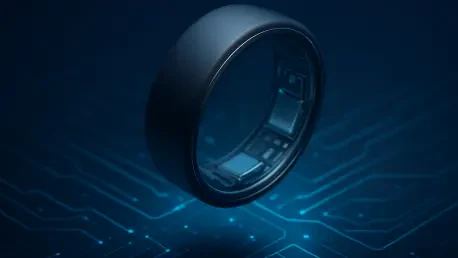
The most immediate triumph of the Oura Ring 5 is its physical architecture, which achieves a forty percent reduction in internal volume compared to its predecessor. At a mere 2.28mm in thickness, the ring manages to pack a complex array of sensors into a frame that feels identical to a standard titanium wedding band. This reduction was achieved through a radical redesign of the battery and circuit board, allowing the device to maintain its seven-day battery life despite the smaller footprint. The use of aerospace-grade titanium ensures that the ring remains scratch-resistant and durable enough for high-intensity weightlifting or outdoor excursions.
Beyond the dimensions, the aesthetic refinement speaks to a deeper understanding of jewelry design. The interior of the ring is now entirely smooth, replacing the visible sensor bumps of previous generations with a recessed, flush-mounted sensor suite. This change not only improves the comfort level during sleep but also ensures that the sensors maintain a consistent connection with the skin without leaving indentations. The finish options have also been updated to look more like precious metals, moving away from the “gadget-like” appearance of earlier iterations and toward a high-end fashion statement that complements any wardrobe.
The Advanced Sensor Suite: Implementing Smart Sensing Technology
The heart of the device lies in its “Smart Sensing” technology, which utilizes a dynamic array of LED sensors to adapt to the wearer’s unique physiology. Unlike static sensors that can lose accuracy if the ring rotates, this system uses multiple data paths to triangulate vitals such as heart rate variability, blood oxygen levels, and skin temperature. This redundancy is crucial because it ensures that data collection remains continuous even during active movement or shifts in sleep positions. By monitoring these metrics at a high frequency, the ring creates a high-fidelity map of the wearer’s cardiovascular and respiratory health.
Furthermore, the introduction of blood pressure insights represents a significant leap forward in consumer-grade biometrics. While not intended to replace a medical-grade cuff for diagnostic purposes, the ring provides long-term trends that help users identify how lifestyle factors—like salt intake, stress, or caffeine—affect their cardiovascular baseline. When combined with the “Readiness Score,” which synthesizes recovery data into a single daily number, the sensor suite provides a comprehensive look at the body’s internal state. This enables users to make informed decisions about whether to push for a personal record in the gym or prioritize a recovery day.
Software Integration: Navigating the Application Ecosystem
The hardware is supported by a meticulously structured application that categorizes health into three main pillars: Today, Vitals, and My Health. This hierarchy prevents the user from being overwhelmed by raw numbers, instead offering a narrative of their wellness journey. The “Today” tab functions as a quick-glance dashboard for immediate metrics, while the “Vitals” section offers a more granular look at physiological markers. The “My Health” pillar is perhaps the most innovative, as it tracks cardiovascular age and long-term resilience, providing a broader perspective on how the body is aging over time.
One of the most impressive software features is the “Automatic Activity Detection,” which has become significantly more precise in this generation. The ring can distinguish between a casual walk, a swimming session, and a high-intensity interval training workout without any manual input from the user. For outdoor activities, the app integrates GPS data from the paired smartphone to provide detailed maps and pace analysis. This seamless transition from rest to activity tracking ensures that the user’s “Activity Score” is always accurate, reflecting the true physical load of their day without the need to interact with a screen.
Innovations in Monitoring: Trends Shaping the Industry
The Oura Ring 5 is a byproduct of a larger trend toward proactive rather than reactive health management. In 2026, the focus has shifted from simply counting steps to understanding the nuances of metabolic health and hormonal cycles. The inclusion of advanced temperature sensors has made the device a leader in women’s health, offering precise tracking for menstrual cycles and even early pregnancy detection by monitoring subtle deviations in baseline temperature. This level of insight allows for a more personalized approach to wellness that respects the biological differences between users.
Moreover, the industry is increasingly leaning toward subscription-based models to fund ongoing software development and data privacy. Oura has positioned its membership fee as a “privacy wall,” asserting that the cost of the subscription prevents the company from needing to monetize user data through third-party sales. This reflects a growing consumer appetite for digital sovereignty, where users are willing to pay for the assurance that their most intimate health data remains encrypted and private. This business model also allows for continuous updates, such as the “Health Radar” feature, which uses AI to detect early signs of illness before physical symptoms manifest.
Practical Use Cases: Health Management in Daily Life
In real-world application, the ring excels as a tool for long-term behavior change. For athletes, the recovery data is indispensable for preventing overtraining and burnout. By observing how alcohol, late-night meals, or intense stress impact their “Sleep Score” and heart rate variability, users can see a direct correlation between their choices and their physiological performance. The device essentially acts as a localized diagnostic tool, providing the kind of feedback that was once only available in a clinical setting or a high-performance sports lab.
Beyond athletics, the ring serves as an early warning system for general wellness. The “Health Radar” functionality can identify a rising resting heart rate or a slight increase in body temperature days before a user realizes they are fighting off a virus. This allows individuals to adjust their schedules and prioritize rest, potentially shortening the duration of an illness. For those managing chronic stress, the “Stress Monitor” provides real-time insights into how daily triggers affect their nervous system, encouraging the use of breathing exercises or meditation to return to a state of equilibrium.
Navigating the Obstacles: Challenges and Operational Hurdles
Despite the technical triumphs, the Oura Ring 5 is not without its limitations, particularly regarding the “pay-to-play” subscription requirement. For a device that already carries a premium price tag, the additional monthly fee remains a point of contention for many consumers. This model creates a barrier for users who prefer a one-time investment and feel that they should own their data without a recurring cost. Furthermore, because the ring lacks any visual interface or haptic feedback, users are entirely dependent on their smartphones to check their status, which may be a drawback for those seeking more immediate interaction.
Another operational challenge lies in the legal complexities of data protection. While the company emphasizes its privacy-first stance, it is important to understand that it does not operate as a “Covered Entity” under HIPAA regulations in its consumer-facing business. This means the legal protections for this data are different from those governing hospital records. As biometric tracking becomes more pervasive, the industry faces ongoing scrutiny regarding how private companies handle sensitive health information and what happens to that data in the event of an acquisition or policy change.
Future Trajectory: The Path of Smart Ring Technology
Looking ahead, the integration of smart rings with the broader medical infrastructure is the next logical step. We can expect to see devices in the coming years, from 2026 toward 2028, achieving medical-grade certifications for conditions like sleep apnea or atrial fibrillation. The expansion of AI-driven health coaching will likely become more sophisticated, moving from simple data reporting to providing actionable, personalized advice based on a decade of accumulated biometric patterns. The potential for non-invasive glucose monitoring or hydration tracking remains the “holy grail” of the industry, and the Oura Ring 5 sets the stage for these breakthroughs.
The long-term impact of this technology will likely be the democratization of health data. As sensors become even smaller and more affordable, the ability to monitor one’s biological baseline will no longer be a luxury but a standard part of personal care. This shift could lead to a more efficient healthcare system where doctors receive pre-vetted, high-fidelity data from their patients, allowing for faster diagnoses and more precise treatment plans. The Oura Ring 5 is a critical milestone in this journey, proving that the most powerful technology is often the kind that we forget we are even wearing.
Final Assessment: A Milestone in Wellness Engineering
The Oura Ring 5 functioned as a definitive statement on the future of wearable technology by successfully merging extreme miniaturization with robust clinical accuracy. It eliminated the primary barriers to consistent wear by providing a form factor that was indistinguishable from traditional jewelry while maintaining a battery life that outperformed most smartwatches. The software ecosystem matured into a helpful companion that translated complex biological signals into actionable daily insights, moving the conversation from raw data to holistic lifestyle management. While the subscription model and the absence of haptic feedback represented notable trade-offs, the device’s ability to provide a non-intrusive window into human physiology remained its most compelling feature. Ultimately, this iteration of the smart ring proved that the most effective health monitors are those that integrate so seamlessly into a user’s life that they become a natural extension of the body. The lessons learned from this generation of engineering set a new benchmark for the entire wearables industry, emphasizing that the future of tech lies in its ability to be both invisible and indispensable.