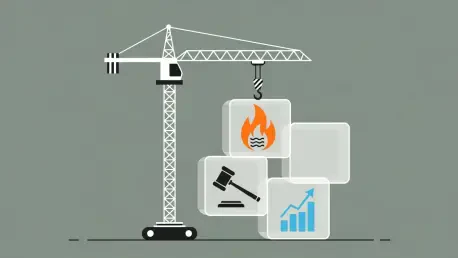

The landscape of construction insurance across the western United States is undergoing a seismic shift, a period of intense pressure that industry experts have aptly termed a reckoning, fundamentally altering the operational norms for developers, contractors, and insurers alike. This crisis is not a singular event but a convergence of three powerful forces: pervasive claims inflation, escalating climate-related risks such as catastrophic wildfires, and an increasingly hostile litigation environment. These elements are collectively causing insurance capacity to shrink, costs to skyrocket, and forcing a complete re-evaluation of how construction projects are insured and managed in high-risk states like California, Arizona, and Washington. The established models of risk transfer are no longer sustainable, pushing the industry toward a critical inflection point where adaptation is not just advantageous but essential for survival. This challenging climate demands a deeper understanding of the interconnected pressures that are reshaping the future of building in the American West.
The Triad of Turmoil Unpacking the Crisis
The Financial Squeeze Inflation and Climate Costs
The construction industry is grappling with a severe escalation of an already challenging or “hard” insurance market, where underwriters have long been cautious about large-scale projects. A primary driver of this intensification is “social inflation,” a term describing the significant rise in liability verdicts and legal settlements. In a trend seen across other sectors, such as auto insurance, juries are awarding substantially larger sums in liability cases. This directly translates to higher insurance claim payouts and, consequently, forces insurers to increase premiums for essential coverages like general liability and commercial auto policies. For construction operations, which rely heavily on these policies, the financial impact is immediate and severe. This inflationary pressure strains budgets, complicates project bidding, and introduces a new level of financial uncertainty that permeates every stage of the construction lifecycle, from initial planning to final delivery.
Compounding these financial pressures are the devastating effects of climate change, which have severely impacted the property insurance side of the construction sector. The increased frequency and intensity of wildfires, particularly in the western states, have led to staggering and often unpredictable losses for insurers. This has caused a dramatic rethinking of risk exposure, especially for builder’s risk placements that cover projects during the construction phase. Insurers are now exercising extreme caution, with many withdrawing coverage entirely for high-value wood-frame projects or any construction site located in an area with significant wildfire exposure. This retreat from the market has created coverage deserts where obtaining adequate property insurance is nearly impossible, leaving developers with the difficult choice of self-insuring against catastrophic events or abandoning projects altogether. The result is a market where climate risk is no longer a future consideration but a present and formidable barrier to development.
The Legal Battlefield
On the liability front, the most significant driver of market volatility remains the pervasive landscape of construction defect (CD) litigation. This legal environment, especially for multifamily residential developments, is fraught with challenges that create immense instability for project-specific liability programs. The unpredictability and high cost of claims stemming from defect lawsuits make it exceptionally difficult for insurers to accurately price risk and maintain profitability over the long term. In response, a substantial number of insurance carriers have retreated from the market, particularly in states with plaintiff-friendly laws. This exodus has led to a significant reduction in competition, allowing the few remaining insurers to dictate highly unfavorable terms. Contractors and developers now face substantial non-renewals for existing policies, higher self-insured retentions that shift more risk onto their balance sheets, and the implementation of narrower liability forms that offer less comprehensive coverage than ever before.
The legal mechanisms themselves contribute significantly to this challenging environment, creating a long tail of risk that insurers are increasingly unwilling to underwrite. Lengthy statutes of limitation for filing defect claims, which can extend for a decade or more after a project’s completion, combined with evolving and often broad court interpretations, make underwriting a precarious endeavor. This extended exposure means an insurer might be liable for a claim many years after a policy has expired, complicating reserve calculations and financial planning. As a result, insurers that do remain in the market are adopting defensive postures. They are implementing strict exclusions for common sources of claims, such as water intrusion or soil-related issues, and demanding that contractors assume a larger portion of the risk through higher deductibles. This legal quagmire not only drives up insurance costs but also stifles innovation and development, particularly in the residential sector where the risk of litigation is highest.
Reshaping the Industry Adaptation and Economic Fallout
New Models for Coverage and Development
The constrained insurance market has forced a fundamental shift in how large construction projects secure necessary coverage, moving away from traditional single-carrier policies. With fewer carriers willing to write substantial risks, particularly for projects valued over $10 million, the industry has embraced complex “layered programs.” This structure involves piecing together coverage from multiple insurers, with each carrier taking a different layer of the risk. Often, these layers are sourced from the Excess & Surplus (E&S) market, which specializes in higher-risk policies not available in the standard or “admitted” market. While this approach is more complicated and costly, requiring specialized brokers to navigate the intricate negotiations, it has become the new standard. For many large-scale developments, it represents the only viable path to securing the adequate coverage limits needed to satisfy lenders and stakeholders, transforming the role of the insurance broker from a simple agent to a strategic risk architect.
The immense pressure from construction defect litigation is having a direct and discernible impact on the types of projects being built, particularly in the housing sector. The soaring cost and acute scarcity of project-specific liability insurance for “for-sale” residential developments, such as condominiums and tract homes, have reached a tipping point. These projects are frequent targets of class-action lawsuits initiated by trial attorneys, making them exceptionally risky for both developers and their insurers. As a result, many developers in western states are finding such projects financially unfeasible and are abandoning them in favor of building apartment complexes. Apartments are typically held as long-term rental assets and are less susceptible to the same type of defect litigation, making them a safer investment in the current climate. This strategic shift has profound implications for the regional housing crisis, specifically limiting the supply of new homes available for purchase and exacerbating affordability challenges for potential homebuyers.
Lingering Economic Risks
Beyond the primary challenges of insurance availability and cost, the lingering effects of earlier economic disruptions are creating a new and insidious layer of risk. Ongoing labor shortages and past supply chain bottlenecks have manifested as widespread financial instability among smaller subcontractors. This has led to a concerning trend in business failures among “second-tier” trades—the subcontractors hired by a project’s primary subcontractors. While these entities are not directly contracted by the general contractor (GC), their failure can have significant and cascading financial repercussions throughout the entire project. The financial health of these smaller firms has become a critical, yet often overlooked, vulnerability that can derail project timelines, inflate costs, and create unforeseen liabilities for the GC, who may be left to cover the financial fallout of a business failure several steps down the contracting chain.
This emerging risk is particularly acute on public or municipal projects that require surety bonds, where the GC’s payment bond guarantees payment to all suppliers and subcontractors on the job. If a second-tier trade, such as an electrician’s subcontractor, goes bankrupt and fails to meet its financial obligations to its suppliers or employees, a claim can be made directly against the GC’s payment bond. This creates a “cascading effect,” where the GC is held legally and financially liable for the failures of companies deep within the contracting hierarchy. This unforeseen liability adds another layer of complexity and risk for GCs, forcing them to adopt more stringent vetting processes for all tiers of subcontractors and to account for potential downstream defaults in their own financial planning. The stability of the entire project ecosystem now depends on the solvency of its smallest and often most vulnerable participants.
Navigating the New Normal Technology and the Call for Change
The Technological Lifeline
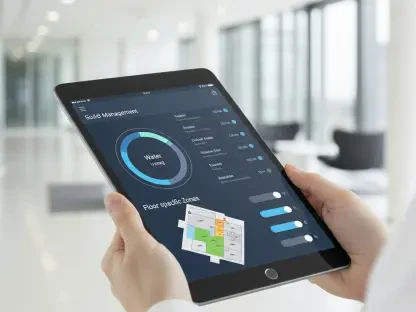
In this difficult environment, technology has emerged as a crucial lever for risk mitigation and a powerful tool for negotiating more favorable insurance terms. Developers and contractors are increasingly partnering with technology providers to deploy sophisticated monitoring systems directly on job sites. By installing Internet of Things (IoT) sensors that provide real-time data on potential hazards, such as the early signs of fire, water leaks, or theft, project managers can proactively address risks before they escalate into costly claims. This data-backed approach provides underwriters with tangible assurance that risks are being actively and effectively managed. This proactive stance has enabled insurance brokers to successfully argue for better terms on behalf of their clients, securing higher coverage limits and lower deductibles that can make previously uninsurable projects viable again, demonstrating that a commitment to technology can yield a direct return on investment.
Alongside on-site hardware, Artificial Intelligence (AI) is proving to be a transformative force in risk management, particularly in automating the complex and traditionally manual process of subcontractor insurance verification. AI-powered tools can now analyze the intricate policy language of non-standard E&S insurance documents with a level of speed and accuracy that manual review cannot match. These systems can instantly flag any endorsements, exclusions, or policy limitations that do not meet the stringent insurance requirements outlined in a GC’s contract. By identifying these potential gaps in coverage before a subcontractor ever sets foot on a job site, this technology helps prevent situations where a GC could be exposed to significant liability due to a subcontractor’s inadequate insurance. This evolution signifies a shift of AI from a back-office administrative tool to a client-facing, value-added service that is becoming indispensable for navigating the complexities of modern construction risk.
A Plea for Systemic Reform
Ultimately, it became clear that the crisis facing the construction insurance market could not be resolved by the insurance industry alone. A sustainable, long-term solution necessitated fundamental legal and regulatory reforms that addressed the root causes of the market’s instability. The adversarial litigation environment was consistently identified as a primary blocker, not only to a stable insurance market but also to solving the wider housing affordability crisis that plagued the region. Lasting change required a collaborative effort among all stakeholders—including trial lawyers, insurers, and developers—to find common ground and create a more predictable and sustainable system. In the interim, the role of the insurance broker evolved from that of a transactional agent to a holistic risk advisor, tasked with guiding clients through this unprecedentedly challenging environment with a suite of value-added services ranging from technology integration to strategic financial planning.