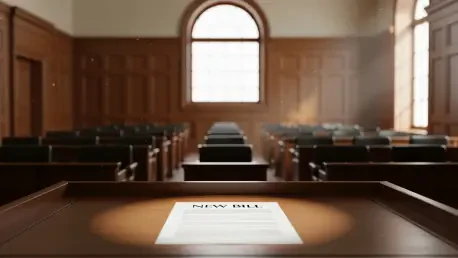

Homeowners across Illinois are reeling from a severe case of “massive sticker shock” after one of the state’s largest insurers, State Farm, implemented an average premium hike of 27%, a move that has ignited a high-stakes political battle. This dramatic increase has thrust the state’s regulatory framework for the insurance industry into the spotlight, prompting a direct and public confrontation between Governor JB Pritzker and State Farm’s CEO, Jon Farney. The governor is now aggressively pushing to revive a previously stalled legislative measure designed to grant the Illinois Department of Insurance unprecedented power to challenge and potentially reverse what it deems to be excessive rate increases. The core of this conflict revolves around a fundamental disagreement over the balance between consumer protection and the operational freedom of insurance companies in a market increasingly battered by climate-related disasters and economic inflation. At the heart of the debate is a question of accountability: should insurers have unilateral power to set rates, or should the state have the authority to intervene on behalf of its citizens when costs spiral out of control? The outcome of this legislative push could set a new precedent for insurance regulation in Illinois and have ripple effects on the national insurance landscape, impacting both corporate bottom lines and the financial stability of millions of households.
A Clash of Interests
The Governor’s Push for Consumer Protection
Governor JB Pritzker’s legislative initiative represents a significant strategic shift in Illinois’s approach to insurance oversight, moving from a hands-off system to one of active post-implementation review. Under the proposed bill, insurance companies would not be required to seek prior approval from the state before raising their rates, a key distinction from more stringent regulatory models. However, the legislation would arm the Illinois Department of Insurance with a powerful new tool: the authority to scrutinize premium hikes after they have taken effect. If the department determines that an increase is “unfair or excessive,” it would be empowered to compel the insurer to issue refunds directly to policyholders. Pritzker has passionately argued that this measure is essential for establishing a fair marketplace and providing a necessary check on corporate power. He contends that the current system is fundamentally flawed, lacking any meaningful enforcement mechanisms or consequences for insurers who might impose exorbitant rates. In his view, the absence of such accountability leaves consumers vulnerable and without recourse, effectively allowing companies to operate with impunity. This proposal is framed not as an attack on the industry but as a pro-consumer safeguard designed to restore balance and ensure that rate adjustments are justifiable and not purely profit-driven.
The governor has actively countered industry opposition by drawing parallels to regulatory frameworks in other states, including those with conservative political leanings. In a direct communication to State Farm CEO Jon Farney, Pritzker pointed out that states like Texas, which are often cited as models of free-market principles, have enacted similar or even more restrictive insurance oversight laws. He strategically highlighted that his proposal is considerably less intrusive than the Texas model, which often involves a pre-approval process for rate changes. By focusing on post-hike refunds rather than prior approval, Pritzker’s bill aims to strike a compromise that allows insurers to respond to market conditions swiftly while still holding them accountable for their pricing decisions. He has publicly asserted that as long as an insurer like State Farm sets its rates based on fair, market-driven data and actuarial science, it should have nothing to fear from the new regulations. This line of reasoning is intended to portray the legislation as a reasonable, middle-ground solution that protects consumers from price gouging without crippling the insurance industry’s ability to operate profitably and sustainably in a challenging economic environment. The governor’s stance frames the issue as one of basic fairness and transparency for the policyholders who form the backbone of the insurance market.
State Farm’s Dire Warnings
In stark opposition, State Farm CEO Jon Farney has issued a grave warning that the proposed legislation would have a catastrophic effect on the state’s insurance market. In his communications with Governor Pritzker, Farney argued that the bill, far from protecting consumers, would “destroy Illinois’ current healthy insurance market.” He contends that introducing this new layer of regulatory uncertainty would fundamentally destabilize the competitive landscape. Insurers, facing the potential for retroactive rate reversals and mandated refunds, might become hesitant to innovate or offer a wide range of coverage options. This could lead to a contraction of the market, with fewer companies willing to underwrite policies in Illinois, ultimately limiting consumer choice and driving up costs for the remaining policies. Farney’s position is that the current system, which allows market forces to dictate pricing, fosters a competitive environment that benefits consumers in the long run. He suggests that the proposed government intervention, while well-intentioned, would introduce inefficiencies and disincentives that would ultimately harm the very people it aims to protect by making insurance harder to obtain and more expensive. His argument paints a picture of a fragile ecosystem that could be easily disrupted by heavy-handed regulation.
Farney has also vigorously defended his company’s recent rate adjustments, framing them not as arbitrary price hikes but as necessary responses to unprecedented external pressures. He cited a dramatic increase in weather-related losses, a direct consequence of more frequent and severe storms, which has led to a surge in claims. Compounding this issue is the high rate of inflation that has significantly driven up the costs of labor and materials needed to repair and replace damaged homes. From State Farm’s perspective, the premium increases are a direct reflection of these escalating operational costs and are essential for the company to remain solvent and capable of paying out future claims. In his dialogue with the governor, Farney also subtly reminded the administration of State Farm’s immense economic footprint in Illinois. As one of the state’s largest employers, with a workforce of 21,000 people, the company is a vital component of the local economy. This implicit message underscores the potential economic fallout—including job losses and reduced investment—that could result from policies perceived as hostile to the industry, adding another layer of complexity to the governor’s legislative ambitions and the ongoing public debate.
The Broader Implications
Precedent and Persuasion
The ongoing political duel in Illinois is being closely watched as a potential bellwether for insurance regulation nationwide. Should Governor Pritzker succeed in passing his bill, it could establish a powerful new precedent that other states might seek to emulate. Lawmakers in regions similarly affected by rising premiums and climate-related disasters may view the Illinois model as a viable template for asserting greater control over their own insurance markets. The core concept of post-implementation review and refund authority offers a compelling political solution, allowing legislators to demonstrate decisive action on behalf of consumers without resorting to the more rigid and potentially market-disrupting system of prior rate approval. This approach could prove particularly attractive in states where there is a strong public outcry over the rising cost of living but also a reluctance to impose regulations that could be perceived as overly burdensome to businesses. The success or failure of Pritzker’s initiative will likely influence the tenor and direction of legislative debates on insurance reform across the country for years to come, shaping how other governments attempt to balance consumer affordability with industry stability.
The debate has also become a masterclass in political persuasion, with both sides employing distinct rhetorical strategies to win over public opinion and legislative support. Governor Pritzker has framed the issue as a straightforward matter of consumer rights and corporate accountability, casting himself as a champion for everyday homeowners against a powerful, profit-driven industry. By referencing regulations in Republican-led states like Texas, he has skillfully attempted to neutralize partisan opposition and present his proposal as a common-sense, bipartisan solution. Conversely, State Farm has adopted a strategy that emphasizes market principles and economic consequences. CEO Jon Farney’s warnings about market destruction, reduced competition, and potential job losses are designed to appeal to lawmakers and citizens concerned with the state’s economic health and business climate. This narrative positions State Farm not as an antagonist but as a vital economic partner whose stability is threatened by misguided government intervention. The clash has evolved beyond a simple policy dispute into a battle for the public narrative, with each side trying to define the terms of the debate and persuade stakeholders that its vision for the future of the Illinois insurance market is the correct one.
Economic Undercurrents and Future Outlook
The conflict between Governor Pritzker and State Farm brought to the forefront the deep-seated economic tensions shaping the modern insurance industry. Insurers are navigating an increasingly perilous landscape defined by the dual threats of climate change, which has made weather patterns more volatile and destructive, and persistent inflation, which has inflated the cost of everything from lumber to skilled labor. These macroeconomic forces have directly contributed to the sharp premium increases that sparked this legislative battle in the first place. State Farm’s justification for its rate hikes—citing unprecedented losses and rising repair costs—was a reflection of this new reality. The proposed legislation, therefore, was not merely a political maneuver but a direct response to a fundamental economic problem: how to maintain an affordable and accessible insurance market when the underlying risks and costs are skyrocketing. The resolution of this debate in Illinois was expected to have significant economic repercussions, potentially influencing investment decisions, employment levels within the sector, and the overall availability of insurance coverage for homeowners in high-risk areas.
Ultimately, the legislative session concluded with a compromise that reshaped the state’s regulatory landscape. While the final bill did not grant the Illinois Department of Insurance the full refund authority Governor Pritzker had initially sought, it did introduce enhanced oversight and transparency requirements for insurers seeking to implement significant rate increases. The intense public and political pressure brought to bear during the conflict was instrumental in forcing a dialogue that acknowledged the validity of both consumer frustrations and industry challenges. The debate had served as a critical stress test for the relationship between state government and a major corporate citizen, highlighting the delicate balance required to foster a stable business environment while protecting the public interest. The outcome suggested a move toward a more collaborative regulatory model, one that recognized the complex economic realities of the modern insurance market. This episode ultimately provided a valuable case study in navigating the intricate interplay of politics, economics, and consumer protection in an era of increasing uncertainty and financial strain for both households and businesses.