
The insatiable appetite for computational power within the artificial intelligence sector has reached a critical juncture where conventional energy grids can no longer guarantee the reliability or sustainability required for next-generation model training. As OpenAI pushes the boundaries of generative intelligence, the company has increasingly looked toward radical energy solutions, most notably through a strategic alignment with Helion Energy. This nuclear fusion startup, which has enjoyed long-standing support from Sam Altman, represents a high-stakes bet on a technology that has remained elusive for decades. To navigate the complex web of interests and potential conflicts, Altman recently stepped down as Helion’s board chair, mirroring his previous exit from the nuclear fission firm Oklo. This administrative shift signaling a move toward formalizing a massive power purchase agreement designed to fuel the massive data centers necessary for the models of the late 2020s. The transition highlights a new era where AI firms are no longer just software entities but are becoming primary architects of global energy infrastructure.
Scaling Infrastructure to Meet Generative Demands
The proposed agreement between OpenAI and Helion Energy outlines a trajectory for energy adoption that is unprecedented in the history of the technology industry. Reports indicate that OpenAI could potentially secure 12.5% of Helion’s total energy production, which translates to a staggered delivery of five gigawatts by 2030 and an immense 50 gigawatts by 2035. This arrangement follows a precedent set by Microsoft, which previously signed a deal to purchase power from Helion starting in 2028. Such massive commitments underscore a growing consensus among technology leaders that traditional power grids are fundamentally insufficient to support the exponential growth of artificial intelligence. By securing direct access to next-generation zero-carbon power sources, AI powerhouses are attempting to bypass the limitations of aging utility systems. This strategy reflects a necessity to insulate large-scale compute operations from the volatility of the broader energy market.
Beyond the sheer scale of the power delivery, this partnership signifies a fundamental shift in how silicon valley views the concept of vertical integration. In previous years, tech companies focused on optimizing software and hardware; now, they must secure the very electrons that fuel their processors. The drive toward 50 gigawatts is not merely a number but a reflection of the massive cooling and processing requirements of data centers that span entire geographic regions. As OpenAI moves from training today’s large language models to developing more complex cognitive architectures, the energy density provided by fusion becomes a vital asset. Traditional renewables like wind and solar, while critical for the grid, often lack the constant, high-intensity baseload capacity required for non-stop AI operations. Consequently, the reliance on fusion energy represents a shift toward a more stable and high-output energy profile that can sustain the continuous uptime demands of global AI platforms.
Overcoming Technical Barriers in Fusion Production
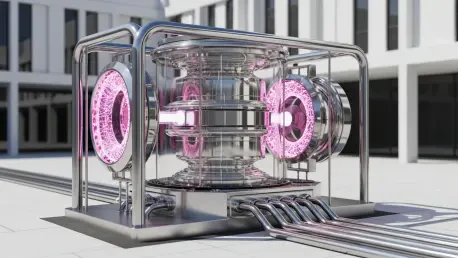
Helion Energy’s technical approach differs significantly from traditional fusion methods that rely on heating water to drive steam turbines. Instead, the company utilizes high-beta pulse magnetic fields to compress plasma and convert the resulting fusion energy directly into electricity. This method promises higher efficiency and a more compact footprint, but it also presents immense engineering challenges that must be addressed within a very tight timeframe. To meet the projected targets for 2030, Helion must transition from its current prototype phase to a massive manufacturing scale. This transition requires the successful installation of approximately 800 reactors, each capable of producing 50 megawatts, within the next few years. While the Polaris prototype has reached plasma temperatures of 150 million degrees Celsius, it must still consistently exceed the 200 million degree threshold to ensure commercial viability and stable energy output for long-term power delivery.
The logistical undertaking of building thousands of fusion reactors involves establishing a supply chain that does not currently exist at a commercial scale. Beyond the 800 reactors needed by the turn of the decade, an additional 7,200 units would be required by 2035 to meet the high-end estimates of the OpenAI deal. This necessitates a manufacturing speed and precision that rivals the automotive or aerospace industries. Each unit must be integrated into existing power distribution networks or dedicated local microgrids that can handle high-voltage direct current outputs. Furthermore, the materials science involved in maintaining structural integrity under extreme magnetic pressure and thermal stress remains a focal point for the engineering teams. If Helion can successfully automate the production of these reactor cores, it will solve one of the most significant bottlenecks in the history of nuclear energy. The success of this endeavor depends on translating laboratory physics into a repeatable and robust industrial process.
Integrating Energy Strategy into the AI Roadmap
This potential partnership signifies a broader trend of matchmaking between high-consumption technology firms and experimental energy providers. By securing long-term power commitments, AI companies aim to insulate themselves from future energy shortages while simultaneously funding the development of technologies that remain unproven at a commercial scale. This proactive investment strategy suggests that the future of digital intelligence is inextricably linked to the success of clean energy breakthroughs. While Helion has not officially finalized the public announcement of the agreement, the leadership changes and the startup’s aggressive development timeline indicate a unified effort to bring fusion energy to market years ahead of the broader industry’s expectations. This high-stakes bet positions fusion as the primary solution for the sustainable expansion of the digital economy, ensuring that the progress of AI is not throttled by the physical constraints of the legacy power grid.
The strategic alignment between OpenAI and Helion Energy established a new paradigm for how the technology sector addressed the rising costs of industrial-scale computing. By prioritizing direct investment in fusion, the organization moved beyond simple carbon offsets and toward the creation of a dedicated energy ecosystem. This shift necessitated a closer collaboration between physicists and software engineers, ensuring that the hardware of the future was matched by a sustainable power source. Industry leaders who observed this transition recognized that the future of large-scale artificial intelligence depended on securing early access to high-density power. Strategic planners emphasized that companies should have audited their long-term energy requirements and pursued similar modular energy partnerships to avoid future bottlenecks. This historical move ultimately demonstrated that the path toward advanced intelligence was paved with the successful commercialization of zero-carbon fusion energy.