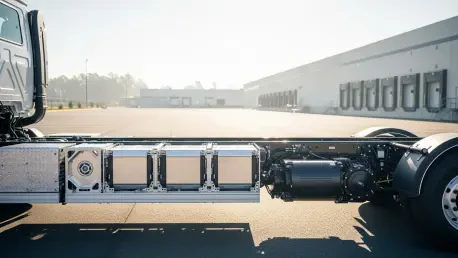

For decades, the clatter of a diesel engine was the only sound associated with a truck that could actually finish a full day of heavy-duty hauling across the city, yet that long-standing industrial symphony is now being interrupted by the silent, high-torque promise of modern engineering. The industrial landscape of logistics once appeared inseparable from the rumble of internal combustion, a standard that seemed impossible to displace until a Los Angeles-based startup decided to challenge the status quo. Harbinger has introduced the HC Series Cab, a vehicle meticulously engineered to disrupt the medium-duty sector by addressing the specific weaknesses of legacy models.
This truck is not merely a replacement; it is positioned as a fundamental upgrade that combines electric efficiency with the sheer endurance required for heavy hauling. With a range-extended hybrid variant capable of traveling up to 500 miles, the vehicle dismantled the primary argument against non-diesel work trucks: range anxiety. Furthermore, the chassis was designed with a turning radius that outmaneuvered traditional trucks, proving that moving away from fossil fuels could actually result in a more agile and functional tool for urban navigation.
The End of the Diesel Monopoly in Medium-Duty Logistics
Fleet operators have long relied on the rhythmic rumble of diesel engines as the undisputed standard for medium-duty hauling, but that dominance is facing a legitimate threat. Harbinger’s HC Series Cab is a vehicle designed not just to match the utility of traditional work trucks, but to exceed it through a combination of electric efficiency and hybrid endurance. This shift signaled that the green transition was no longer a compromise—it had become a necessary evolution for companies seeking to remain competitive in a shifting regulatory landscape.
The vehicle’s entry into the market arrived at a time when urban centers were increasingly restricting traditional combustion engines to improve air quality. By offering a platform that adhered to these new standards without sacrificing the payload capacity that businesses demand, the startup addressed a critical pain point for regional logistics. The move away from a diesel monopoly represented a broader trend toward diversified energy sources that prioritized both environmental responsibility and operational flexibility.
Why the Commercial Sector is the True Frontrunner for Electrification
While the consumer electric vehicle market frequently grappled with fluctuating demand and infrastructure concerns, the commercial sector remained a more logical candidate for rapid transformation. In this space, the primary drivers of decision-making were total cost of ownership and vehicle uptime. Fleet managers prioritized reliability and predictable expenses over brand loyalty, making them the ideal audience for a startup that focused on the harsh realities of daily delivery and logistics.
Harbinger identified that the true value of electrification lay in the reduction of fuel and maintenance expenses, which directly impacted the bottom line of medium-duty operations. By targeting this specific segment, the company aimed to tap into a massive market that was already searching for ways to insulate itself from the volatility of oil prices. This pragmatic approach allowed for a steady adoption rate, as businesses viewed the new technology through the lens of long-term profitability rather than personal preference.
Versatility by Design: Hybrid Power and Modular Architecture
The design of the HC Series Cab reflected a dual-pathway approach, acknowledging that a single power solution could not satisfy every logistics need. The fully electric model offered a clean, quiet solution for dense urban routes where stop-and-go traffic favored regenerative braking and zero-emission zones. Meanwhile, the hybrid variant provided the necessary stamina for long-haul tasks, ensuring that work did not stop simply because a battery depleted. This flexibility ensured that the vehicle remained useful across a variety of geographic and operational contexts.
Modular architecture served as the backbone of this versatility, allowing the chassis to adapt to various configurations ranging from flatbeds to specialized cargo boxes. This adaptability ensured that the vehicle fit seamlessly into existing commercial workflows, while a focus on driver ergonomics and cabin accessibility addressed the human element of logistics. Such thoughtful engineering facilitated an easier transition for workers who were accustomed to the layout of traditional diesel cabs, reducing the training time required for fleet-wide implementation.
Financial Strength and Strategic Partnerships Fueling Growth
Scaling production in the automotive world required more than just innovative designs; it demanded substantial capital and strategic alliances. Harbinger secured a stable financial footing through Series B and C funding rounds totaling $260 million, providing the necessary runway to compete with established legacy manufacturers. This capital was bolstered by partnerships with industry giants like FedEx and THOR Industries, which validated the startup’s technology in the eyes of the broader market and established a clear path toward mass adoption.
A distinguishing factor in the company’s growth was its commitment to vertical integration, acting as its own primary supplier for critical components. By developing proprietary batteries, motors, and axles in-house, the firm maintained strict quality control while reducing dependency on global supply chains. This strategy allowed them to optimize every part of the drivetrain for the specific demands of medium-duty work rather than relying on off-the-shelf parts that often led to performance trade-offs.
Leveraging Vertical Integration and Autonomous Tech for Future-Proofing
The long-term vision for the HC Series Cab extended beyond the powertrain, focusing on the integration of intelligence and autonomous capabilities to redefine the nature of fleet management. Through the acquisition of Phantom AI, the company prepared for a future where trucks were not just transport tools but sophisticated data platforms. These advancements promised to improve safety and optimize route efficiency, creating a vehicle that grew more valuable over its operational lifespan as software continued to improve.
Vertical integration also opened new revenue streams, as the company began selling its specialized energy storage solutions to external partners like Airstream. This diversified business model provided a buffer against the typical volatility of the vehicle market, ensuring that the company remained viable even during economic shifts. By controlling the entire ecosystem of their vehicles, from the software to the hardware, they positioned their trucks to be the smartest assets in any commercial fleet.
The introduction of the HC Series Cab represented a pivotal moment where the transition to cleaner energy finally aligned with the rigorous demands of industrial productivity. Fleet operators who adopted this technology found that the shift reduced their reliance on traditional fuel infrastructures while enhancing the flexibility of their logistics networks. The success of this modular approach suggested that the future of medium-duty transport belonged to platforms that could evolve alongside technological breakthroughs.
Strategic investments in autonomous software and proprietary hardware paved the way for a more sustainable and efficient commercial environment. Industry leaders recognized that the value of these vehicles rested in their ability to minimize downtime and maximize the utility of every mile driven. Ultimately, the industry moved toward a paradigm where the performance of a truck was measured not by the sound of its engine, but by the intelligence of its architecture and the durability of its design.