
The long-held dream of transforming industrial manufacturing into a process as agile and iterative as software development is taking a significant step forward, propelled by a substantial infusion of capital into an innovative technology startup. Freeform has announced the successful closure of a $67 million Series B funding round, a clear signal of investor confidence in its AI-powered laser manufacturing platform. This financial backing, which reportedly brings the company’s post-financing valuation to $179 million, is earmarked to accelerate the company’s mission of producing high-precision metal parts at unprecedented speed and scale. The round attracted a roster of prominent investors, including Founders Fund, Nvidia’s NVentures, Apandion, AE Ventures, Linse Capital, Threshold Ventures, and Two Sigma Ventures, all betting on Freeform’s capacity to fundamentally reshape how critical components are made. The investment will fuel a major expansion, enabling the company to scale its operations, hire up to 100 new employees, and address a growing backlog of contracts from customers seeking a faster, more reliable production alternative.
The Fusion of AI and Advanced Hardware
From Vision to High Volume Production
The genesis of Freeform lies in the direct experience of its CEO and co-founder, Erik Palitsch, during his tenure as a rocket engine developer at SpaceX. It was there he encountered the profound limitations of existing metal 3D printing technologies, which were often expensive, frustratingly unreliable, and fundamentally unsuited for the demands of mass production. This firsthand struggle with the state-of-the-art manufacturing tools inspired the establishment of Freeform in 2018. The company was founded on a singular, ambitious goal: to overcome the bottlenecks that plague traditional manufacturing and even first-generation additive manufacturing. Palitsch envisioned a system where creating complex metal parts was no longer a slow, multi-stage process but a streamlined, software-defined workflow. This vision required a complete rethinking of the entire production stack, from the foundational hardware to the intelligent software that controls it, aiming to deliver not just prototypes but thousands of kilograms of finished, mission-ready parts on a daily basis, a capability that has remained elusive for the industry.
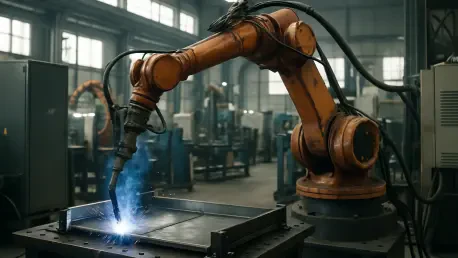
Freeform’s current operational success is built upon its “GoldenEye” printing system, a sophisticated platform that already represents a significant advancement in additive manufacturing technology. By utilizing a coordinated array of 18 powerful lasers, the GoldenEye system can fabricate complex metal components with high precision and speed. The company is already demonstrating the viability of its approach by delivering hundreds of mission-critical parts to its undisclosed customers every week. This consistent output serves as tangible proof of concept, validating the core principles behind its integrated hardware and software design. The successful deployment of the GoldenEye platform has not only allowed Freeform to build a strong operational track record but has also provided invaluable real-world data. This data is crucial for refining its processes and has been instrumental in securing the new funding, as it provides concrete evidence of the system’s reliability and its potential to scale, thus setting the stage for the company’s next, more ambitious technological leap.
Engineering the Future with AI Native Systems
What sets Freeform’s approach apart is its characterization as an “AI native” manufacturing platform, a distinction rooted in its deep integration of artificial intelligence from the ground up. This is not simply a matter of adding a layer of software analytics to existing machinery. Instead, the company has forged a strategic partnership with Nvidia, leveraging its powerful ##00 GPU clusters to create a digital twin of the entire manufacturing process. This allows Freeform to run complex, real-time, physics-based simulations that model every aspect of the metal-printing workflow before a single laser is fired. By combining the predictive power of these simulations with a constant stream of sensor data collected from its machines during operation, the platform enters a continuous feedback loop. This AI-driven cycle enables the system to learn from every part it produces, autonomously optimizing parameters to enhance quality, increase throughput, and reduce failures, effectively making the manufacturing process smarter and more efficient with each build.
The newly acquired $67 million in funding is set to catalyze the development and deployment of Freeform’s next-generation platform, codenamed “Skyfall.” This system represents a quantum leap from the current GoldenEye technology, designed to scale the laser array from 18 to hundreds of individual lasers working in concert. This massive increase in parallel processing power is the key to unlocking true factory-scale production. The ambition for Skyfall is to transform the facility into a high-volume producer capable of outputting thousands of kilograms of precision metal parts daily. This level of productivity aims to directly compete with, and in many cases surpass, traditional manufacturing methods in terms of both speed and cost-effectiveness for complex components. The investment will directly fund the engineering, facility expansion, and talent acquisition necessary to bring the Skyfall system online, positioning Freeform to address its significant contract backlog and meet the escalating demand for advanced, on-demand manufacturing solutions across various industries.
A Broader Shift in Industrial Investment
The Rise of Manufacturing as a Service
The significant financial backing secured by Freeform is not an isolated event but rather a prominent example of a growing trend within the venture capital landscape: a heightened interest in the “Manufacturing-as-a-Service” (MaaS) sector. Investors are increasingly recognizing the immense potential in companies that are building the automated, software-driven factories of the future. This movement reflects a broader industry-wide push to modernize production, reduce reliance on fragile global supply chains, and enable faster innovation cycles. Firms like Hadrian, which focuses on automated machining for the aerospace and defense sectors; VulcanForms, known for its large-format laser metal additive manufacturing; and Divergent, which has developed a complete vehicle manufacturing platform, are all part of this new wave. These companies, each with a unique technological approach, share a common goal of abstracting away the complexities of production, allowing customers to procure high-quality parts with the ease of a cloud-based service, thereby democratizing access to advanced manufacturing capabilities.
Looking Ahead
Freeform’s successful funding round represented a pivotal moment, marking a strong vote of confidence from the investment community in its vision for an AI-driven manufacturing future. The infusion of capital was set to dramatically accelerate the company’s trajectory, enabling it to transition from its proven “GoldenEye” system to the far more ambitious, massively parallel “Skyfall” platform. This technological leap was not merely an incremental improvement; it was designed to fundamentally alter the economics of producing complex metal parts, making advanced manufacturing more accessible and scalable. With plans to expand its workforce and facilities, the company positioned itself to tackle its substantial backlog and solidify its role as a key player in the burgeoning MaaS sector. The strategic allocation of these funds toward both technological development and operational expansion underscored a clear intent to move beyond prototyping and establish a new paradigm for industrial production at scale.