
The rapid ascent of autonomous AI agents has fundamentally altered the startup ecosystem, effectively condensing the timeline between a conceptual spark and a fully functional software product. At the center of this seismic shift is Garry Tan, the President and CEO of Y Combinator, whose recent obsession with “gstack”—an open-source framework designed for AI-driven development—has ignited a fierce debate regarding the future of labor in Silicon Valley. This movement is not merely about a new repository on GitHub; it represents a profound reimagining of the founder’s identity, the potential obsolescence of traditional engineering teams, and the psychological impact of hyper-productivity. By examining the technical foundations of Tan’s framework and the polarizing reactions it has garnered, we can better understand the next era of software engineering and the changing nature of human-AI collaboration.
The Evolution of the Solo Founder and the Rise of the AI Workforce
Modern technology is witnessing a radical transition where the individual founder can now command a digital workforce that rivals the output of an entire mid-sized company. Garry Tan’s advocacy for agentic workflows suggests that the distance between a raw idea and its execution has been collapsed by the emergence of autonomous tools. This transformation has turned the startup journey into an exercise in high-level management rather than manual labor, allowing a single individual to navigate complex architectural decisions with the speed of an entire department. Consequently, the traditional barriers to entry for building a multi-million dollar product are rapidly dissolving as AI bridges the gap in human bandwidth.
This shift has also redefined the psychological landscape of entrepreneurship, moving away from the historical reliance on chemical stimulants toward a state of natural, AI-induced flow. Tan characterizes this experience as a form of “cyber psychosis,” where the ability to instantly manifest complex “crystalline structures” of thought into functional software creates a high-intensity feedback loop. This evolution suggests that the competitive edge in the modern market is no longer defined by human endurance alone, but rather by the efficiency of the “force multiplier” an individual can exert through the orchestration of sophisticated AI systems.
The Architecture of “God Mode”: How Gstack Reimagines Development
Simulating the C-Suite Through Opinionated Prompt Orchestration
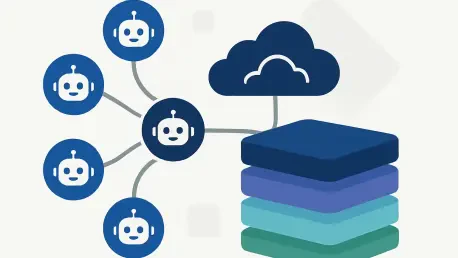
Gstack distinguishes itself from standard AI chatbots by moving beyond simple query-response interactions, instead implementing a sophisticated simulation of a corporate hierarchy. By utilizing “skills” stored in markdown files, the framework assigns specific personas—such as the CEO, the Lead Engineer, and the Security Auditor—to different AI agents, ensuring that code is not just written, but vetted and strategized. This modular approach leverages the specialized capabilities of models like Claude Code, allowing a single user to run a multi-stage pipeline where the “CEO agent” validates a feature’s market viability before the “Engineer agent” writes a single line of code.
The power of this system lies in its ability to enforce a rigorous internal logic that mimics human organizational structures. Instead of asking a single prompt to do everything, the framework forces the AI to check its own work across different departmental boundaries. This creates a layer of accountability and reliability that was previously missing from generic AI coding assistants. By treating the AI as a series of specialized employees rather than a general-purpose tool, gstack provides a blueprint for building software that is both architecturally sound and strategically aligned with business goals.
The New Hustle Culture: From Chemical Stimulants to AI-Driven “Cyber Psychosis”
Garry Tan’s personal narrative marks a shift in the Silicon Valley “grind” mentality, replacing the traditional reliance on wakefulness-promoting drugs with the dopamine-rich feedback loops of rapid AI iteration. He describes a state where the friction of manual coding is removed, allowing the brain to stay in a constant state of creative output. This suggests that the future of elite performance in tech is becoming increasingly tied to the seamless integration of human thought and machine execution. The intensity of this process has created a new standard for what it means to be a “high-performance” founder in a world where speed is the primary currency.
Furthermore, this cultural pivot reflects a broader change in how innovation is perceived by the tech elite. The focus has shifted from the quantity of hours worked to the quality of the systems being managed. When a founder can iterate on a product twenty-four hours a day using autonomous agents, the definition of “hustle” changes from personal labor to systemic optimization. This creates a new environment where the most successful individuals are those who can maintain a high-frequency connection with their AI tools without succumbing to the mental exhaustion of traditional development cycles.
Technical Merit vs. Celebrity Influence: The Great Developer Divide
The reception of gstack highlights a growing tension between those who see it as a masterclass in AI reliability and critics who dismiss it as an overhyped collection of basic prompts. While the project achieved viral status on GitHub, it also faced accusations of “clout-driven” development, with detractors arguing that the tool’s fame stems more from Tan’s position at Y Combinator than from true technical innovation. This friction underscores a deeper anxiety among professional developers regarding the democratization of coding and the fear that executive-level “god mode” configurations might undervalue the nuance of human expertise.
Critics have specifically pointed to the simplicity of the underlying prompts, suggesting that the framework is more of a branding exercise than a breakthrough. However, proponents argue that the value is not in the individual text strings but in the structured methodology of the workflow. This divide illustrates a significant cultural rift in the industry: one side values the intricate, manual craft of engineering, while the other prioritizes the high-level orchestration of systems. As AI continues to penetrate the development stack, this debate over what constitutes “real” technical skill is likely to intensify.
Orchestration as the Final Frontier of Software Engineering
The industry consensus emerging from the gstack debate is that the future of programming lies less in manual syntax entry and more in the high-level management of autonomous systems. Expert analysis of the framework reveals that while individual prompts may be simple, the methodology of creating a structured, multi-agent workflow is a significant leap toward reliable AI-generated software. This shift signals a transition where the most valuable skill for a developer is no longer just writing code, but architecting the systems that govern how AI writes it.
In this new paradigm, the role of the engineer evolves into that of a systems architect or a “prompt conductor.” The focus moves toward ensuring that the various AI agents are operating within the correct constraints and that the overall output aligns with the broader project requirements. This requires a deeper understanding of logic, security, and system design rather than just a mastery of a specific programming language. As these frameworks become more prevalent, the ability to orchestrate complex digital workflows will become the defining characteristic of the modern technologist.
Strategies for Navigating the Shift Toward Autonomous Agent Frameworks
To effectively leverage the insights provided by the gstack phenomenon, founders and developers should focus on the transition from “doer” to “orchestrator.” Actionable strategies include adopting a modular prompt architecture that separates logic from review, ensuring that AI agents are governed by distinct, opinionated protocols rather than generic instructions. Furthermore, organizations should begin experimenting with agentic hierarchies to identify bottlenecks in their existing development cycles, using these tools to automate repetitive documentation and security auditing tasks. By focusing on the structural “skills” of the AI rather than just the output, teams can maintain high standards of correctness while significantly increasing their delivery speed.
Beyond the technical implementation, it is crucial for teams to cultivate a culture of critical oversight. Even the most advanced agentic frameworks require human intervention to ensure that the final product meets the aesthetic and functional needs of real users. Developing internal benchmarks to test the performance of different AI personas can help in refining the “skills” stored in the framework. This proactive approach allows companies to stay ahead of the curve, transforming potential disruptions into a powerful competitive advantage that scales with the business.
The Future of Innovation in an Agent-First World
The discourse surrounding Garry Tan and gstack served as a pivotal moment in the history of software development, marking the point where AI agents moved from experimental toys to serious organizational tools. While the debate over the technical complexity of these prompts continued, the broader implication was clear: the threshold for building a multi-million dollar product became lower than ever before. As the industry moved forward, the success of a startup increasingly depended on a founder’s ability to manage a digital workforce as effectively as a human one.
Looking toward the next phase of this evolution, organizations began prioritizing the development of proprietary agentic protocols as their core intellectual property. The focus shifted away from the code itself and toward the unique ways in which a company could orchestrate its AI “workers” to solve specific market problems. Ultimately, gstack functioned as a harbinger of a world where the constraints of human labor were replaced by the infinite scalability of the “god mode” developer, forcing everyone in the tech sector to reevaluate their value in an automated landscape.