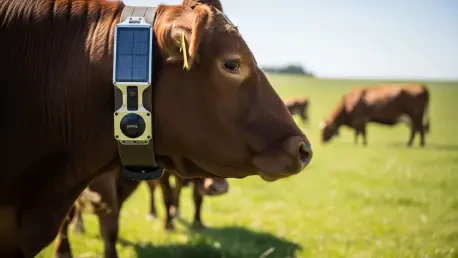

For over a century, the jagged silhouette of barbed wire has defined the rural landscape, acting as a physical manifestation of property rights and the primary tool for restricting the movement of livestock across millions of acres. While high-altitude drones and sophisticated satellites now monitor the clouds, the ground-level reality of cattle management has remained stubbornly tethered to the 19th century, relying on static barriers and manual herding. The emergence of solar-powered smart collars is finally challenging this status quo, effectively turning physical boundaries into invisible lines of code. This shift allows producers to move entire herds with a simple swipe on a mobile interface, signaling a fundamental virtualization of the ranch that replaces reactive physical labor with predictive, data-driven engineering.
The transformation represents a departure from the restrictive bottlenecks that have long hampered agricultural growth. Traditional fences are static, requiring constant maintenance and limiting the fluidity of land use. In contrast, digital boundaries offer a level of flexibility that allows for the real-time optimization of grazing patterns. By removing the need for permanent infrastructure, ranching moves away from being a struggle against the landscape and toward a more integrated, responsive system where the environment and the animals coexist in a digitally managed equilibrium.
Why the Agricultural Status Quo Is Breaking
The global livestock industry currently finds itself trapped between the escalating costs of traditional management and an urgent requirement for improved land efficiency. Maintaining thousands of miles of physical fencing across the rugged terrains of New Zealand, Australia, and the western United States is an expensive, labor-intensive ordeal that dictates the rhythm of the ranch. Because physical barriers are difficult to move, cattle often remain in the same paddocks for too long, leading to overgrazed patches and underutilized forage. This lack of precision results in a significant productivity gap, as the nutritional potential of the land is rarely fully captured.
Moreover, a persistent shortage of skilled agricultural labor has made traditional herding methods increasingly unsustainable. The financial burden of employing helicopters, motorbikes, and teams of riders to gather and move stock has become a primary pain point for large-scale operations. As the cost of manual oversight rises, the industry is forced to look toward autonomous solutions that can manage vast numbers of animals with minimal human intervention. This economic pressure is the catalyst for a digital overhaul, pushing the sector to adopt technologies that can bridge the gap between rural tradition and modern industrial efficiency.
The Tripartite System: Hardware, Network, and Behavior
Virtual fencing functions as a sophisticated ecosystem designed to influence animal behavior through a combination of hardware and software. At the center of this system are autonomous, solar-powered collars that act as the primary interface between the producer and the animal. These collars utilize GPS and internal sensors to track the location, movement, and health of each individual in the herd in real-time. By providing constant data streams, the hardware ensures that the virtual boundary is not just a line on a map, but a functional tool for behavioral management.
Instead of utilizing physical pain or intimidation, the system relies on behavioral engineering through audio and vibrational cues. Animals are trained to associate specific sounds with the proximity of a boundary, much like the parking sensors in a modern vehicle. This training period is remarkably brief, with most cattle mastering the association within only three interactions. To ensure the reliability of these cues in remote areas, a low-frequency tower network maintains a constant connection between the collars and a centralized application. This robust infrastructure provides the “many nines” of reliability required to manage millions of dollars in livestock without the risk of a digital blackout.
From Aerospace to the Open Range: Insights and Impacts
This technological leap is being led by innovators who treat the farm as a high-stakes engineering environment rather than a traditional homestead. Companies like Halter, supported by major venture capital players like Peter Thiel’s Founders Fund, have adopted a “zero to one” philosophy. This approach does not seek to make the traditional fence slightly better; it seeks to replace it entirely, fundamentally changing the primary lever of agricultural productivity. By viewing the ranch through the lens of aerospace-level precision, these firms are introducing a level of technical rigor previously unseen in the pastoral sector.
The impact of this shift is visible in the massive datasets now being collected on cattle behavior. These systems can identify subtle changes in movement that signal fertility cycles or the early onset of illness, often days before a human handler would notice a symptom. This data-driven diagnostic capability offers a quantifiable return on investment that far exceeds the simple reduction of labor costs. Industry data suggests that precision grazing enabled by virtual fences can increase land productivity by 20%, with some early adopters reporting that they have doubled their total output by managing their forage with surgical accuracy.
Strategies for Implementing a Virtualized Herd
Successfully transitioning to a virtual fencing model requires a comprehensive shift in both physical infrastructure and management philosophy. Producers must implement structured training protocols where cattle are introduced to audio cues in controlled environments before being released onto expansive ranges. This phased adaptation ensures that the herd remains calm and responsive to the digital boundaries. During this period, the focus shifts from physical containment to building a reliable behavioral response, which serves as the foundation for all future management decisions.
Once the herd is trained, the mobile interface allows for the creation of dynamic paddocks that can be adjusted daily to ensure optimal land rest and recovery. This precision grazing framework enables farmers to move cattle frequently, preventing land degradation and maximizing the growth of high-quality forage. Furthermore, the integration of behavioral data into daily workflows allows for proactive health monitoring. Automated alerts can isolate sick animals or manage breeding windows with a level of precision that was historically impossible, ensuring that the management of the herd is as efficient as the technology that monitors it.
The adoption of virtual fencing represented a decisive moment in the evolution of global livestock management. By moving beyond the limitations of physical barriers, the industry embraced a model that prioritized data, animal welfare, and environmental stewardship. The transition required significant capital investment and a willingness to abandon century-old traditions, but the results justified the upheaval. Producers who integrated these systems found themselves capable of managing larger herds with greater precision and less environmental impact than ever before. This technological shift successfully aligned the economic goals of the ranch with the biological needs of the land, ensuring that the future of cattle management was defined by intelligence rather than just physical restraint.