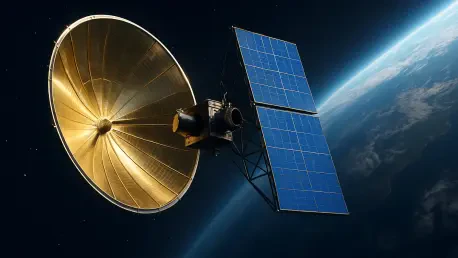

Spacecraft historically functioned as expensive, static assets drifting through fixed trajectories, yet the modern theater requires the same dynamic agility seen in high-performance atmospheric combat. This transition from passive observation to high-stakes tactical maneuvering marks a fundamental change in how operators perceive the orbital domain. Solar Thermal Propulsion (STP) emerges as the indispensable middle ground, offering a bridge between the raw power of chemical rockets and the steady efficiency of electric engines. By utilizing concentrated sunlight to heat propellant, this technology allows satellites to execute rapid repositioning maneuvers that were previously impossible for long-duration missions.
Key industry players, led by the U.S. Space Force and a vanguard of private innovators, are pushing for systems that treat space as a contested environment rather than a sanctuary. The strategic necessity of dodging debris or evading adversarial assets has turned the spotlight on propulsion startups. This shift is not merely about speed; it represents a comprehensive rethinking of orbital longevity and tactical resilience. As space becomes more crowded and geopolitically sensitive, the ability to change orbits on demand transforms a satellite from a sitting target into a maneuverable asset.
Market Dynamics and the Evolution of In-Space Mobility
Emerging Trends in Spacecraft Propulsion and Defense Tactics
The rise of Space Mobility Primes signals a departure from the legacy model where propulsion was a secondary component of satellite design. Today, the demand for rapid-response capabilities drives the development of platforms specifically engineered for high-impulse operations. Companies are increasingly leveraging additive manufacturing to create complex engine geometries that maximize thermal efficiency while reducing weight. This technological evolution allows for the integration of heritage propulsion concepts with modern commercial execution, enabling satellites to behave more like fighter jets than drifting weather stations.
Geopolitical tensions further accelerate this evolution, as defense agencies seek to neutralize the threat of space-based kinetic or electronic interference. The focus has moved toward creating modular propulsion systems that can be integrated into various satellite frames. By prioritizing high-performance materials and advanced heat management, engineers are making rapid orbital transit a viable commercial service. This trend reflects a broader move away from launch-heavy strategies toward maneuver-heavy operational philosophies that prioritize mission flexibility.
Growth Projections and the Financial Landscape of Space Logistics
Financial markets have responded with significant enthusiasm to this shift in orbital logistics, as evidenced by Portal Space Systems’ recent $250 million valuation. A successful $50 million Series A funding round demonstrates investor confidence in the scalability of solar thermal solutions. This private capital is bolstered by approximately $45 million in strategic military investment, which serves as a clear indicator of defense priorities. These funds are directed toward proving that agility in space is not just a luxury but a fundamental requirement for the next generation of infrastructure.
Looking ahead, the demand for solar thermal technology is expected to surge within the debris avoidance and satellite servicing markets. Traditional satellites often face a premature end of life due to fuel exhaustion or the inability to dodge incoming debris. High-efficiency engines allow for extended mission durations and complex servicing tasks, such as refueling or repositioning. The performance of the SuperNova spacecraft and the upcoming 2027 Hex thruster mission will serve as critical benchmarks for the entire sector, potentially unlocking billions in new orbital service contracts.
Overcoming Technical and Strategic Barriers in Space Propulsion
Solving the thrust vs. efficiency paradox remains the primary technical hurdle for engineers working with concentrated solar energy. Chemical propulsion offers high thrust but burns through limited fuel rapidly, whereas electric systems are efficient but lack the power for sudden movements. Solar thermal systems bypass this limitation by using mirrors to concentrate solar radiation, heating propellant to extreme temperatures to produce significant thrust without the weight of traditional oxidizers. However, this creates extreme engineering challenges regarding heat exchange materials and nozzle durability.
Beyond the hardware, a strategic obstacle lies in shifting the aerospace procurement mindset from one that prioritizes initial launch weight to one that values life-cycle maneuverability. Resilient flight electronics must also be developed to handle the intense thermal cycles associated with high-impulse burns. These systems must operate flawlessly in the harsh radiation environment of space while managing the precise optics required for solar concentration. Overcoming these barriers requires a blend of rigorous laboratory testing and iterative flight demonstrations to prove long-term reliability.
The Regulatory Framework and Global Security Standards
Navigating the complex regulatory landscape is essential for companies dealing with dual-use technology that has both commercial and military applications. U.S. military strategic funding comes with stringent compliance requirements, ensuring that advanced propulsion systems align with national security objectives. International space treaties also play a role, as the deployment of high-mobility assets must be balanced with global norms regarding non-interference and space sustainability. Establishing clear safety protocols is vital as the industry prepares for the eventual transition from solar thermal to nuclear thermal propulsion.
Government partnerships serve as a critical mechanism for de-risking advanced propulsion testing for private firms. By providing access to testing facilities and secure data sharing, federal agencies allow startups to iterate faster than they could on their own. These collaborations ensure that safety and security standards evolve alongside the technology, preventing a regulatory vacuum. This framework supports a stable environment where innovation can flourish without compromising the long-term security of the orbital environment.
The Future of Deep Space Transit and Nuclear Integration
Solar thermal propulsion acts as a vital technological bridge toward the realization of future nuclear thermal engines. While nuclear systems offer unparalleled energy density, the logistical and regulatory hurdles of testing them on Earth are immense. By mastering solar thermal heat exchange and nozzle mechanics in orbit now, developers are essentially validating the core components of nuclear transit. This progression is essential for the commercialization of the cislunar economy, where moving heavy cargo between the Earth and the Moon will require far more power than current systems provide.
Consumer and government demand for satellites capable of cross-orbital repositioning continues to grow as the complexity of space missions increases. Long-term innovation cycles are already moving beyond Earth orbit toward interplanetary infrastructure. The goal is to build a logistics network that supports a sustainable presence on other celestial bodies. Solar thermal systems provide the starting point for this vision, offering a reliable and scalable solution for moving through the inner solar system with efficiency and speed.
Synthesizing the Next Leap in Orbital Dominance and Commerce
The paradigm shift toward agile, high-impulse orbital maneuvering redefined the expectations for satellite longevity and tactical utility. Portal Space Systems successfully modernized 20th-century propulsion concepts, turning theoretical solar thermal research into a cornerstone of contemporary space defense. This transition allowed for a more resilient orbital architecture that resisted the static vulnerabilities of the past. Strategic investments from both public and private sectors confirmed that propulsion innovation remained the primary driver of the burgeoning space economy.
Policymakers and investors recognized that the ability to navigate through crowded orbits was no longer optional. The development of the SuperNova platform provided a clear roadmap for how future logistics networks could operate within the cislunar domain. Ultimately, the advancement of solar thermal technology ensured that space remained a sustainable and commercially viable frontier. The industry moved toward a future where propulsion limitations no longer dictated the scope of human ambition in the stars.